- Sunday, 7 June 2026

HoR polls: Legislation is main role of MPs, but voters still expect 'development' from them
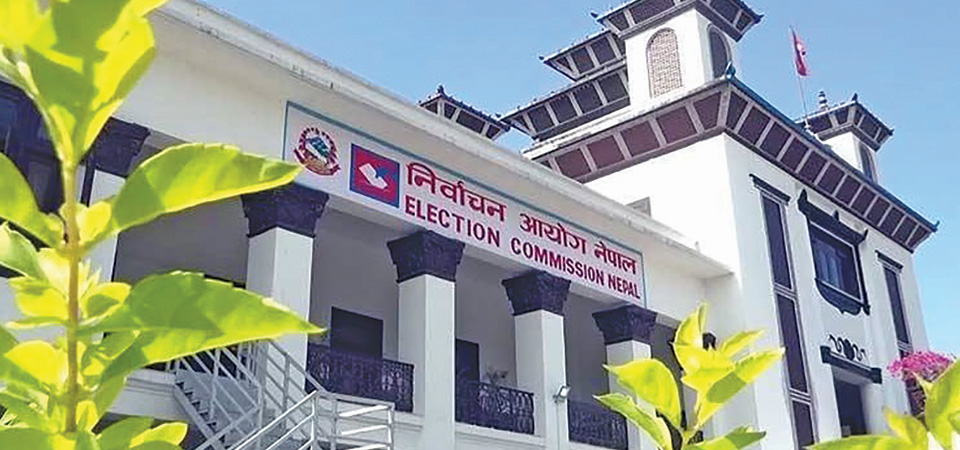
Kathmandu, Jan 27: The Federal Parliament is the supreme body in the country for people's representation and citizen sovereignty. According to the Constitution, generally the members of the House of Representatives and the National Assembly, elected for a fixed term by the citizens, do not have the responsibility to carry out development works.
The main responsibility of a member of parliament is fundamentally to make laws, form the government and discuss and pass the budget.
Debating on and approval of such government policies and programmes, constitutional amendments and putting people's voice, monitoring of the regular functioning of the government, providing necessary directions and suggestions to the government, ratification of international treaties, and ensuring the government is accountable to citizens are also the additional roles of the parliament.
Although these are the policy roles of the parliament, in Nepal, since the time of the Panchayat polity, MPs have been regarded as 'carriers of development'. It has become a tradition in Nepal that votes have been sought and given on this basis.
Candidates who have filed their nomination papers for the HoR election to be held on March 5 have started soliciting for votes, promising development for their constituencies, saying, 'This is how I will develop your area.' Voters have also started asking candidates the question, 'How will you develop our area if you win?'
Constituent Assembly member and senior advocate Ram Narayan Bidari says that both MPs and the public have been confused about the primary role of the parliament. In his understanding, the two important functions of the parliament are to form the government and to make laws. Another function is to supervise the judicious allocation of the country's budget.
"It is acceptable for a candidate to say 'If I win the election, I will make this kind of budget,' but making commitments like 'I will build roads, drains, and playgrounds in this area in this way' is not within a parliamentarian's jurisdiction. This falls under the authority of the local level. A parliamentarian should not encroach upon the rights of the local level," said Bidari, an expert on the Constitution.
Bidari said, "If someone who asks for votes by trampling on others' jurisdiction wins, what all will they violate? What all will they do against the law? Therefore, committing to development in parliamentary elections is lying to the electorate."
He stated that a member of parliament can tell the electorate that he or she will direct the government from the floor of the parliament to amend, for example, the laws related to land, forest, revenue and education for development and construction according to the needs of the voters.
Former Chief Whip of the Nepali Congress, Shyam Kumar Ghimire, acknowledges that the tradition of committing to development and contesting parliamentary elections since the Panchayat era cannot be broken.
Ghimire said that this time also in the context of the upcoming HoR elections there has been no discussions on what kind of law to enact and what the responsibilities of a member of parliament are, emphasising that physical development and construction have been given priority.
“Such a tradition must be changed. In fact, MPs have no role in development, construction or budget formulation. They only approve the budget presented by the government in parliament based on majority or minority,” Ghimire said.
He added that, however, in the current elections, there is still a problem in understanding and conveying that the main role of MPs is legislation. "There is a need to develop awareness on this matter at a national level that MPs are not development workers.”
Former Chief Whip of the Communist Party of Nepal (UML), Padam Giri, says that he has not been able to explain to the people that the Constitution gives Parliament the primary role of forming the government and making laws.
“There is a gap between the expectations of the people and the responsibilities given by the Constitution. Voters have not been adequately informed about this. From small-scale development to large development projects, MPs are expected to undertake these, and MPs are evaluated based on them,” said leader Giri, a candidate for the House of Representatives from Parbat district.
Stating that this kind of understanding has become a major challenge for the implementation of federalism, he said, "Therefore, it is necessary for the media to convey, almost like a campaign, to the people the responsibility and the role of MPs. Otherwise, voters tend to think that MPs are not responsible when development does not take place in their area."
Giri mentioned that the public has been evaluating the MPs based on what development and construction have been achieved rather than what kind and how many laws have been made, and he shared his experience that people are asking not about what kind of law will be made tomorrow, but about how things like playgrounds, drains, and schools will be constructed.
Former MP Madhav Sapkota who is a member of the Nepali Communist Party (NCP) also emphasises the need to highlight what the work, duties, and rights of an MP are in the constitution.
"An MP is a legislator, and as a parliamentarian, one should raise issues concerning the public, but there is no direct role of a member of parliament in development projects," said Sapkota, a candidate in the upcoming HoR election from Sindhupalchok Constituency No 1.
According to him, even now voters and candidates seem to focus on infrastructure development. "A parliamentarian is not a development representative, but a lawmaker. The constitution has clearly defined the responsibilities of the three tiers of government and which projects fall under which government's jurisdiction."
He viewed that HoR election candidates must make a commitment on what kind of quality and publicly accountable method is needed to solve the country's main problems in the upcoming parliament and how to establish it.
Outgoing MP of the Rastriya Swatantra Party, Asim Shah, said that he explained to citizens in his constituency while visiting their homes that 'a Member of Parliament is not a person who builds roads and bridges, but a representative responsible for making laws for the country'. He stated that only after understanding this would the justification for the parliamentary election be confirmed.
"If the voters do not understand, it is the candidate's duty to explain it to them, and if the candidate understands but does not spread awareness, that is clearly dishonesty," said the RSP leader Shah. He emphasised that MPs should be clear about going to parliament to make policies and laws.
"If there is the problem facing the electorate, for example the problem of unremoved garbage, it is not the MP's role to collect it and manage it, but it is their responsibility to focus on how to solve that problem in the long term," he said. (RSS)