- Saturday, 6 June 2026

Tourism Beyond Talk, Into Action
This scribbler recently received platinum opportunities—remember, this metal is even more precious than gold, which itself is climbing toward Sagarmatha-like heights in price—to closely observe the strengths, weaknesses, opportunities, and challenges facing Nepal’s tourism sector. Tourism remains one of the country’s most sensitive industries, now struggling amid global headwinds sweeping from Latin America and Europe to the Middle East and South Asia. These pressures stem largely from wars, ongoing hostilities, and deep uncertainties, including the recent loss of lives and destruction witnessed during the Gen Z protest in our own proverbial land of milk and honey.
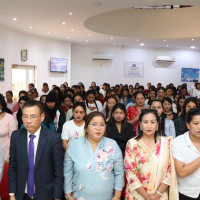
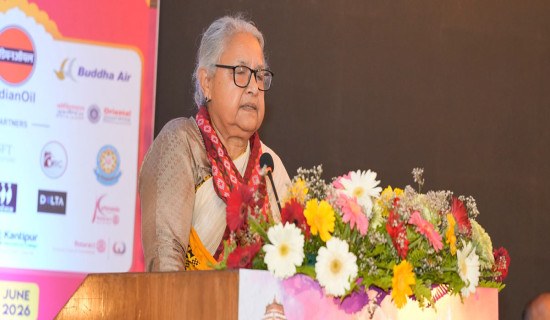
Hearing from the who’s who of the industry, like government ministers and relevant officials, including the captains of the industry, experts of repute and academicians par excellence, during the 27th anniversary celebrations of the Nepal Tourism Board at Bhrikuti Mandap in Kathmandu was indeed enlightening. Getting to meet past colleagues and members of the diplomatic community was a bonanza in itself.
As a starter, though, this sapien wishes not to delve into the main course—long and intense academic exhortations—as he likes the dessert far more. Nonetheless, space permitting, he will deal with those thought-provoking materials, which can be important raw materials for policymaking, some other time. Long speeches, great thoughts and incisive progress reports are indeed welcome in an argumentative society like ours, but visuals are far more effective (methinks) in this day and age of instant gratification.
A cultural dance offering glimpses of ethnic dresses and musical heritages of all seven provinces was indeed mesmerising, leaving the audience craving for more. The organisers and the artists from the National Theatre deserve kudos for a great performance. Additionally, glimpses of Nepal’s natural and archaeological wonders towards the weekend were refreshing and invigorating, especially for those badly in need of downtime on the eve of the year 2026.
Yet, should such platforms be used to pile pressure on higher authorities as part of collective bargaining, bring to the fore discords within an entity tasked with projecting Nepal as an ideal tourist destination worldwide and issue directives to subordinates? There’s a time and place for everything, even in a society where almost every member thinks they have rights only and hardly any obligations, right? Who knows this better than Nepal’s tourism fraternity? Then came big celebrations marking the 58th anniversary of the Nepal Association of Tour and Travel Agents.
In a fitting tribute to Ganesh, the deity tasked with removing obstacles and ensuring a smooth completion of tasks, artists from the FCH group clad in traditional attire performed a dance, touching hearts and minds after the lighting of our traditional lamp (diyo), marking the auspicious start of an important event.
As speakers put it at the above-mentioned events, global tourism is at a crossroads, and our industry is not in an enviable position. Notably, though, Nepali tourism has proved its resilience in trying times such as the decade-long war, the Gorkha earthquake of 2015 and the Covid-19 pandemic, having brought in around 1.2 million tourists in 2025 despite a violent, youth-led protest of September 8-9. Still, the contribution of the tourism industry to our GDP remains measly (at 6.7 per cent according to some estimates), even as our two neighbours continue to enjoy an upswing in their respective tourism industries.
What should our unique selling points (USPs) be as we move ahead from the crossroads? An affordable destination for all and sundry? An international picnic spot of sorts where a guest can even visit environmentally sensitive and exotic areas with a very limited carrying capacity by paying a nominal fee?
A place where the intrepid backpacker can munch on locally made doughnuts on the roadside with a cup of tea, along with some local chaps? A destination where one can climb down the world’s tallest peak and other majestic peaks from a specially designed helicopter? A country where the guest can go anywhere with no restrictions whatsoever, given that guests are ‘gods’?
A classy destination for the rich and the famous that provides them the opportunity of a lifetime to literally burn their millions? Or a destination that offers diverse packages based on varying spending capacities of tourists, starting from a threshold?
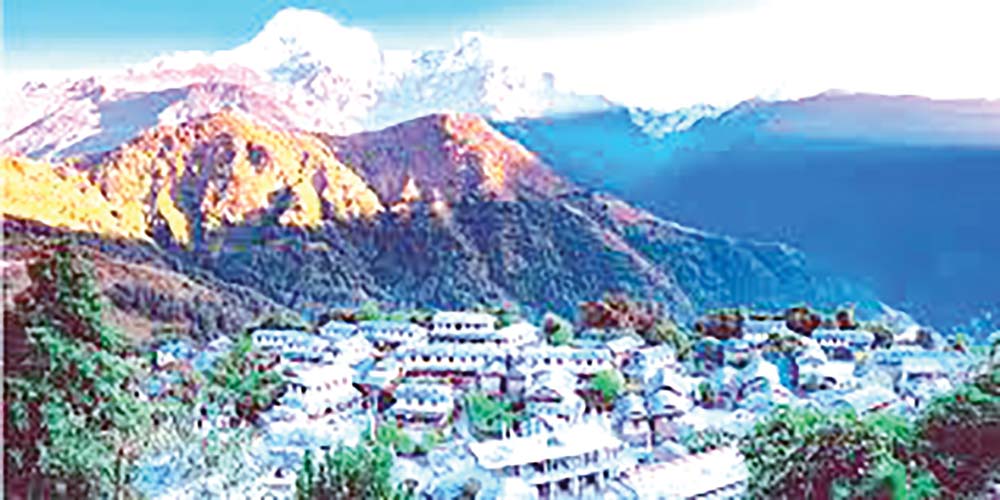
Incidentally, before attending the above-mentioned events, this pensmith came across a video where a tourist was complaining about the road, hydels and other poorly planned modern infrastructure in the Annapurna region acting as a big turnoff for backpackers like him.
Equally noteworthy is a response from the owner of a travel and tour agency on the sidelines of the NATTA event in response to a query regarding the state of the business. The business has not really taken off since the Covid-19 times.
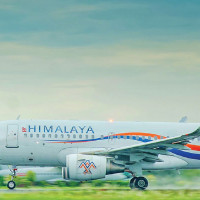
A limited fleet and a very limited reach of the national flag carrier, thanks also to the European Union’s act of putting Nepal on its aviation safety blacklist for more than a decade, is a pointer to an untapped yet vast potential of Nepal’s tourism industry. Like any other industry worth its name, Nepali tourism cannot remain at a crossroads till the cows come home.
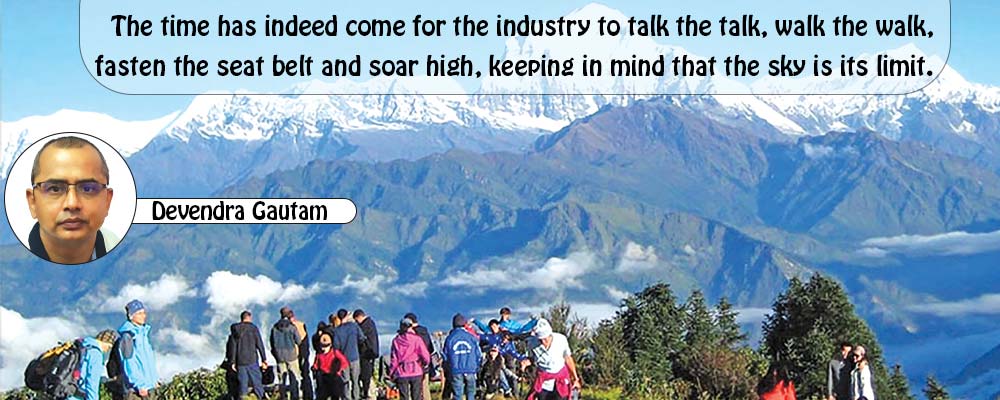
The time has indeed come for the industry to talk the talk, walk the walk, fasten the seat belt and soar high, keeping in mind that the sky is its limit.
(The author is a freelancer.)
-original-thumb.jpg)

-original-thumb.jpg)
-original-thumb.jpg)