- Sunday, 3 May 2026

Over half a million saplings distributed in Banke
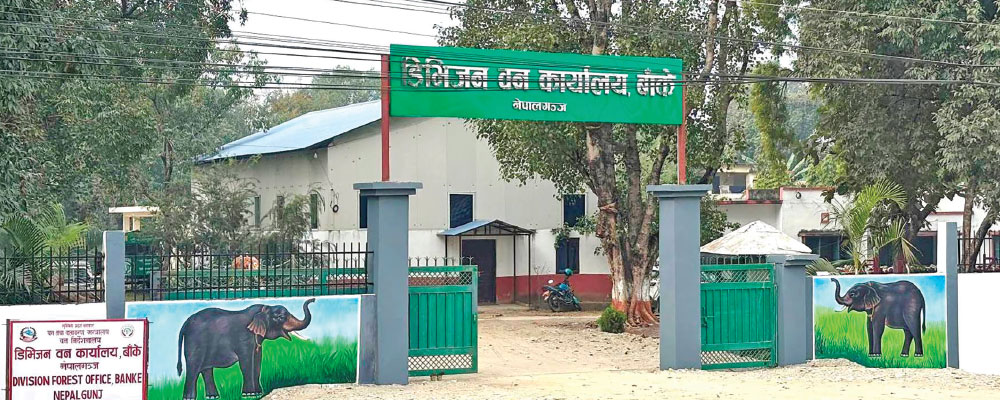

By Siraj Khan,Nepalgunj, Jan.18: The practice of planting trees on private land in Banke has increased in recent years.
Along with private land, saplings are also being planted in community forests, along roadsides, at religious sites and in public spaces, according to the Division Forest Office, Banke.
Senior Forest Officer Sushil Subedi of the Planning Section at the Division Forest Office said that 513,000 saplings of 30 different species were distributed across the district in the last fiscal year 2024/25. During the same period, the office grew a total of 561,000 saplings.
Of the saplings distributed, around 400,000 were one-year-old species, while 134,000 were multi-year species, Subedi said.
He added that the saplings were distributed to expand greenery, improve the environment and promote income generation on farmers’ private land, in community forests, along roadsides, at religious sites and in public areas.
“Janaki Rural Municipality has no forest area, and forest cover is also limited in Khajura and Baijanath. In such a situation, the demand for firewood, timber and greenery has to be met by planting trees on private and public land,” Subedi said.
According to the Division Forest Office, farmers are planting trees on private farmland mainly to obtain quick returns, meet household needs and generate income through sales. The office said farmers in Banke are increasingly attracted to fast-growing species, which has helped strengthen the rural economy.
Among the one-year-old saplings distributed in the district, demand is highest for teak, eucalyptus and khair. Among multi-year species, sandalwood, jacaranda, gulmohar, juniper and jamun are in higher demand. Farmers particularly prefer fast-growing species such as teak and eucalyptus.
The demand for trees planted on private farmland has increased in areas around Nepalgunj Sub-metropolitan City, Janaki Rural Municipality and Kohalpur Municipality due to higher consumption of timber and firewood by veneer, plywood, brick and herbal processing industries.
At the same time, the Division Forest Office said priority is being given to the production and plantation of native species such as sal, mahua, khair and sissoo for natural forest restoration and biodiversity conservation.
According to the office, saplings are being distributed to various local levels through nurseries in Kohalpur, Mehanmanpur, Agaiya, Shamsherganj, Narainapur and the central nursery.
With a target of producing more than 600,000 saplings this year, work such as filling polybags with soil, bed management, nursery maintenance and improving sapling quality is being carried out at eight nurseries across the district.