- Saturday, 6 June 2026

Development of sericulture, silk industry stressed

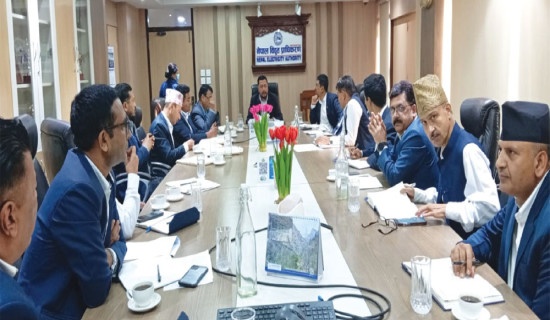
Kathmandu, Jan 10: Minister for Agriculture and Livestock Development, Dr Madan Prasad Pariyar, has stated that the promotion of silk-based industries can contribute significantly to increasing rural income and creating employment opportunities.
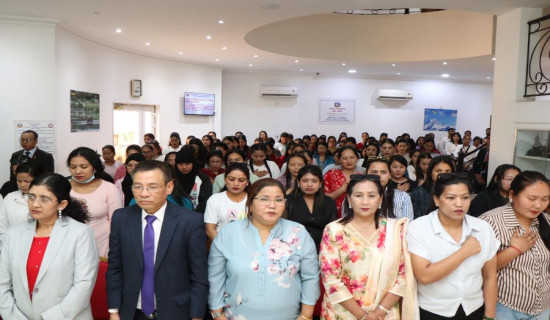
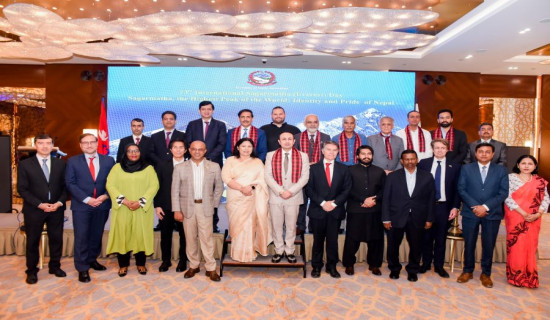
Speaking at the National Silk Conference, jointly organized by the Handloom Fabrics Makers of Nepal and the Silk Development Centre here today, the Minister expressed confidence that silk farming and sericulture will play a vital role in developing skills and entrepreneurship among youth, reducing imports, promoting exports, and supporting the green economy through climate change adaptation. He also highlighted the high potential of silk-based industries to boost the national economy and accelerate economic prosperity.
“The future of the silk industry depends on clear allocation of roles and responsibilities among the three-tier government, a reliable and sustainable partnership with the private sector, strengthening of institutions such as the Silk Development Centre, and effective coordination and collaboration among all stakeholders,” the Minister added.
Former Minister Ananda Prasad Pokhrel said, “Nepal remains a national agricultural museum due to its climate, and local productions should be promoted by connecting them to tourism. It is urgent for the government to give special attention to local products such as timur (Nepali pepper) and kimbu (mulberry) to support citizens’ income-generation.”
Handloom Fabrics Makers of Nepal Chair Roshan Kumar Pokharel stated, “Silk is not merely a fabric; it embodies history, culture, livelihoods, and the future. For several years, silk has provided employment for farmers, promoted skills, and brought recognition to the nation, contributing both beauty and trade. This is not solely a concern for farmers; it also requires the attention of the government and policymakers.”
Deputy Director of the Department of Agriculture, Rajendra Koirala, said that silk farming has been declining over the past 25 years and echoed the need for support from all sides to revive it.
Silk Association Nepal Chair Shankar Pandeya highlighted that global demand for silk is rising and urged the government to give special consideration to its production. Non-Resident Nepali Association President Dr Badri KC also said that silk occupies a significant position in the global market.
The conference aims to bring together the government, private sector, banks and financial institutions, investors, non-resident Nepalis, development partners, farmers, cooperatives, entrepreneurs, and exporters to discuss and strategize on reviving the silk industry as a strategic, high-value, and sustainable national industry, and to implement a 10-year Nepal Silk Vision (2026–2035).
According to the Handloom Fabrics, the silk industry could generate economic value of up to Rs. 500 billion annually if there is integrated development and promotion of mulberry farming, silkworm farming across approximately 22,000 hectares, spinning, weaving, and garment production.
The Speakers added that the silk industry is at a crisis due to the absence of an integrated value chain, lack of policy priorities, limited access to finance and insurance, inadequate technology and skills, and weak market and export mechanisms.
Discussions at the conference will focus on promoting sericulture and silkworm farming through a cluster-based approach, establishing special financial, trade, and insurance mechanisms, technology transfer and skill development, integrated “Nepal Silk Branding,” and enhancing market access. (RSS)