- Saturday, 6 June 2026

Karnali finalises policy on Raute
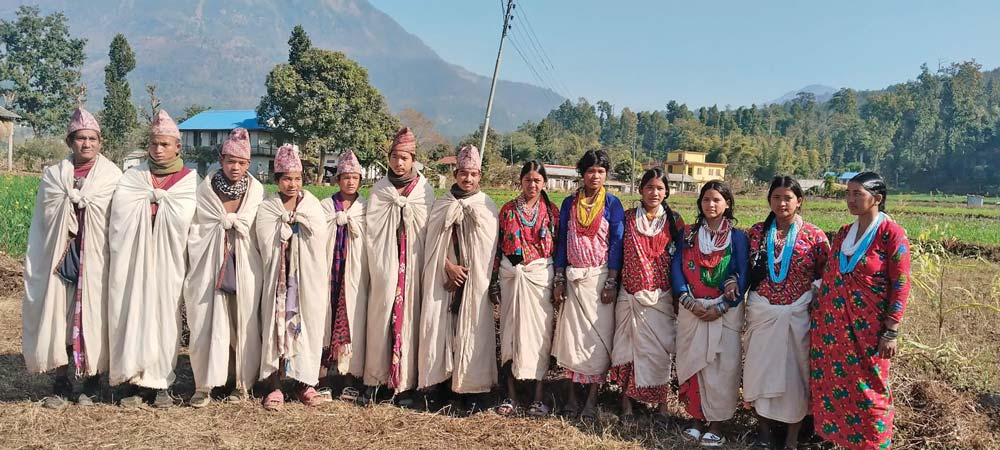
Raute youths living in Lamana, Lekbesi Municipality-5, Surkhet. Photo: Lalit Basel
By Lalit Basel
Surkhet, Jan. 11: The Karnali provincial government has prepared a Raute Policy to study, uplift, protect and support the development of the highly endangered Raute community.
The Raute community has been leading a nomadic life in the forests of the hilly districts of Karnali Province.
The policy, prepared by the Ministry of Social Development, has reached its final stage and has now been submitted to the Office of the Chief Minister and Council of Ministers.
Ghanashyam Bhandari, Minister for Social Development of Karnali Province, said the provincial government has been working for nearly a decade to understand their way of life and improve their living conditions while helping them gradually integrate into society.
A task force formed by the ministry prepared the policy, which will be implemented after completing the remaining formal procedures, he said.
According to Minister Bhandari, the Raute Policy is an important document that aims to protect the community while preserving its cultural heritage.
The policy gives priority to establishing a “Raute Corridor”. Based on data from the past 10 years on where the Raute have travelled and stayed, areas most frequently used by the community have been identified.
Studies showed that the Raute mostly live in Surkhet, Achham, Dailekh and Jajarkot districts, while they had earlier travelled as far as Doti and Dang. These districts have been included in the proposed Raute Corridor.
The policy also covers the Raute language, traditional dress, skills and security. It recognises their craftsmanship as exemplary and includes provisions to market products made by the Raute. Their traditional attire will also be preserved in museums.
Minister Bhandari said the policy, now in the final stage, will contribute significantly to the overall skill development, security, upliftment and conservation of the Raute community.
Preparations for citizenship distribution
Meanwhile, preliminary work has begun to provide citizenship certificates to members of the Raute community. Gurans Rural Municipality in Dailekh, which has already issued identity cards recognising the Raute as permanent residents, has started preparations for citizenship distribution.
Rural municipality chairperson Top Bahadur BC said the District Administration Office in Dailekh had earlier initiated the process, but it was halted as a Cabinet decision is required.
He urged the Ministry of Social Development to take the lead, stating that citizenship would help register the Raute formally and ensure access to services and protection.
As the Raute population is declining, BC said citizenship is necessary to register them and provide state services and protection. However, the Raute community has so far been reluctant to accept citizenship, maintaining that they prefer a forest-based, nomadic life without permanent homes or formal education.