- Sunday, 24 May 2026

Tanahun hosts 6th Indigenous Nationalities Cultural Festival
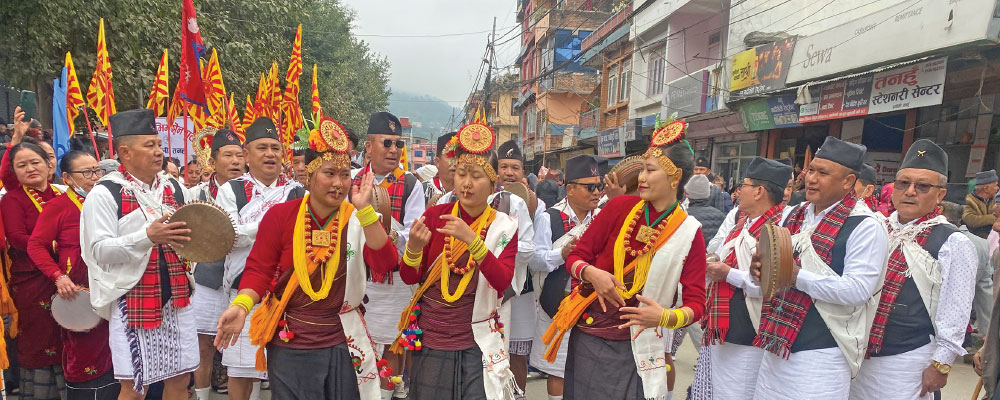

By Amar Raj Naharki,Tanahun, Jan. 10: A shared cultural festival of more than 13 ethnic communities has begun in Damauli, the district headquarters of Tanahun, on Friday.
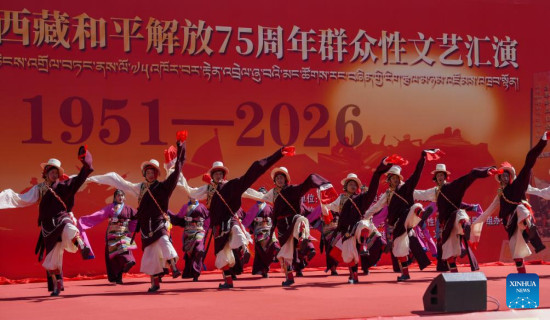
On the occasion of the 6th Tanahun Indigenous Nationalities Cultural Festival, more than 151 cultural groups presented parades and dances reflecting their unique identities.
Organised by the District Coordination Council of the Nepal Federation of Indigenous Nationalities, Tanahun, the festival started on Thursday at the open ground of Vyas Municipality-3 and has transformed Damauli into a vibrant cultural museum.
The festival was inaugurated by Gandaki Province’s Minister for Economic Affairs, Dr. Takaraj Gurung. A grand cultural procession and exhibition featuring the enthusiastic participation of 151 groups from over 13 ethnic communities has been the main attraction of the festival.
Communities such as Dura, Kusunda, Bote, Darai, Chepang, Magar, Gurung, Newar, Kumal, Tamang, Bhujel, and Brahmin-Chhetri performed their traditional hymns, chudka songs, and dances on a single stage.
According to festival spokesperson Jivan Gurung, the Vyas Nagar Tamu Sudhar Aama Samuha of Vyas Municipality-2 secured first place and received Rs 10,000 in cash. The Magar Sudhar Samaj of Vyas Municipality-1 won second place with Rs. 7,500, Magar Guthhi Samiti came third with Rs. 5,000, and Chhangeli Newa Khala and Janabhawana Newa Misa Pucha received consolation prizes with Rs. 2,500 each. All 151 participating groups were also provided Rs. 1,000 each as encouragement, the organisers said.
The festival venue not only showcased dances and music but also exhibits traditional mud houses and old agricultural tools reflecting ancestral lifestyles.
Traditional model houses of the Magar, Darai, and Kumal communities have especially attracted visitors. According to Captain Sombahadur Thapa, coordinator of the Cultural House Construction Committee, these houses, built from mud, bamboo, and wood, contain decades-old household items, including theki, ghyampa, and farming tools.
Sanam Tamang, coordinator of the festival’s main organising committee, said the main objective of the festival is not merely entertainment but the preservation of identity and the transmission of ancestral culture to the younger generation.
Similarly, co-coordinator Siddhanta Garja Magar informed that the income generated from the festival will be used to build a living cultural museum of indigenous nationalities.
The festival will run until January 19 and will feature daily cultural parades, handicrafts, and traditional costumes from various communities.
-original-thumb.jpg)