- Sunday, 3 May 2026

Poll Uncertainty Ends

With the submission of closed lists of the candidates contesting the House of Representatives (HoR) elections under the proportionate representation (PR) category by all political parties, all speculations about the polls have ended. All major political parties, including those that were opposing the polls until the other day, have submitted the closed lists on Sunday, Monday, throughout the night and even Tuesday morning. Altogether 64 parties submitted the closed lists, forwarding over the names of 3,400 candidates in total. The EC has allotted two days — Sunday and Monday — to the political parties to submit their closed lists, and they completed the tasks by Tuesday morning, with the Nepali Congress submitting the lists last. These parties will submit their First-Past-the-Post candidates on January 20, next year. Now that the process to elect 110 of 275 HoR members is already underway, the entire country is now gripped by election fervour.
Just hours before the deadline to submit the PR list was to expire, the parties forged alliances and unity. Rabi Lamichhane's Rastriya Swatantra Party, Kathmandu Metropolitan City's Mayor Balendra Shah and Ujyalo Nepal Party's patron Kulman Ghising inked a deal to unite their parties at the eleventh hour, creating a sensation in the political spectrum. Reform of parties was one of the demands of Gen Z movement of September 8 and 9, but the aged leaders refused that and now with the unity of three popular figures, they are likely to face tough challenges, especially in urban centres, as young voters are fed up with the established parties. Not only the three but also the Madhes-based parties have unified to contest the elections scheduled for March 5, 2026.These all indicate that the polls will be held in time and they will also be interesting to watch.
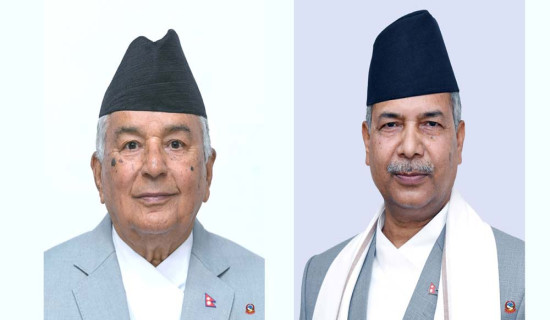
These developments of the past few days have clearly showed the interim government formed on the foundation of the Gen Z movement will succeed in its mission to hold the polls in fair, free and fearless atmosphere and hand over power to elected representatives. Prime Minister Sushila Karki and the ministers of her Cabinet worked hard over the months to create election-friendly environment while President Paudel facilitated the initial meetings between the PM Karki and major political parties as well as the Gen Z groups.
The President hosted the meeting at a time when Prime Minister Karki herself was hesitant to meet with heads of the major parties and was critical of them in public. At the same time, leaders of these parties expressed concerns about the government's ability to ensure security, especially after hundreds of inmates had escaped from jail and weapons had been looted and were still unaccounted for. Amid these uncertainties, Prime Minister Karki shifted gears and began working more actively to create an election-friendly environment.
The government formed a dialogue committee consisting of Minister for Law, Justice & Parliamentary Affairs Anil Kumar Sinha, Minister of Information and Communication Technology Jagdish Kharel and Prime Minister's Chief Advisor Ajay Bhadra Khanal. The committee visited the political party offices that were damaged during the September 9 protests, while Minister Kharel reached the residences of top leaders and invited them for a meeting with the PM. Now that the parties have engaged in the election fray, it is the duty of the government and its agencies to maintain the present environment with sound law and order in place so that all voters visit the polling stations without any iota of fear.

-square-thumb.jpg)