- Sunday, 3 May 2026

Momentous Icebreak


As the country braces for general elections in March next year, political consultations among key stakeholders have gained momentum. In a multiparty system, political parties are key players in shaping the nation's discourse and direction. Political parties are a product of industrial society and their relevance relies on their ability to absorb and address the societal challenges and dynamisms. But when the parties fail to live up to their original mission and ideals, new forces appear on the scene to meaningfully represent the people. Nepal now stands at this juncture when the old parties are losing their credibility and struggling to find their feet in the changed context created by the Gen-Z movement of September 8 and 9.
The Gen-Z revolt has established youths as a decisive component of Nepal's political structure. The agenda and demands of the movement have received legitimacy and acceptance but challenges lie in justifying them in practical terms. The upcoming polls are seen as a historic opportunity to bring Gen-Zers into the mainstream, thereby restoring good governance, transparency and accountability. The present government formed on the back of Gen-Z movement is sparing no effort to conduct the polls fairly and peacefully. It is committed to making the polls inclusive and wants them to be participated in by all legitimate forces in the country. The major political parties, such Nepali Congress and CPN-UML, are obviously on the defensive position in the aftermath of the Gen-Z revolt but the government wants to muster the support of all – old and new – parties so that the election becomes a true democratic exercise and people from all strata take ownership of it.
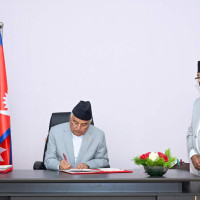
Bearing this fact in mind, President Ramchandra Paudel on Tuesday hosted a meeting between Prime Minister Sushila Karki and the top leaders of three parties – Nepali Congress president Sher Bahadur Deuba, UML chairman KP Sharma Oli and Nepali Communist Party (NCP) coordinator Pushpa Kamal Dahal 'Prachanda' – to discuss the upcoming elections to the House of Representatives. The meeting broke the ice between Prime Minister Karki and the top leaders, particularly Deuba and Oli. Prime Minister Karki had not met with the two since assuming office. The NC and UML have been ambivalent with regard to the polls. On one hand, they are internally carrying out preparations for the polls, on the other, they have moved to the Supreme Court to reinstate the HoR dissolved in the wake of the Gen-Z uprising. The NC has formally announced its participation in the elections, but the ULM is still raising concerns about the security situation for the polls and calling for the restoration of parliament.
Speaking at the meeting, President Paudel noted that the election was the most appropriate solution to the current complex situation and it was their collective responsibility to ensure the success of the election. According to the news report of this daily, the government and the major political parties developed an understanding to make the elections successful. The top leaders are expected to meet at the PM Office next time. The parley involving the President, the Prime Minister and top leaders will allay unnecessary suspicions regarding the elections. The major political parties, which were kicked out of the government by the Gen-Z movement, have no option but to join the election fray to renew their mandate. The people are the ultimate source of sovereignty and the hesitation to go to the people will only backfire in the long run. So all parties must participate in the elections and receive a fresh mandate to govern the country.