- Monday, 25 May 2026

Informal sector workers demand fair wage
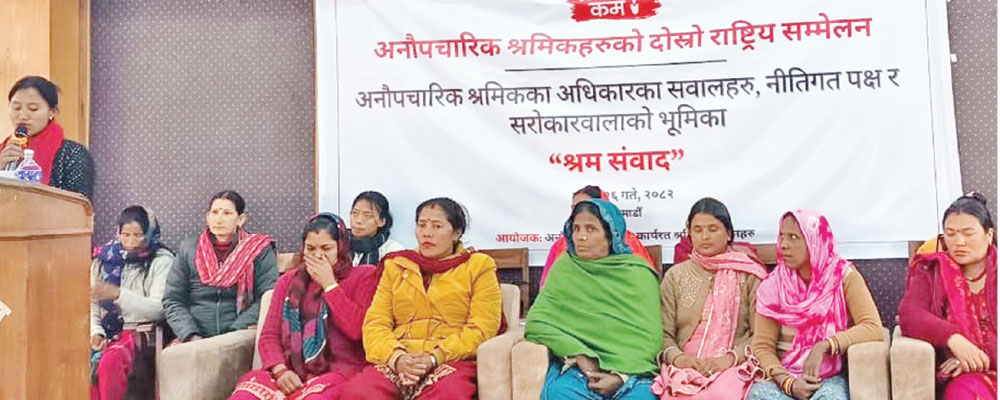
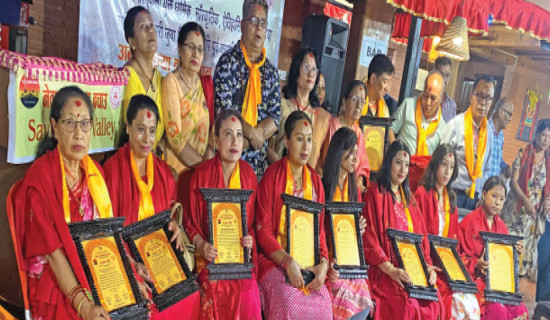
Photo: TRN Informal sector women workers during a discussion in Kathmandu.

By A Staff Reporter,Kathmandu, Dec. 15: Workers in the informal sector have reported being deprived even of basic service facilities.
Speaking at a press conference in Kathmandu, they highlighted that they face unfair treatment in the course of work and often do not receive even the minimum wage.
Representatives from 13 different districts jointly presented a seven-point memorandum, drawing the government’s attention to the problems they face. According to Nepal’s Labour Force Survey 2017/2018, 84.6 per cent of total employment is in the informal sector.
Although women constitute 90 per cent of this workforce, they face wage discrimination, violence, and unsafe working conditions, according to the workers.
Informal sector workers complained that, recently, in Bardiya alone, the wages of six hundred workers were defrauded. They demanded that the government ensure insurance for injuries sustained during work, effective monitoring by relevant authorities in cases of exploitation, and social security arrangements based on worker contributions.
They also demanded that the local governments must ensure mandatory registration of all types of informal sector workers, implement minimum and fair wages as per the Labour Act, 2074, and provide easy access to safe workplaces and insurance facilities.
Since women working in the informal sector are more vulnerable to sexual harassment, exploitation, and discrimination, they have urged relevant authorities to develop immediate and effective safety measures and monitoring mechanisms.
To create a worker-friendly environment, they have also demanded the mandatory provision of basic facilities such as breastfeeding rooms, drinking water, toilets, and childcare centers.
“We want to work in a safe, respected, and exploitation-free environment,” Sita Parki from Doti said. Additionally, the government has been urged to include informal workers in social security schemes based on their contributions and guarantee sustainable employment.
With upcoming elections in mind, they demanded that political parties include informal sector workers’ issues in their manifestos and prioritise them on their agendas.
They also stated that when local governments neglect their problems, it creates additional challenges for informal sector workers.