- Tuesday, 9 June 2026

Should Board Of Trustees Run TU ?

This year Tribhuvan University Senate meeting has received accolades from different academic quarters. As the Senate is the highest governing body, having been endowed with both academic and administrative authority, its meetings and deliberations in it carries larger significance. The TU senate is different from such apex bodies of the peer universities, especially in India and many other countries, because of the composition and authority it is entrusted with. The TU senate comprises the prime minister (chancellor), education minister (pro-chancellor), vice chancellor, rectors and registrar, deans and directors and professors, government and academic nominees, making it a powerful body mandated to take administrative, financial, and policy-related decisions.
When the senate meeting deliberates effectively and takes decisions on academic and budgetary policy matters in concurrence of all the office bearers concerned and stakeholders involved, the university functions smoothly according to its calendar of operation. However, the TU senate meetings held during the previous years had not been a smooth sailing affair. The prime minister used to be reportedly occupied with all and sundry state affairs, which left little space and time for him or her to participate and share time in the university senate meetings. It was also the case during previous years that the prime minister was not responsive enough and forthcoming to cooperate with the university agenda if the vice chancellor was not the person of his or her favour.
Reforms
As a result, the senate meeting, once scheduled, had to be prorogued and rescheduled time and again. However, in this year’s senate meeting, Prime Minister Shushila Karki as chancellor and Minister of Education, Science and technology Mahabir Pun as pro-chancellor not only participated in the senate deliberations as scheduled but also emphasised on the need to make both structural and functional reforms of the apex seat of learning, Prime minster Sushila Karki stated that it was not appropriate for the head
of the government to hold on to the post of chancellor. It tends, according to her, to compromise on the independence and autonomy of academic institutions like TU.
She mentioned further that she was not even aware of the exact number of universities where she held the post of chancellor. She is reported to have remarked that a prime minister should not be conferred with academic role and responsibilities like chancellorship. It is, therefore, necessary that eminent academic persons should hold such positions instead of the Prime Minister. There are a total of 19 universities in the country, and except for the Madan Bhandari University of Science and Technology and Nepal University, all other universities keep the prime minister as the chancellor and the education minister as pro-chancellor.
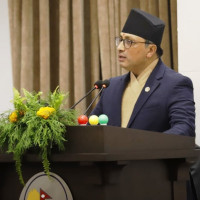
Education Minister Mahabir Pun seems effortful to minimise the meddling of politics in the university‘s academic ecosystem. And to make it a reality, the minister is insisting on changing the law to introduce the concept of a board of trustees to replace the existing arrangement, having the prime minister and education minister at the top of decision-making of the academic and administrative affairs in the higher seat of learning. However, it is very difficult to say if the board of trustees' provision would be effective enough to run the university in a very autonomous and independent way. In the context like ours where party politics has entrenched deeply in all walks of social life, there are very few academic persons meeting such criteria as academic excellence, objectivity and neutrality.
Moreover, as almost all universities are state-funded, coordination with the government is very important to receive the continued resources and logistical support for running them. The state of the university is so tangled in partisan politics that student unions and unionised teachers do carry out obstructive and disruptive activities to vitiate the academic environment. However, no institutional reform has been initiated to contain the party-guided student unions and teachers from carrying out the actions that disrupt academic activities. The internal academic control, discipline, and integrity have been severely compromised.
Even the minimum rigour and sanctity of exams have not been maintained. The TU Service Commission's image has taken a beating due to widely reported compromise on the recruitment integrity. Similarly, TU's scheduled exams have also met with controversy for failing to keep a reasonable standard of care. Though the incumbent Vice Chancellor may not be a politically identified person, his access to levers of political power and cozying up with the previous government executives had reportedly been instrumental in his appointment to the position he is holding now.
Pressing need
Moreover, the university teachers seem not very committed to improving the academic environment, as indicated by their indulgence in extra-academic actions. A scrutiny of the incidents of strikes and stoppage of academic actions executed by teachers in the past shows that the demands put forth by teachers have no relation to reforming the academic environment and management of the university. Admit it or not, whichever party holds the reins of the government, the partisan-oriented activities of both teachers and students are not discouraged.
There is a pressing need to let the academic institutions like TU exercise more autonomy and make it accountable to its performance. Public intellectuals and educationists articulate the need to separate academics and politics and protect the sanctity and integrity of the academic institutions. The trade unionism that has made inroads into the realm of both teachers and students should be reined in and properly regulated. Unless this is done in an earnest manner, our public institution of learning will rot in no time.
(The author is presently associated with Policy Research Institute (PRI) as a senior research fellow. rijalmukti@gmail.com)