- Sunday, 3 May 2026

Moving On Path Of Violence-free Nepal

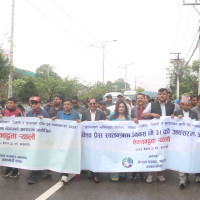
10th December, the Human Rights Day, marks the last day of the 16 Days of Activism against Gender-Based Violence observed all over the world by activists, policymakers and people from all walks of life. This campaign has been observed since 1991 to demonstrate a commitment to ending violations of girls’ and women’s human rights. It commences on 25th November, which is observed as the International Day for the Elimination of Violence Against Women. Since the first Women’s Global Leadership Institute in 1991, it has been observed every year.
As elections are around the corner in Nepal, the prospective candidates must be committed to leading the country towards becoming violence-free. Different political parties preparing to contest the election are now working on their election mandates and selecting candidates. This election is a historic one in Nepal. It is being held because a movement in September 2025 by Gen Z youth was able to oust the then government led by KP Sharma Oli overnight. The revolution was rooted in the fact that Nepali people, especially the youth, were fed up with the escalating rate of corruption, where families of political party leaders flaunted their wealth while the majority of the youth lacked access to proper education and livelihood opportunities.
Election
The same Gen Z groups gave a mandate to former Chief Justice Sushila Karki, through a conference on the Discord app, to form a government, conduct elections, and investigate corruption cases that had been swept under the carpet. However, Prime Minister Sushila Karky has been facing many challenges, including a request by some Gen Zers who made her the PM to quit! Forming a government without political party representation was a herculean task. However, Prime Minister Karki and her mainly technocrat-led ministries are doing their best to run the country and ensure the elections are held in March 2026 as announced.
PM Karki has been requesting all mainstream political parties to contest the elections. The Election Commission of Nepal says it can hold the elections, and the government needs to ensure a peaceful and safe voting environment. The latest news is that 114 political parties with 107 election symbols will be contesting the upcoming elections for the House of Representatives. Altogether 102 political parties will contest with single election symbols, while twelve political parties will contest in five different groups with common symbols.
The excitement to form new parties and enter parliament can be seen as a positive sign. However, the mushrooming of parties and the contesting of 114 political parties might lead to another hung parliament, raising the question of whether Nepal will have a stable five-year period to establish peace, security and move towards development. In the past few days, there have been a series of arrests and cases exposed related to corruption amounting to billions of Nepali rupees. Former ministers, secretaries and government officers have been named as the guilty, and cases are being filed against them.
Therefore, the situation in the country is far from stable or peaceful. Before the March elections take place, a lot needs to be put in order. Also, as the voting sheets will have so many symbols, it will be difficult for people to cast their votes for their desired candidates. Therefore, voter education is required. To clean all forms of corruption — social, economic, traditional, cultural or political — it is important to have honest and committed people as lawmakers. The challenge today is for all political parties contesting the election to come together and field candidates who are educated, from a younger generation, and experienced enough to help the country progress towards development and economic growth. The candidates must have a track record of honesty and of not being involved in any corruption scandals.
Nepal has been part of several international treaties and campaigns to end violence and provide equal opportunities for all its population, no matter what gender, caste, class or community they belong to. Unfortunately, institutionalising democracy and establishing human rights is still a struggle in this country, leading to one of the worst uprisings in September 2025, where 75 innocent people were killed. To end violence of any sort—gender-based violence, criminal activities or massive financial corruption—only those who have never engaged in such actions can truly address injustice. Therefore, the need today is to field candidates who have demonstrated these qualities in their past work and who can serve Nepal better than previous representatives.
Stability
It is also important for Nepali voters to decide what they want to achieve from this election. It will be nearly impossible to read the election manifestos of all 114 political parties registered to contest. However, it is both important and possible for people to check the candidates who will be fielded. It is also important to ensure that at least one political party with credibility in ending corruption is given a simple, if not full, majority. The aim of electing the new government should be to ensure they run the full five-year term they are mandated. This will help the country move towards peace and stability.
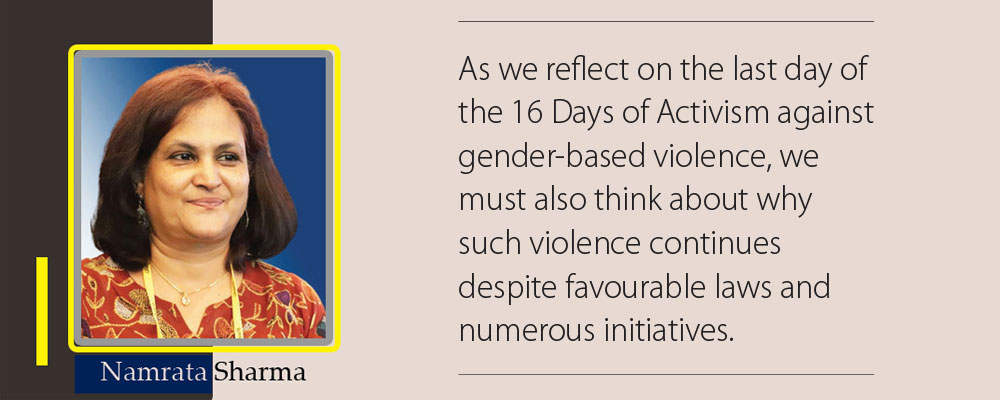
As we reflect on the last day of the 16 Days of Activism against gender-based violence, we must also think about why such violence continues despite favourable laws and numerous initiatives. It is mainly because lawmakers are more interested in their own petty needs than in serving the constituencies they claim to represent. Voting for honest, experienced and educated youth to become the new representatives in Nepal’s parliament will be one step towards addressing this.
(Sharma is a senior journalist and women's rights advocate. namrata1964@yahoo.com X handle: @NamrataSharmaP)