- Friday, 5 June 2026

Public hearings planned for long-stalled West Seti hydro project
By Pushkar Bhandari
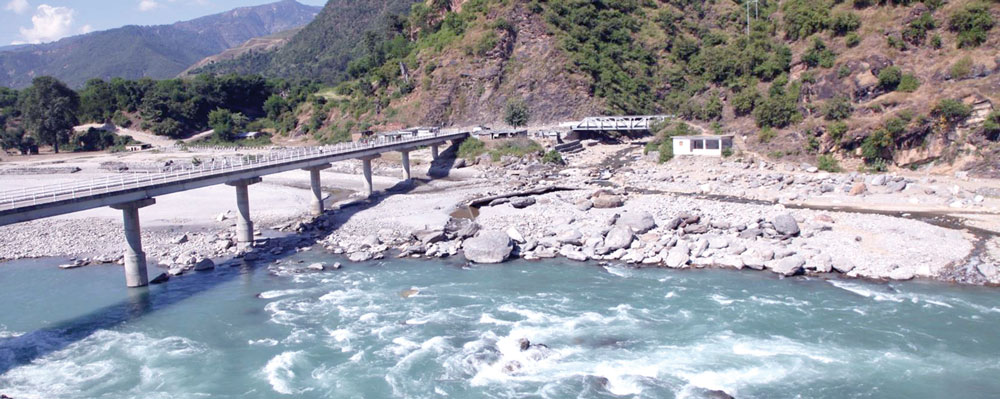
Dadheldhura, Oct. 31: Public hearings are planned to prepare the Environmental Impact Assessment (EIA) report for the long-awaited 800 MW West Seti Hydroelectricity Project, which has been a dream for the past four decades. The report will be shared with local residents of the affected areas for feedback. The Indian company NHPC Limited is conducting the public hearing in several villages in the affected areas of Bajhang, Doti, Dadeldhura, and Baitadi, as part of the preparation of the EIA report.
The project will impact the villages of Nawadurga Rural Municipality Ward Nos. 4 and 5 in Dadeldhura, Sigas Rural Municipality Ward Nos. 5, 6, and 7 in Baitadi, Adarsha Rural Municipality Ward Nos. 3, 5, and 6, Sayal Rural Municipality Ward No. 1 in Doti, and Kedarsya Rural Municipality Ward Nos. 1 and 2, and Bithadchir Rural Municipality Ward No. 9 in Bajhang.
The proposed project covers a total of 16 wards across eight local units in Sudurpaschim Province - Bajhang, Baitadi, Doti, and Dadeldhura districts. The proposed dam will be located 550 meters downstream from the confluence of the Seti River and the Chamagad River, in Adarsha Rural Municipality-5, Doti, and Nawadurga Municipality-4, Dadeldhura.
The proposed dam will be 195 metres tall and 433 metres long, and will be built using concrete-faced rockfill technology. The full reservoir level will be at 865 metres above sea level, according to NHPC.
After the dam is built, its reservoir will extend around 29 km upstream, reaching beyond the Deura Bazar area. The hydroelectric power station will be located near Gopghat Bazaar in Doti. Water from the reservoir will be brought to the power station through an 8.78 km long, 10.5-metre diameter horseshoe-shaped tunnel.
Public hearings will take place from November 4-10 at various locations in the affected municipalities. The hearings aim to inform stakeholders and gather public opinions and suggestions regarding the possible physical, chemical, biological, economic, social, and cultural impacts of the project on the environment.
In September 2022, the project was handed over to NHPC following the cancellation of the agreement with China Three Gorges Corporation, which had been unable to make progress on the project.
The decision to award the project to NHPC followed several years of delays by both Three Gorges and SMEC, an Australian company, in completing the project.
Earlier, Three Gorges had withdrawn from the project even after rejecting the proposal to reduce its capacity from 750 MW to 620 MW during negotiations in September 2018. Nepal had also proposed to sign a Power Purchase Agreement (PPA) with Three Gorges in US dollars.
The company had cited geological issues, high elevation, and the difficulty of resettling affected people as the main reasons for backing out. Similarly, SMEC had also failed to make significant progress during its 17 years of involvement with the project.
In 2012, the project was handed over to Three Gorges, but after several delays, the government decided to study how the project could be made financially viable. The study recommended developing an SR-6 Project, a slightly smaller reservoir-based project, with an installed capacity of 450 MW, located just below the confluence of the Seti River and Budhiganga.
The SR-6 Project is located in Doti and Achham districts, near the access road of Dipayal-Gauguda rural road project. The project could potentially produce up to 652 MW of electricity, with a 207-metre-high dam.