- Tuesday, 5 May 2026

Measles outbreak fueled by distrust in public health
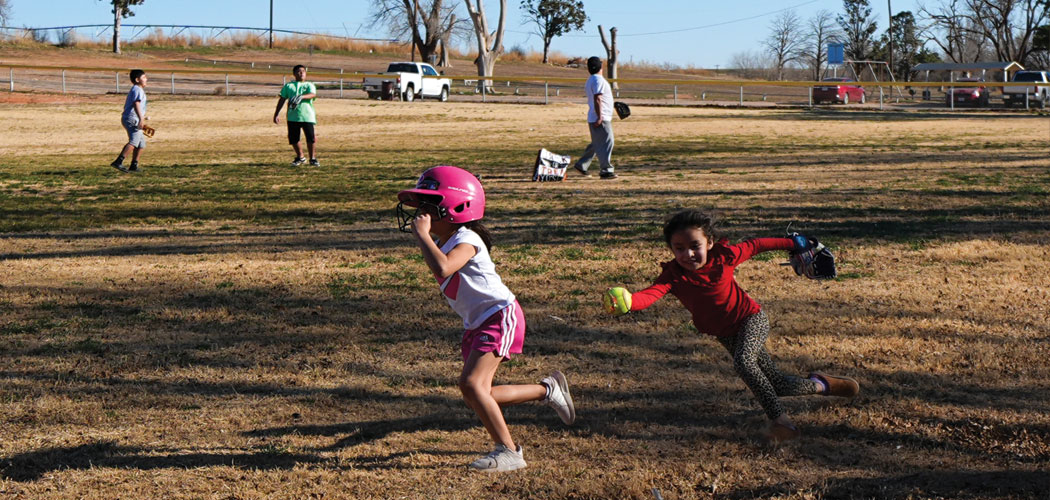
Photo: AP Layla Cortez, 6, right, tries to tag out Jaylee Cruz, 7, as they practice softball at Coleman Park in Brownfield, Texas.

Texas, Mar. 5: Measles had struck this West Texas town, sickening dozens of children, but at the Community Church of Seminole, more than 350 worshippers gathered for a Sunday service. Sitting elbow-to-elbow, they filled the pews, siblings in matching button-down shirts and dresses, little girls' hair tied neatly into pink bows.
Fathers shushed babbling toddlers as their wives snuck out to change infants' diapers.
A little girl in this mostly Mennonite congregation was among those who'd fallen ill with the highly contagious respiratory disease, senior pastor David Klassen said — but she's doing fine, and she happily played through her quarantine. He heard that at least two Mennonite schools shut down for a bit to disinfect.
What he hasn't heard: Any direct outreach from public health officials on what to do as the number of those sickened with measles has grown to 146 and a school-age child has died. And though Klassen is a trusted church and community leader, his congregants haven't asked about whether they should vaccinate their kids — and he wouldn't want to weigh in.
"With this measles situation, I can honestly just tell you we haven't taken any steps as a church," he said. "We did leave it up to the mothers."
As measles — a preventable disease the U.S. considered eliminated in 2000 — spreads through West Texas' rural expanse, Klassen is sticking to an approach on vaccines that is a key tenet for Mennonites. Family leaders are the top decision-making authority — not outside recommendations, certainly not government mandates.
Alongside measles in this region, where voters overwhelmingly supported President Donald Trump, there's another outbreak: one of misinformation about vaccines, distrust of local public health officials and fear of governmental authority overruling family autonomy. And on the national stage, Robert F. Kennedy Jr., the country's top health official and an anti-vaccine activist, dismissed the Texas outbreak as "not unusual."
"Do I trust all the vaccines? No," Klassen said. "And I get from (Kennedy) that he doesn't trust all the vaccines, either. And he is very well educated in that; I'm not."
In an opinion piece for Fox News Digital, Kennedy wrote about the value of the vaccine but stopped short of calling on families to get it, saying the decision is "a personal one." He urged parents to speak to their health care providers about options.
Vaccine skepticism has also been spurred by state lawmakers who this year filed more than a dozen bills that would strengthen or expand vaccine exemptions, which Texas already allows for "reasons of conscience, including a religious belief."
At hospitals in Lubbock, 80 miles to the north and on the front lines of the outbreak, babies with measles are struggling to breathe.
Dr. Summer Davies, a Texas Tech Physicians pediatrician, said she has treated about 10 of the outbreak's patients, most very young or teens. She said children have had to be intubated, including one younger than 6 months old. Others come in with such high fevers or severe sore throats that they refuse to eat or drink to the point of dehydration.(AP)
-square-thumb.jpg)