- Wednesday, 22 April 2026

Call to expedite efforts to build capacity of governments to reduce disaster risks
Kathmandu, Aug 13: The Disaster Risk Reduction and Management (DRRM) localization process should be expedited by engaging key stakeholders and including vulnerable and marginalized groups in disaster risk management.
At a program on ‘Localizing the Global Agenda for Disaster Risk Reduction’ organized by Democracy Media Network, stakeholders discussed plans to localize the DRRM framework. Nepal should intensify efforts to build the capacity of all levels of governments to reduce disaster risks and boost the initiatives to strengthen institutional arrangements for disaster risk reduction and management at local levels, they said.
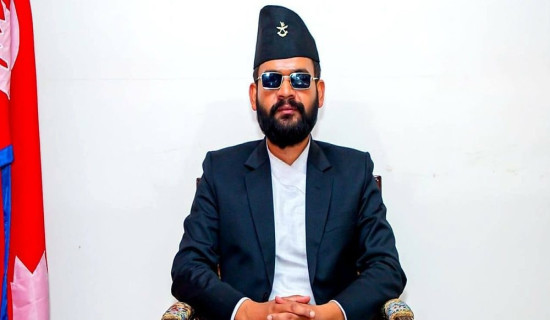
On the occasion, Chairperson of the Nepal Disaster Resilience Network (NDR Network) and former Vice Chair of the Lumbini Provincial Planning Commission, Dr Nahakul KC, highlighted the importance of empowering local governments to adopt appropriate policies and build capacities for risk reduction, mitigation, preparedness, and response in minimizing the impact of disasters.
Nepal's constitution has included disaster management as concurrent rights of three levels of governments. In this context, strengthening the capacity of local governments and other agencies is crucial to ensure that disaster mitigation plans are implemented in a timely manner, he said. "The focus of local governments should start with taking measures for anticipatory actions," he added.
"Anticipatory action should be seen as an initiative that systematically ensures appropriate actions and resources are in place to protect the lives and livelihoods of people living in potential hazard zones.” Harnessing technological advancement in mitigating potential risks of disasters is important, he mentioned. “There must be effective collaboration among federal, provincial and local governments in order to adopt effective technology for the anticipatory actions.”
Dr. KC further said that indigenous methods of mitigating disaster risks, if appropriate and effective, should also be promoted as sustainable measures. “We can blend modern and indigenous technologies to develop sustainable solutions for disaster risks,” he said.
Past disasters have shown that both natural and man-made disasters hit poor and marginalized communities the hardest," he said. "Thus, the government must prioritize the needs of these communities and involve them in the process of preparedness and policy formulation."
Speaking at the event, Chief Executive of Freedom Forum Nepal, Tara Nath Dahal, stressed that media and civil society groups must play a crucial role in supporting the government's disaster risk reduction efforts. “The media sector should monitor disaster initiatives and identify gaps,” he said, adding that frequent follow-ups on disaster-related stories can help hold governments accountable.
Other participants of the program highlighted the need to integrate mental health and well-being into the DRRM framework. “DRRM frameworks at the local government level must not overlook local power dynamics. They should prioritize women, children, and other marginalized communities in their policies and priorities,” they said.
Chairperson of Democracy Media Network, Siromani Dhungana, highlighted the importance of multi-stakeholder engagement in disaster risk reduction and the implementation of effective management plans. He said that Democracy Media Network is committed to working with partners from government, non-governmental organizations, development agencies, voluntary groups, community-based, and grassroots organizations to raise awareness of DRRM issues.
He also assured that the network would make efforts to support the engagement and protection of the most marginalized and vulnerable communities and individuals so that no one is left behind.(RSS)