- Tuesday, 9 June 2026

Counselling Quake Victims


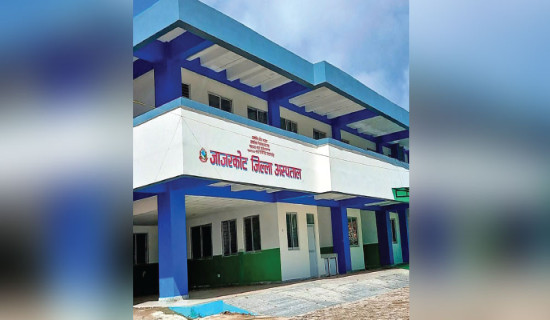
The WHO defines mental health as a state of mental well-being that enables people to cope with the stresses of life, realise their abilities, learn and work well, and contribute to their community. A basic human right, it underpins individual and collective abilities to make decisions, build relationships and shape the world we live in for socio-economic development. Among the factors that degrade mental health, traumatic experience is a major one. And a disaster – that not only leaves a trail of destruction but also kills people in a great number – can well be a source of trauma for the survivors. One such traumatic event has been the 6.4-magnitude Jajarkot earthquake that struck the districts of West Rukum and Jajarkot on the night of November 3, 2023, killing hundreds and injuring many more.
Seven months after the quake, reports documenting the worsening cases of depression among the survivors continue to make headlines. According to one such report carried by this daily the other day, a majority of locals from seven local levels in Jajarkot have remained depressed due to the lack of proper food, clothes and housing, as well as psycho-social counselling. In Bheri Municipality alone, the number of individuals exhibiting symptoms of depression stands at over 2,600. This is understandable, because those who have lost their loved ones to the quake may take years, if ever, to come to terms with the tragedy. The sufferings of the orphaned dependents, elderlies left with no one to take care of, expectant or new mothers, patients of severe medical conditions, among others, are also fathomless.
The good news, however, is that organisations – such as Centre for Mental Health and Counselling- Nepal – in coordination with the municipality are keeping depression patients on medication. But, by their own admission, they have fallen short in providing the much-needed counselling to them. A lack of sufficiently trained manpower and resources is cited as the reason. The sheer number of patients has also overwhelmed the organisations.
Psychiatrists unanimously agree that psychosocial counseling plays a crucial role in helping individuals and communities cope with disruption in the aftermath of natural disasters. Counseling provides emotional support, helps individuals process trauma and grief, and assist in developing coping mechanisms for the future. Without proper counselling, the deeply-embedded trauma can continue to manifest in the form of anxiety, nervousness, post-traumatic stress disorder (PTSD) and other conditions. So, it is imperative that counseling services are made available and accessible to the affected to promote healing. This is indispensable not only to equip survivors with necessary tools to effectively deal with the emotional shocks, but also to help them develop resilience to rebuild lives.
Through counseling, survivors can learn healthy coping mechanisms, stress management techniques, and strategies to overcome the challenges they may encounter on their path to recovery. This is also critical for the long-term recovery of affected individuals and a community as a whole. The fact that the survivors are still having to suffer mentally calls for the building of sustainable mental health infrastructure to ensure that necessary supports are readily available in the event of natural disasters, which have grown in frequency and intensity across the world. For this, it is crucial to invest in training local healthcare providers, teachers, and community leaders at the grassroots level.