- Wednesday, 3 June 2026

Budget Execution Challenges In Sports Sector

The Federal Government of Nepal has unveiled its budget for the fiscal year 2024/25, demonstrating a significant rise in sports funding compared to the preceding four fiscal years. The sports budget, which peaked at nearly Rs. 4 billion in 2019/20, experienced a downturn in the fiscal years 20/21, 21/22, 22/23, and 23/24 due to the economic impact of the coronavirus pandemic.
The fiscal year 2019/20 saw a budget allocation of Rs. 3.99 billion for the Ministry for Youth and Sports. However, the government has made a commendable move by increasing the budget to Rs. 3.5 billion for the upcoming fiscal year 2024/25, despite the current fiscal year 2023/24 having only Rs. 2.875 billion assigned for the ministry.
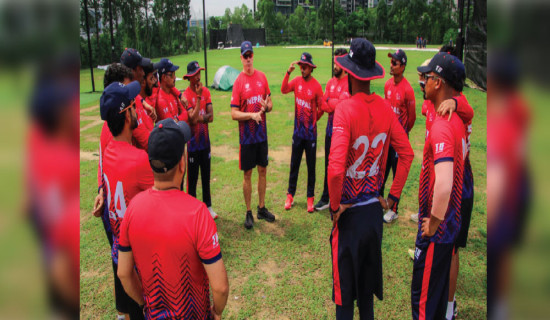
The government had initially requested that the sports ministry draft a budget proposal within the limit of Rs 3.19 billion. By exceeding this ceiling in the allocation, the government has underscored its commitment to enhancing investment in sports development. Furthermore, the government plans to use the budget to prepare the national team for the forthcoming Olympics and Asian Games. The National Sports Council (NSC) has already initiated special training camps under Mission 2026 to prepare the national team for the 20th Asian Games and the 5th Asian Para Games scheduled in Japan in 2026. This budget allocation is a positive step from the government.
In addition, the government has pledged to host at least 80 national-level sports tournaments in 2024/25. Both traditional Nepali sports and modern e-sports have been given equal importance. The government aims to revive the popularity of bagchal, dandi biyo, and horse riding while also recognising the growing popularity of e-sports by planning to host international e-sports events.
For the successful organisation of the 10th National Games, the government has set aside Rs. 600 million. Karnali Province will be hosting the biennial sports extravaganza on November 17, 2024. With approximately seven months left, the construction of the necessary infrastructure for the eight-day event is progressing slowly.
The government continues to allocate funds for the construction of various stadiums, including the Mulpani Cricket Stadium in Kathmandu, the Girija Prasad Koirala Stadium in Morang, the Gautam Buddha International Cricket Stadium in Bharatpur, the Fapla International Cricket Ground in Dhangadhi, and the upgrading of the TU International Cricket Ground in Kathmandu.
A total of Rs. 1.30 billion has been earmarked for the construction and maintenance of sports infrastructure. This includes the construction of Pokhara Cricket Stadium, the establishment of a sports lab, the construction of a high-altitude training centre, and the installation of floodlights and scoreboards at the TU Cricket Stadium.
The government also intends to use this budget to expand opportunities in sports, including increasing women’s participation. In addition to providing sports scholarships for students and organising school-level tournaments, teachers will also receive sports training. This comprehensive approach to sports development is a testament to the government’s commitment to fostering a vibrant sports culture in Nepal.
Challenges
The upcoming fiscal year’s budget appears to be a repetition of previous years’ plans. While the budget’s proposals seem ambitious and forward-thinking, the real challenge has always been in their execution. The slow progress in infrastructure development, policy formulation, and management issues is discouraging aspects of Nepali sports.
In each budget, the government has discussed collaborating with the private sector for the construction, operation, and management of stadiums and integrating sports with private companies’ social responsibilities. However, the absence of policies and regulations has obstructed the realisation of public-private partnerships in the sports sector.
The Ministry of Youth and Sports has even prepared a report on public-private partnerships but has not yet initiated policy-making. Emphasis should be placed on revenue-generating sports to attract the private sector to invest in sports. Without guaranteed profits, the private sector would not be enticed to invest in sports. The annual reports published by the Office of the Auditor General (OAG), the institution responsible for auditing Nepal’s public bodies, do not provide any reassurance. According to the recently published 61st Annual Report of the OAG, the Ministry of Youth and Sports failed to utilise and implement the available budget in the fiscal year 2022/23.
This is not just the case for the fiscal year 2022/23. The reports from previous fiscal years also highlight the same failure. The reports suggest that the progress and programmes for which the budget was allocated are below 50 per cent. More than 72 per cent of the budget allocated for the construction of sports infrastructure also remained unused and got frozen. The government has been allocating a significant amount to the construction of infrastructure from the budget to the ministry. For the upcoming fiscal year, 37 per cent of the ministry’s budget has been allocated solely for sports infrastructure.
Despite a large portion of the sports ministry’s budget being assigned for infrastructure development, the National Sports Council, the governing body of Nepali sports, has been unable to fully spend the budget due to delays in the construction of the infrastructure. Bureaucratic and legal hurdles have stalled the construction of at least five international cricket stadiums for many years. The budget remaining unused and getting frozen indicates the negligence and indifference of the sports administration towards the development of sports.
The Mulpani Cricket Stadium has been a notorious example of taking too long to complete. The government even designated it as a national pride project along with the Girija Prasad Koirala Stadium to expedite the construction. Despite being included in the pride projects, the project has not picked up pace.
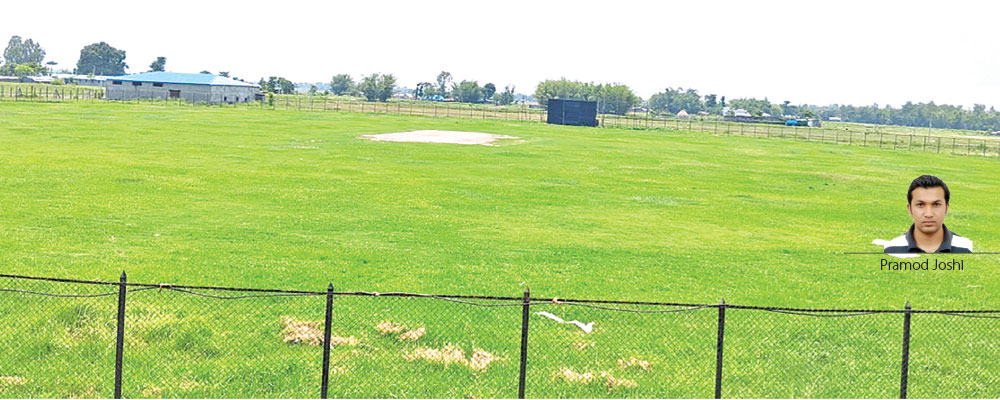
The situation at the Girija Prasad Koirala Stadium is even worse. Since the land was acquired in 1998 to build the multi-purpose stadium in Baijanathpur, except for preparing a cricket pitch, a shooting range, and a tennis court for the 7th National Games in 2016, nothing has been done. The ministry has been struggling for the budget to prepare the detailed project report for the stadium, which has turned into a grazing site due to a lack of conservation.
The Gautam Buddha International Cricket Stadium, initiated to be built by the Dhurmush-Suntali Foundation with crowd funding in 2019, was closest to completion. However, the dream project has been in limbo ever since the foundation pulled out of the project due to a lack of funds and handed the ownership document over to Bharatpur Municipality. Despite budget guarantees by the federal, provincial, and local governments, the project could not proceed due to bureaucratic hassles.
Similarly, the fate of the TU International Ground is also uncertain. The installation of floodlights at Kirtipur will only proceed after the High Court delivers a verdict on the case filed by one of the contractors participating in the bidding process.
Overcoming the hurdles
While the increase in the budget is a positive step, it alone cannot guarantee the future success of sports in Nepal. The development of Nepali sports is significantly hindered by bureaucratic red tape, procurement process delays, a lack of monitoring and evaluation mechanisms, and a lack of transparency.
Moreover, effective implementation of plans and policies at every level of Nepali sports requires honest and determined leadership. One of the primary reasons Nepali sports has not been able to make a significant leap forward is due to leadership incompetence, which has resulted in misdirected investments.
Corruption within the leadership has led to investments being disproportionately allocated towards officials’ facilities and foreign tours. This ineptitude has discouraged the private sector from showing interest in Nepali sports. Furthermore, the fear of misuse has made the government hesitant to invest further.
By addressing these challenges, Nepal can bridge the gap between budgetary allocations and tangible results. This will pave the way for a brighter future for Nepali sports, enabling athletes to fully realise their potential and achieve international success. It’s crucial to remember that the success of sports in any country is a collective effort that requires not only financial investment but also effective leadership, transparency, and the right policies and mechanisms in place.
(Joshi is an associate editor at The Rising Nepal.)

-square-thumb.jpg)