- Friday, 8 May 2026

Egyptian vulture facing extinction threat
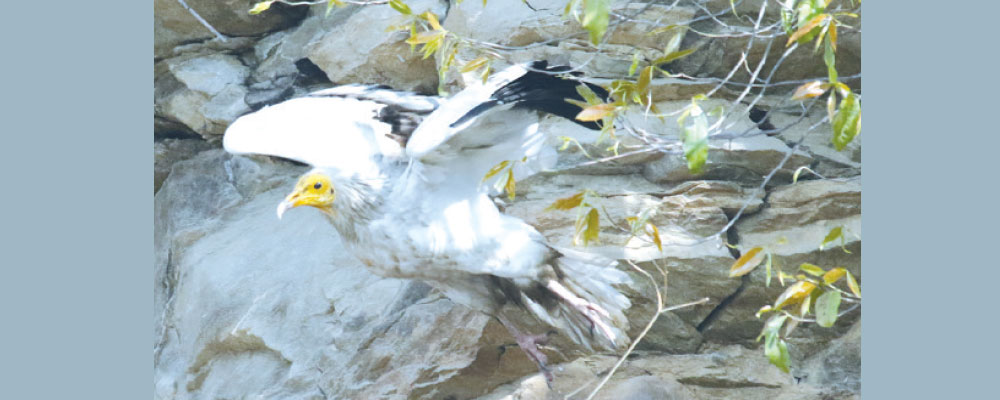

By A Staff Reporter,Kathmandu, May 22:The Egyptian vulture, referred to as Seto Giddha in Nepali, is facing a growing threat of extinction.
A study conducted in Pokhara on the biology, threats and conservation of this vulture revealed that the species has a reproductive success rate of only 31 per cent from the time they lay eggs until the fledglings are raised and able to fly.
The Egyptian vulture (Neophron percnopterus), the smallest vulture species, is experiencing a population decline across its range and is categorised as endangered by the IUCN.
The research was conducted to understand factors such as breeding season length, clutch size and mortality rate which are crucial for developing conservation plans, said Milan Baral, a researcher at the Nepalese Ornithological Union.
Baral said that the research was carried out in the Pokhara Valley from March 2023 to April 2024. It was revealed that the Egyptian vulture has a reproductive success rate of only 31 per cent.
During this period, it was found that out of 16 white vulture nests discovered in the Pokhara Valley, only six chicks from five nests were successfully hatched and developed into fledglings. The vulture usually lays one to two eggs per year.
“Twenty-two predetermined nesting territories were surveyed, revealing 16 active nests. Three territories were destroyed by mining and development activities, while two were unoccupied, possibly due to disturbances or shifting landfill sites. Surveys continued even after some pairs began nesting and incubation, as breeding times varied depending on food availability and climatic conditions,” said Baral.
Baral said that both natural and human factors contribute to the low reproductive success rate of vultures. The Egyptian vulture nests on both cliffs and trees. Human factors affecting reproductive success include forest fires, rock extraction from nesting cliffs, human activities, reduced food availability and the inability to feed the chicks on time. Natural factors include predation by monkeys and mongooses, which remove eggs from nests and unseasonal rain, which destroys eggs, he added.
The breeding process of this vulture starts in February/March and ends in July/August. During nest building, males and females divide the tasks. The male spends much time gathering dry wood, cloth, straws, cotton, dung and soil for the nest. Items like masks and small cloth items are also found in the nests. Although both bring construction materials, the male primarily collects them while the female stays at the nest and assembles them, said Baral.
During the incubation period, the female spends 60 per cent of the time in the nest while the male spends 40 per cent. Unlike eagles, where the female mostly stays in the nest and the male provides food, white vultures take turns according to a schedule. When raising chicks, the male brings most of the food. It has been observed that Egyptian vultures often bring chicken intestines and heads to feed their chicks.
According to Baral, they feed the chicks by breaking the food into small pieces. Before the chicks hatch, they again repair the nest with dry wood and cloth. As part of this study, vulture conservation awareness programmes were conducted for students and the community near the nests.
With support from the Rufford Foundation, Baral studied the biology, threats, and conservation of the white vulture.
According to Baral, there are 23 species of vultures in the world, nine of which are found in South Asia and all nine species are found in Nepal. Of the vultures in Nepal, six species are resident and three are migratory. The Egyptian vulture is one of these species and is the smallest vulture found in South Asia, with its body length measuring 60 cm to 70 cm.