- Sunday, 10 May 2026

Productive Investment

Investment is the lifeblood of development. For a developing country like Nepal, investment in infrastructure underpinning sectors like transport, health, education, manufacturing, among others, are critical to infuse a dose of momentum into its economy. To nourish a vibrant economy, it cannot afford to recklessly pour unlimited money into unproductive sectors like real state and share market. There must be solid investment in the components of GDP such as agriculture, industry and services which are not only the productive sectors but also the pillars of the economy. When it comes to investing on these sectors, there must be no ifs and buts on the part of the government.
Duly recognising this need, Finance Minister Dr. Prakash Sharan Mahat has stressed the need for moving in the direction of getting more returns from limited resources citing that the economy has shown unmistakable sign of recovery and has improved significantly this year. He has rightly said that banks and financial institutions should contribute more to economic development by investing in the productive sector.
In the past, there is no denying that a significant chunk of banks' investment didn't go to right places. A lot of credit was extended to the stock market and real estate business. The borrowers who took loans at that time are now in trouble because the interest rate has substantially increased but there is zero or little return from the investment to pay back the loan. The crisis facing cooperatives mirrors this colossal problem – a reminder of what will happen when unrestraint investment in made in unproductive sector like real estate.
There is no option to increasing investment in sectors that not only creates and sustains jobs but also generates revenue. Doing so is crucial to strengthen the middle-class and to build a foundation for long-term economic prosperity. Also necessary is stopping easy credit and frenzied investment in real state that only creates a huge bubble in the prices of property and other assets. The minister rightly pointed out that the resources of the state should be invested in the areas that give maximum returns.
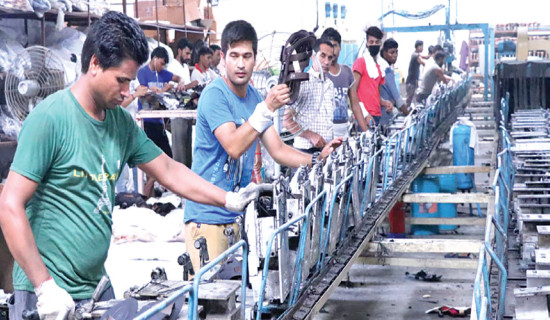
In a good move, the central bank, Nepal Rastra Bank, has prioritised a directed loan programme for investment, clearly stipulating that loans should be formally granted to the productive sector. Failure to comply with these instructions may result in penalties. Despite this, banks are showing indifference towards investing in one such sector, agricultural sector, citing associated risk. But agriculture and manufacturing are our strengths. With plenty of arable land and increased power supply, the two productive sectors are in a position to produce foods and goods at an industrial scale so that we not only can substitute imports but can also generate employment opportunities for many. This can go a long way to check the exodus of our frustrated youths who are heading abroad in search of greener pastures in unprecedented numbers.
The monetary policy of the central bank should work to ensure that the sectors get the needed capital boost which is both feasible and a necessity. This is also needed to spur economic activities which will go on to create an environment conducive for the creation of prosperity as well as the middle class who can increase the demand of finished products by consuming them.