- Sunday, 10 May 2026

Earthquake Preparedness


The other day, our country marked the 26th Earthquake Safety Day, a day dedicated to reflecting on earthquake preparedness since it began in 1998. This is significant as it all started after the devastating earthquake in 1934 that affected thousands of lives and homes. As the country observes this day, it is crucial to take a close look at the progress made and address any existing gaps in our earthquake readiness. One of the slogans chosen for this year’s ceremony, ‘Use also local resources and technology; let us build an earthquake-resistant structure’, highlights a key feature that underpins disaster.
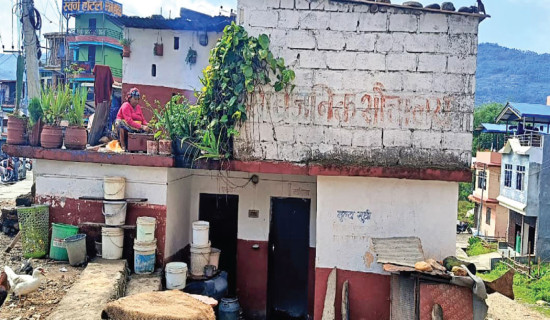
Using local knowledge and materials in construction may greatly contribute to the development of structures that are resilient against seismic shocks. Yet rhetoric alone is not enough; a comprehensive plan has become imperative. Nepal is ranked 11th globally in potential earthquake risks, with major tremors occurring once per century. The earthquake of 2015, taking place more than eight decades after the devastation that occurred in 1934, exposed Nepal's weaknesses. The devastation of killing 8,970 and destroying over one million houses highlights the necessity for building up comprehensive measures for earthquake preparedness.
The recent earthquake in west Nepal in November 2023, which killed more than 154 people and destroyed over 76,00 houses, is a reminder of the continuous danger. However, a 7.8-magnitude earthquake will potentially cause about 21,000 casualties and damage nearly all residential buildings in the Kathmandu Valley, according to the government’s assessment of risk conducted by the Japan International Cooperation Agency (JICA). This projection is urgent and must be acted upon without delay. So, Prime Minister Pushpa Kamal Dahal 'Prachanda' acknowledging that earthquakes in Jajarkot, Bajhang, and Doti might be signs of possible earthquakes in western Nepal makes this situation more serious. The problem the Prime Minister has indicated concerning the lack of attention to pre-disaster risk assessment not only lacks corresponding structures and preparation but also requires an immediate solution.
While the government has made remarkable progress in preparing for an eventual earthquake, a concerted effort is needed from various federal ministries up to local governments. The National Society for Earthquake Technology (NSET) must take a lead role in coordinating these activities.
The government’s promise not to establish another reconstruction body and instead strengthen the National Disaster Risk Reduction and Management Authority (NDRRMA) is an encouraging action. But this commitment must translate into real actions, for example, enhancing the NDRRMA's organisational structure and providing it with adequate resources.
It is also integral for the quick adoption of earthquake-resistant designs, the construction of sturdy buildings, and the sufficient allocation of budgetary resources. The government action to study and report on building insurance for all buildings, including private homes as well as public facilities, should be expedited. Thus, it is at the turning point during its earthquake preparedness phase. Earthquake Safety Day is a timely reminder to bridge the gaps, prioritising risk assessments and solid measures. The government should back swift action with visible road results. In essence, the resiliency of a nation depends not only on policies, but it is ingrained even in its very foundations, beyond structural and policy backdrops. Let this day be a mirror and also the start of transformational change in the preparation strategies.