- Wednesday, 3 June 2026

We should speak through actions than words: Lama
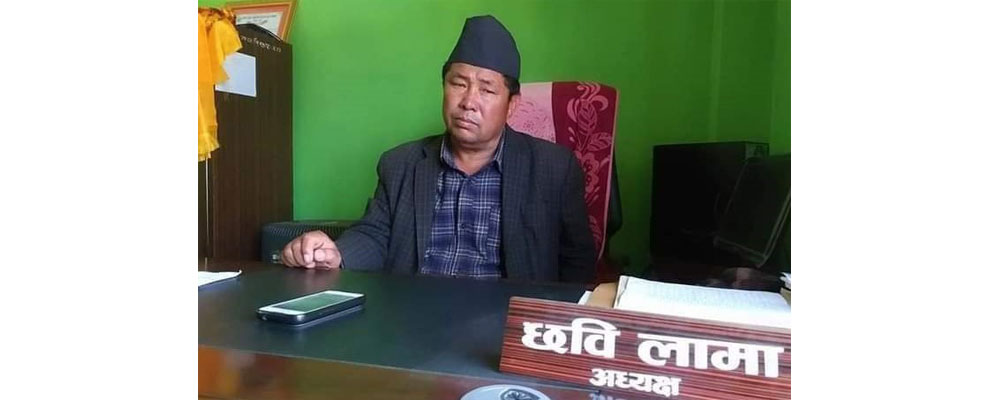

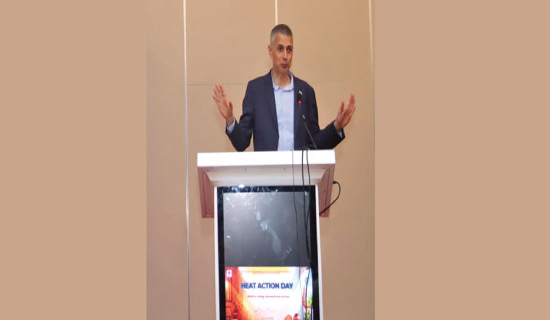
Baiteshwor Rural Municipality is a local level in Dolakha that has eight wards. The rural municipality is led by Chhabi Lama, who was elected for a second term in last year's local election. Representing the Nepali Congress party, Lama has prioritised road, education, agriculture and tourism for Baiteshwor's development. The Rising Nepal's Sujan Kafle talked with him about his plans and policies. Excerpts:
Since this is my second time as rural municipality chair, I did not have to spend time understanding rules and regulations. I could immediately begin work.
Now, I plan to complete the projects I started in my first term. I understand that I was re-elected because I prioritised the people's needs and expectations so, I aim to keep fulfilling their desires and helping them meet their aspirations. We have designed programmes for education, health, road, tourism, drinking water and infrastructure development based on the people's needs and demands.
It has been nearly one and a half years since your re-election. What works have you carried out in that time?
We have focused on fulfilling the promises we made during the election. We believe we should speak through our actions more than our words.
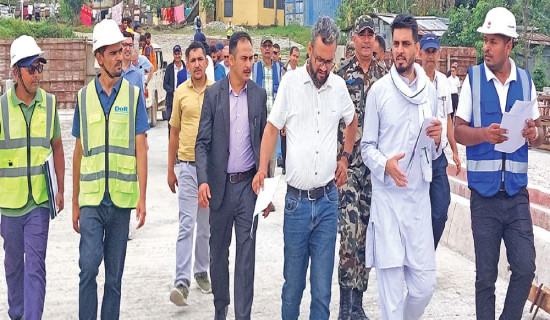
We have prioritised roads. We have been widening and upgrading rural roads so that they have access to transportation throughout the year. We have blacktopped 15 kilometres of road and concretised five kilometres more. We want our people to have access to permanent roads and be able to use them to reach health institutions without delay.
In education, we have focused on improving the quality of education rather than increasing the number of schools. Additionally, we have also implemented programmes to adjust posts to manage manpower, build teachers' capacities, develop schools' infrastructure and provide scholarships to deserving students.
What projects has the local government included in its budget?
We have included a project to build one permanent road in every ward. We will implement schemes to support agriculture and animal husbandry. We also hope to build well-equipped health posts in all our wards.
The rural municipality has allocated a budget to set up digital attendance systems and install CCTV cameras in all its offices. It has also allotted money for production-based grants, lift irrigation and drinking water projects.
We aim to have at least one tap in all houses of the rural municipality before our term expires. So, we are working to ensure that. The rural municipality has made it mandatory for its elected representatives and employees to enrol their children in community schools and around 80 per cent of our elected officials and staff members have followed this rule. Now, we want to get the next 20 per cent to follow it too.
We have decided to implement schemes to develop agriculture and animal husbandry. We have increased our milk production substantially by providing grants to milk producers. The local level will also facilitate the marketing of agricultural products.
Have you done anything to ensure efficiency and effectiveness in service delivery?
We are leaving no stone unturned to make our rural municipality citizen-friendly. We hold public audits before starting any project and hold public hearings every four months to collect complaints and suggestions. We have also supported different radios and media houses to ensure proper communication of rural municipality notices and transparency in our activities.
Do you have anything planned for tourism?
We hold great potential for tourism and want to develop this rural municipality as an attractive tourist destination. Tourism will support the local economy.
What are the problems the people of Baiteshwor are facing?
Monkeys. They destroy crops and trouble everyone. Many farmers have stopped planting anything in their fields because they feel the animals will destroy their crops anyway. The monkey menace is so great that people have started leaving the area altogether. But we do not have the resources and the capabilities to control these monkeys on our own.
m The way the federal and provincial governments view the local level is the main challenge. That has made it challenging for us to exercise our common and exclusive rights. The local government has lots to do but a very limited budget. It would be easier for us to work if the federal and provincial levels cooperate with us.

-original-thumb.jpg)