- Wednesday, 3 June 2026

Urgent Climate Concerns

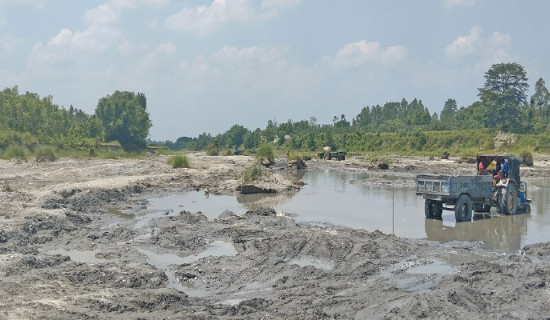
Climate change has become a major environmental challenge faced by humanity as it has affected agriculture, human health, livelihood, economy, ecology, biodiversity and water resources. Nepal’s agriculture is largely dependent on rain-fed farming practice and the less mechanised farming remains a source of livelihood for many. Nepal has been witnessing irregular and unusual weather and climatic patterns in recent decades, the hostile events that were never seen before. Prolonged draught, excessive rains, partial rains, hailstorms and incidents of lightning are occurring more frequently and causing adverse effects on life and environment. Excessive rains are causing natural disasters like flash floods, landslides, inundation and soil erosion.
Scientists say that global warming has brought unprecedented shift in the dynamics of monsoon, with a shift in precipitation patterns. For instance, high-intensity precipitations over short period of time have caused floods and landslides in more
destructive form. Climate change, caused by rise in temperature, is
having more negative impacts in mountainous country like Nepal due to uneven topography and less adaptive capacity. In this context, Prime Minister Pushpa Kamal Dahal Prachanda has said that he will raise Nepal’s pressing climate issue at the 78th United Nations General Assembly being held in UN headquarters, New York from
September 18.
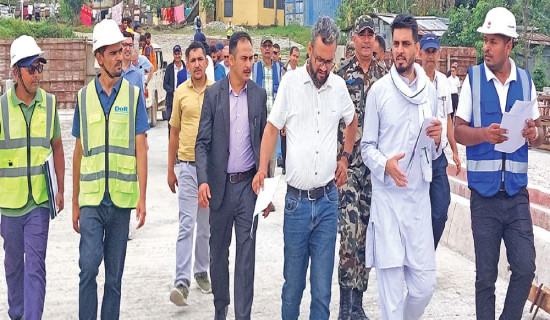
Prime Minister Prachanda is attending the meeting where he will emphatically raise the issues of national and international importance. Speaking at a meeting of Socialist Front in Pokhara on Friday, the Prime Minister pledged that he will place emphasis on climate change challenge, poverty and food insecurity intensified by recent wars and inflation faced by third world countries like Nepal. Climate change poses a serious threat to the future of the entire human race, the Prime Minister said and added that it was crucial to engage in serious discussions on this issue and work collectively to identify common solution. The climate issue touched upon by the Prime Minister with a sense of urgency will be expressed on behalf of all the least developed and mountainous nations at the global forum in New York.
As per the report of IUCN there are about 3,252 glaciers in Nepal which are melting at an alarming rate due to rising temperatures. The report says that glaciers in the Himalayan and Hindu Kush Mountain Range have melted 65 per cent faster in the 2010s decade compared to the previous decade which shows that global warming has started showing its grave effect. Glaciers are the major source of freshwater for many countries including Nepal. Rapidly melting glaciers have risked glacial lake outburst as the lake cannot hold more water and cause flash flood in the nearby settlements. They are likely to cause sudden floods and dearth of fresh drinking water in the near future. It is threatening the fragile ecosystem of mountainous region and livelihood of communities.
Nepal’s economy is largely based on tourism and snowcapped mountains, rugged trekking trails, pristine glacial rivers, glacial lakes and diversity in vegetation and wildlife. Nepal’s tourism prospect can be affected as the loss of biodiversity will give rise to new insects and vector-borne diseases in the formerly frigid regions. Global emission of greenhouse gases by Nepal is negligible but it is bearing the brunt of the adverse impacts of climate change. Therefore, the loss and damage thus caused to us should be duly compensated through a global fund. Contributions to fund should be made by rich industrialised nations who have largest share in emitting greenhouse gases.