- Wednesday, 10 June 2026

Dolakha losing residents at an alarming rate
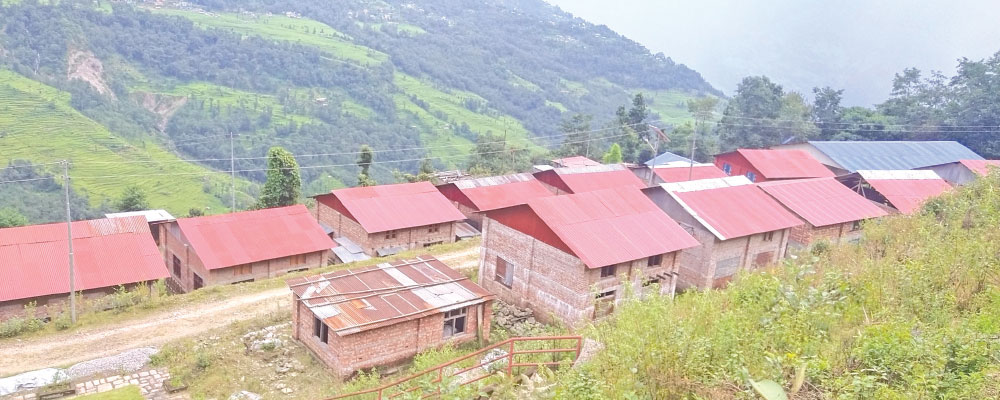

By Sujan Kafle,Charikot, Aug. 29: After the 2015 earthquake, the villages of Thukpa underwent a paradoxical transformation. The number of houses in Dolakha district increased, but the number of people occupying those houses went down.
As per the 2021 census, there are 78,229 houses in the district. Of them, 45,954 are in use but 16,091 houses are not. That means that 20 per cent of the houses in the district are empty.
In Ghimiretol, Hilepani, Kalinchowk Rural Municipality–4, only 14 of the 36 houses are occupied. According to local Rita Subedi, the remaining families built houses with the reconstruction grant they received after the earthquake. "But they indeed live in Kathmandu," she said.
After receiving Rs. 300,000 from the government, Keshav Kafle built a house for his son in Bhirkot, Tamakoshi Rural Municipality–1. Others in his neighbourhood also did the same for their children, hoping they would return from work in the cities or abroad. But their children did not. "The villages also have electricity and good roads now. Still, people are much too eager to leave," Kafle lamented. "We have no one to even bring us medicine if we fall sick."
Kafle said that only those above 60 years of age remained in the villages. Another local Rajkumar Karki said that everyone pursued material luxury. "No one wants to farm. Everyone wants to leave in the name of employment."
"If this trend continues, the entire village will turn into a ghost settlement," Karki worried.
The post-earthquake situation raised some hope. "Youngsters started returning in droves to rebuild their homes. It seemed that our settlements would become lively again," Karki said, adding, "But after their houses completed, everyone went back."
A total of 74,000 people were eligible for the post-quake reconstruction grant from the district. Of them, 67,000 accepted the grant and built new homes as mandated by the government. The local governments elected in 2017 also worked intensively to connect previously inaccessible villages to roads, education, transportation and drinking water. "Still, everyone continues to emigrate," Hira Kumar Tamang, chairman of Melung Rural Municipality, expressed with sadness. "Schools were also reconstructed. But the number of students enrolled in them decreases every year," Santosh Karki, teacher of the Narayani Secondary School, said.
Integrated settlements also empty
Many houses inside the integrated settlement in Panipokhari, Bhimeshwor Municipality–1 are also empty. The Panipokhari settlement is the first model settlement in the district built by the National Reconstruction Authority. The settlement was built for members of the marginalised Thami community who had to leave their communities rendered unsafe by weakened ground.
But, despite being built for 57 families, only 10 families reside here. Others still live in their old unsafe houses.