- Thursday, 21 May 2026

Without parliament hall, lawmakers taking oath at temporary hall today
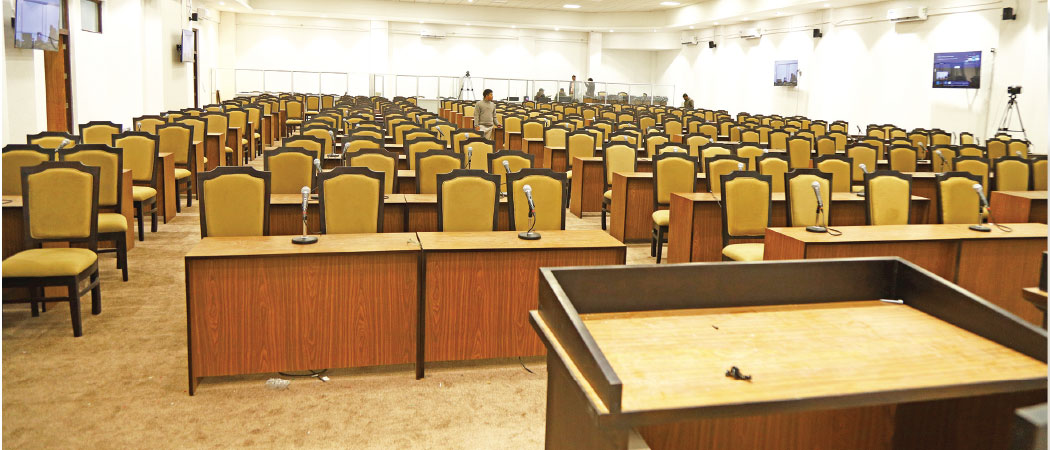
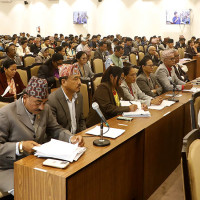
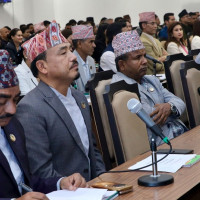
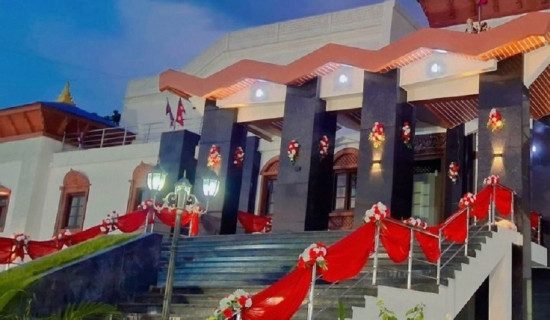
Photo: TRN Temporary multipurpose hall in Singha Durbar set for oath taking ceremony of newly elected parliamentarians on Thursday.

By A Staff Reporter,Kathmandu, Mar. 26: Nepal’s Federal Parliament will begin its new term under an emergency set-up, with key infrastructure still incomplete.
According to Ekram Giri, spokesperson for the federal parliament secretariat, 274 newly elected members of the House of Representatives (HoR) are taking oaths in a temporary multipurpose hall inside Singha Durbar due to the lack of a fully constructed parliament building.
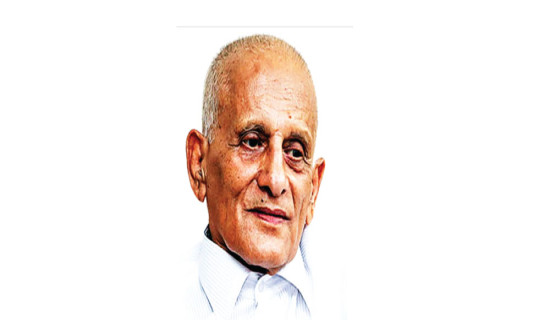
The oath-taking ceremony has been scheduled for 2 pm on Thursday. Of the 275 members of HoR, Arjun Narasingh KC, the oldest among them, took the oath of office and secrecy from the President on Wednesday, and he will administer oath to other lawmakers.
Giri made it clear that the current arrangements are far from ideal. “We have 12 buildings in total. None of them have been completely built. They have not been made available to us completely. What we are talking about now is an emergency set-up,” he said.
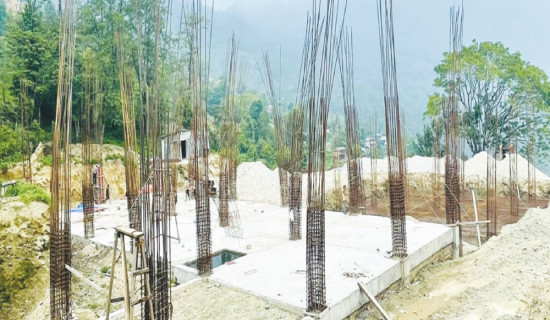
The new parliamentary complex, which includes multiple buildings for legislative and administrative functions, still remains unfinished.
“The word complete cannot be said now. If the construction had been finished, we would have been holding meetings in the House of Representatives main hall,” said Giri.
Although the structural framework is largely in place, several key aspects, including finishing work and full operational readiness, are still pending. “The structure of all the buildings is ready, but other works are yet to be completed,” added Giri.
The current situation arose after the Birendra International Conference Centre in Baneshwor, which had been in use as the parliament building since 2008, was destroyed during Gen-Z protests on September 9.
“We did not even have a place to hold the meeting," said Giri.
In response, the Secretariat has focused on making the multipurpose hall usable for immediate needs, including oath-taking and initial sessions. “We are working to finish the infrastructure quickly and make the multipurpose hall operational soon,” he said.
The temporary hall presents significant capacity challenges. With space for only around 280 people, it barely accommodates the 275 members of the House, along with essential staff.
“It is likely that it will be very tight to conduct the meeting. It seems that it will be a little awkward, a little tight, but it will have to be managed,” Giri said, adding that future joint sessions could be even more difficult.
Despite the infrastructural setbacks, the Secretariat is moving ahead with constitutional requirements.
“We will start with the oath-taking. After that, the session will be called, and then we proceed with regular parliamentary business,” said Giri.
He noted that early priorities will include electing the Speaker and Deputy Speaker before moving on to government business.
With a large number of new and young lawmakers entering parliament, the Secretariat has proposed an orientation programme. However, practical difficulties remain.
“An orientation programme for new lawmakers is necessary, but the problem is that we do not have a meeting hall that can accommodate 275 members,” said Giri. As a result, the Secretariat is still considering how and when to organise such sessions.
Giri also highlighted the financial shift from the previous arrangement. The parliament had been renting the Birendra International Conference Centre at significant cost.
“Initially, we used to spend about Rs.70 million annually. Later, it was increased to almost Rs.170 million,” he said.
Now, with operations moved to Singha Durbar, rental costs have been eliminated. “We have our own building, and we do not have to pay rent, which is the biggest thing,” he added, though he cautioned that total operational costs remain unclear until construction is complete.
Given the sensitivity of parliamentary proceedings, security arrangements are being strengthened. “As soon as the parliament session begins, it becomes sensitive,” Giri said. Internal security is being handled by the Secretariat, while external security responsibilities lie with the government.
Media access and public attendance will be restricted due to space limitations. “This is a short-term set-up. Some things are difficult in such a situation,” he said.
Giri also highlighted the efforts made to modernise parliamentary operations through technology. “We are trying to integrate about 10 different software systems,” he said, adding that plans for a data centre and expanded digital services are underway.
For now, proceedings will be streamed online. “We try to provide everything we can and are ready to deliver digital services to move forward digitally,” he said.
Giri reiterated that the Secretariat is working under constraints but remains committed to ensuring parliamentary continuity. “This is an emergency set-up. Although it is not complete, we are trying to make it possible,” he said.