- Wednesday, 3 June 2026

Genetic test saves newborn, could save millions more
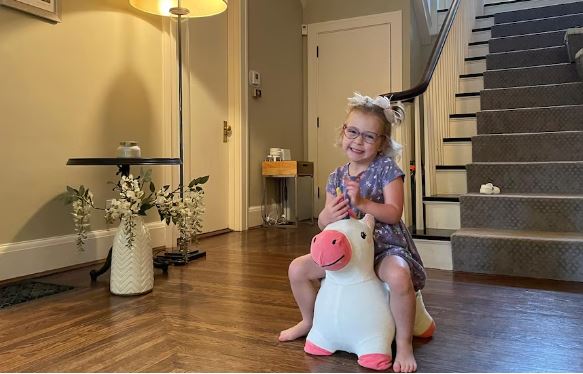

Cincinnati, Aug. 29: Brynn Schulte nearly died twice when she was a baby, at one point needing emergency surgery for massive bleeding in her brain.
No one knew what was wrong until a test that looked at her full genetic blueprint found a rare bleeding disorder called factor XIII deficiency — an early diagnosis that saved her life.
“You have this hopeless feeling when you don’t really know what’s going on,” said her father, Mike Schulte. “Casting a wide net really made a world of difference figuring this out quickly and getting her the right care that she needed almost immediately.”
Brynn, now 4, got the genetic testing as part of a clinical trial, the results of which were published recently in the Journal of the American Medical Association. “Whole genome” tests are nearly twice as good as narrower tests at unearthing genetic abnormalities that can cause disease in infants — the study found 49% of abnormalities, compared to 27% with more commonly used tests targeting particular types of genetic diseases.
Whole genome tests could solve the problem of doing several narrowly targeted tests on babies, which still might not find the disorder. Experts caution there are some issues, because labs vary in how they interpret results, and whole genome tests are costlier and less likely to be covered by insurance.
But researchers envision that whole genome tests eventually will be used for millions of hospitalized babies with confounding, sometimes life-threatening conditions. According to the U.S. National Human Genome Research Institute, around 350 million people worldwide live with rare disorders, and about 80% of the more than 7,000 conditions are genetic.
“I’ve been doing clinical trials of babies for over 40 years,” said study author Dr. Jon Davis, chief of neonatology at Tufts Children’s Hospital in Boston. “It’s not often that you can do something that you feel is going to really change the world and change clinical practice for everyone.”
The night after Brynn was born, her mother Lindsay noticed her skin was gray, her breathing labored. Blood had pooled beneath Brynn’s scalp, causing two bulges on her head.
Doctors transferred her to the neonatal intensive care unit at Cincinnati Children’s Hospital Medical Center, where she got blood transfusions and tests for different bleeding problems. She improved and went home — only to wind up back in the hospital when she was about a month old for the massive brain bleed. A doctor warned she likely wouldn’t make it. A pastor prayed with the family.
After her surgery, Brynn stayed in the NICU for two months. At various points, doctors thought she might have a vascular problem or a mass in her liver. (AP)