- Wednesday, 3 June 2026

Menace Of Monsoon Floods

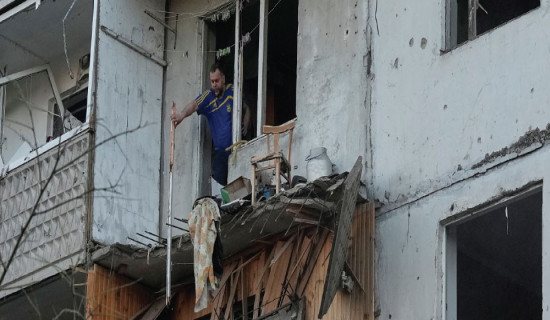
Flood and landslide have wreaked havoc in Nepal every year, leading to loss of life, property, livestock and infrastructures. This being the phenomenon repeating regularly, we should leave no stone unturned when it comes to staying prepared to deal with this natural disaster. Right now, monsoon rains are affecting general life in the eastern sector of the country. Excessive precipitations have made rivers swell and breach their banks, putting settlements under risk. Mountain topography and the settlements there are scenic and serene but during the monsoon season, they are vulnerable to landslides, floods and erosion.
Mountain and hill slopes become unstable in the events of heavy and prolonged rains, more so in the areas that have seen haphazard digging in the name of rural road construction, and deforestation. Each year rain-induced calamities claim lives, displace households and destroy major infrastructures like roads, bridges, water supply lines, telecommunication towers, and powerhouses. The losses and damages climb higher mostly when we are not adequately prepared for disaster management and focus on immediate relief that is often insufficient. Rainfall pattern have change in the recent years, resulting in high-intensity precipitations over short period of time which have intensified the magnitude of flashfloods and landslide.
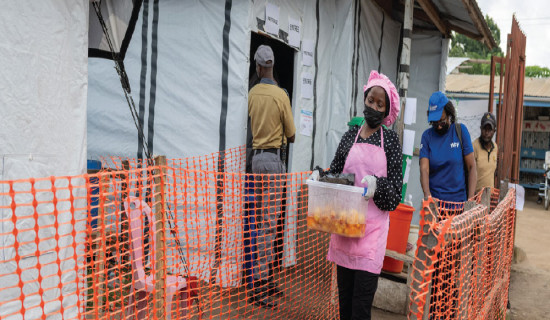
Calamities, caused by landslides, floods and inundation, call for robust measures on search, rescue, rehabilitation and relief assistance. Carrying out such operations is often challenging because the efforts are hampered by bad weather and damaged roads, bridges and communication disruptions. This is where advance training, simulation drills, food and water stock, medical manpower and community shelters are needed. We are ill-prepared if we start making preparations after the occurrence of a disaster. In case of damaged ground transport network, we need to call air rescue missions into action. During inclement weather conditions, such missions need the help of advanced weather monitoring and forecast system. People displaced by floods, landslide and inundation come under high risk of infectious disease outbreak, scarcity of safe drinking water, food, medicine and other essential items.
Availing immediate medical attention can save many lives but it is difficult to mobilise doctors, nurses and other health works with necessary equipment and basic medicines in the affected areas. This calls for serious planning and preparedness. Rescue and relief delivery missions face challenges when transport facilities are broken. A news report published in this daily on Saturday says that most of the highways in Nepal including the East-West highway, Madan Bhandari Highway and Siddhicharan Lok Marga have faced partial or major obstructions in the past few weeks due to incessant monsoon rains. In such a situation, travelling within the country has become difficult and risky.
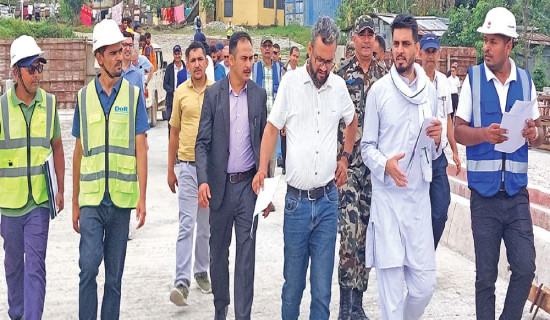
Blocked highways, swollen rivers, swept away bridges and stranded travellers are in the news these days. The landslides along the Narayangadh-Munglin road section is the regular occurrence. The ongoing road expansion works from Munglin to Pokhara are causing hardship in mobility due to added effects of rains. Monsoon rains are showing uncommon patterns in recent years which scientists attribute to the impact of global temperature rise and climate change. Excessive rains in Melamchi, Manang and most recently in the Kagbeni of Mustang district were unprecedented in character. Heavy rains in upstream hilly regions raise water levels of Koshi River to danger mark. It has been difficult to tame the river and it breaks its embankments and puts settlements under water. Chief District Officer of Udayapur Janardan Gautam said that the water level in Saptakoshi River was measured at 28,000 cusecs per hour on Friday which was the highest water level of this monsoon. To manage flood risk at the Koshi barrage, Nepal and India need better coordination.