- Wednesday, 3 June 2026

Kremlin denies role in plane crash believed to have killed Prigozhin
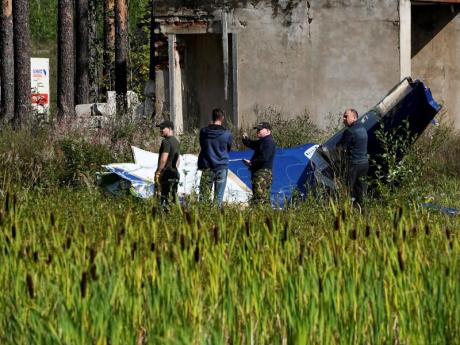

Kremlin, Aug. 26: President Vladimir Putin’s spokesperson, Dmitry Peskov, on Friday rejected allegations that the Kremlin was behind a plane crash that is presumed to have killed mercenary leader Yevgeny Prigozhin, whose brutal fighters were feared in Ukraine, Africa and Syria and conducted a brief but shocking mutiny in Russia two months ago.
Prigozhin, who was listed among those on board the plane, was eulogized by Putin, even as suspicions grew that the Russian leader was behind a Wednesday crash that many saw as an assassination.
A preliminary U.S. intelligence assessment concluded that the plane was downed by an intentional explosion. One of the U.S. and Western officials who described the initial U.S. assessment said it determined that Prigozhin was “very likely” targeted and that the explosion falls in line with Putin’s “long history of trying to silence his critics.”
The officials, who spoke on the condition of anonymity because they were not authorized to comment, did not offer any details about what caused the explosion, which was widely believed to be vengeance for the mutiny in June that posed the biggest challenge to the Russian leader’s 23-year rule.
Asked by The Associated Press whether the Kremlin has received an official confirmation of Prigozhin’s death, Peskov referenced Putin’s remarks from a day earlier: “He said that right now all the necessary forensic analyses, including genetic testing, will be carried out. Once some kind of official conclusions are ready to be released, they will be released.”
Britain's defense ministry said Friday that the presumed death of Russian mercenary leader Yevgeny Prigozhin in a plane crash could destabilize the Wagner Group,
“The demise of Prigozhin almost certainly would have a deeply destabilizing effect on the Wagner Group. His personal attributes of hyperactivity, exceptional audacity, a drive for results and extreme brutality permeated Wagner and are unlikely to be matched by any successor,” the ministry wrote in a statement.
Wagner mercenaries were key elements of Russia’s forces in its war in Ukraine, particularly in the monthslong fight to take the city of Bakhmut, the conflict’s most grueling battle. Wagner fighters also have played a central role projecting Russian influence in global trouble spots, first in Africa and then in Syria. (AP)