- Tuesday, 2 June 2026

French small towns reeling from rioting
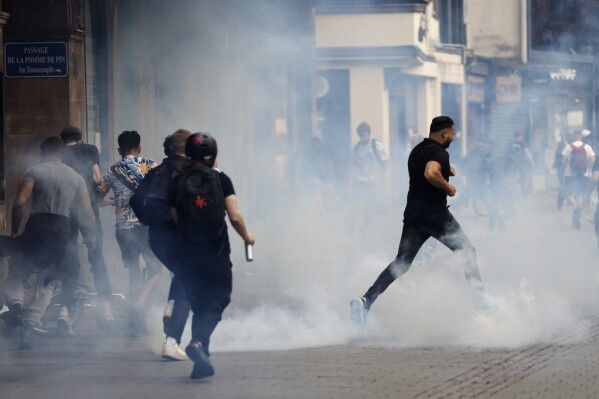

Paris, July 8;After a pleasant evening of wine-tasting — joyfully billed "Grapes and Friends!" — with a hundred or so people and oysters, charcuteries and cheeses, the mayor of the picturesque French town of Quissac was on his way home.
Then his phone rang: Urban unrest that was engulfing France after the deadly police shooting of a teenager on Paris' outskirts, hundreds of kilometers (miles) and a world away to the north, had careened into Quissac's tranquility, too.
In a quick hit-and-run, a small group of people — seemingly no more than four, the mayor says — bombarded the local gendarmes' barracks on Quai de la Gare road with powerful fireworks, denting its metal shutters and setting fire to a cypress tree. In the grander scheme of things, it wasn't much compared to orgies of destruction, arson, looting and rioting unleashed on multitudes of other communities across France in six nights of mayhem. Still, for the town of 3,300 people in the Gard region of southern France, it was a first. Quissac's unsettling experience last Friday night — and those of other out-of-the-way towns and villages also hit by unrest to varying degrees — set France's latest nationwide spasm of rioting apart from previous cycles of violence that have flared periodically in every decade since the 1980s.
Although typically referred to in France as "les violences urbaines" — urban violence — the unrest this time was no longer contained to blue-collar towns and cities' disadvantaged housing projects, places where anger at social and racial inequalities has festered.
Carried in part on the winds of social networks that have narrowed gaps between France's urban centers and its vast rural spaces, unrest also reached outward to touch places that escaped a similar nationwide wave of rioting in 2005.
Mayors of small towns where vehicles were torched, fires lit and police attacked are scratching their heads, trying to figure out: Why them? Why now? Why are France's big-city problems, which previously seemed far away, sinking roots into their peace and quiet, too?
"Why these incidents in a little town like ours?" asks the mayor of L'Aigle in Normandy, where fires were lit, cars torched and police chased around after small groups of suspects.
"In the press and even on the TV news, it was mainly Paris and its suburbs, Lyon and Marseille that were talked about. But when you look, there were also incidents in a certain number of small communities," the mayor, Philippe Van-Hoorne, says. "Unfortunately, the increase of uncivil behavior, of violence, is developing even in modest towns like ours ... It's very hard to solve." (AP)