- Tuesday, 2 June 2026

As Ukraine war drags on, civilians' mental health needs rise

Kramatorsk, Apr. 13: Huddled in the back of a café near the train station where a missile killed dozens of people a year ago, Nastya took slow, deliberate breaths to calm herself. Overnight, her neighbourhood had been bombed again, and she just couldn’t take any more.
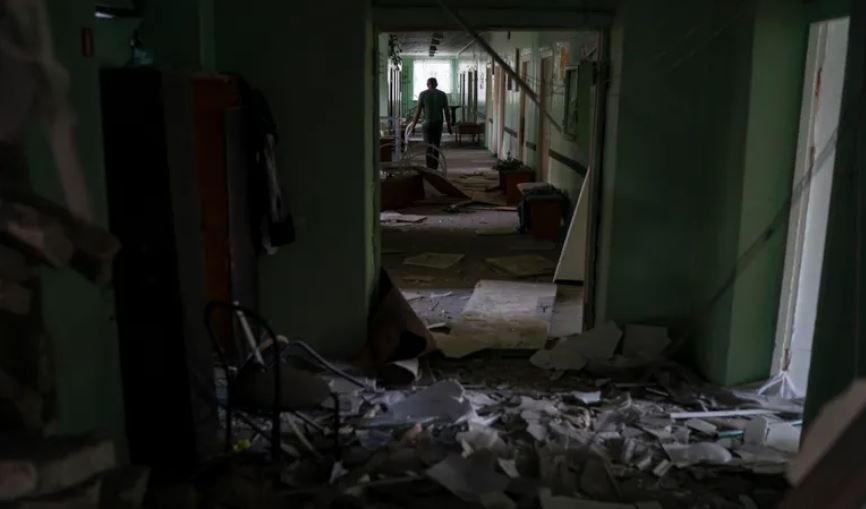
Heeding her parents’ advice, the 20-year-old woman had visited the nearby psychiatric hospital that morning — a place that also bore the scars of war after being repeatedly bombed, including by a missile that destroyed part of the building last September. But the staff swept up the shattered glass, shovelled away the debris and carried on working, determined to stay in Kramatorsk, in Ukraine’s eastern Donbas region, to help those in need.
For Nastya, it was a lifeline.
"After today’s shelling, I could no longer cope with anxiety, the feeling of constant danger,” the speech therapy student said, giving only her first name to talk last month about the difficult decision to seek mental health care. The stigma of Soviet-era psychiatry, when dissidents were incarcerated in psychiatric institutions as a form of punishment, still lingers.
“I just realized that my psychological health is much more important,” she said.
There are hundreds of thousands like Nastya in Ukraine, experts say, and the number of people needing psychological help is only expected to rise as the war continues. In December, the World Health Organization said one in five people in countries that have experienced conflict in the past decade will suffer from a mental health condition, and estimated that about 9.6 million people in Ukraine could be affected.
Russia’s invasion in February 2022 resulted in millions of people being displaced, bereaved, forced into basements for months due to incessant shelling or enduring harrowing journeys from Russian-occupied regions.
For Nastya, as for so many, the war changed everything overnight. There is a before — a life of simple pleasures, of going for coffee and laughing with friends. And an after.
“You wake up with the feeling that you are just surrounded by horrors, anxieties, surrounded by constant air raid sirens, flying planes, helicopters,” she said. “You’re simply in a closed circle which is not filled with the happy times of before, but with great fear. Fear of the unknown, fear of dying here and now.”
Hundreds of kilometres (miles) to the west, 38-year-old Tatyana, a worker at the Zaporizhzhia nuclear power plant who spent four months living under Russian occupation in the town of Enerhodar, trembled as she recounted seeing bombs explode near the plant, and how her family endured a 24-hour ordeal to escape to Ukrainian-held territory.
When she visited a support centre in Boyarka, south of Kyiv, several months ago to register for aid, she collapsed into uncontrollable tears. The staff called a psychologist.
Therapy has helped, said Tatyana, who also asked that her surname not be used to talk openly about seeking out mental health care. Her gaze was blank and unfocused during pauses as she spoke following a group therapy session last week. She’s trying to cope with the feelings of living in a war.
“This fear that comes when you realize that you may lose everything in a moment,” she said. Life is "like a light switch. It can be turned off and never turn on again.”
The need for mental health treatment has shot up across Ukraine, professionals say, even as they deal with the effects of war in their own lives.
“The demand is huge, and unfortunately it will only grow,” said psychotherapist Pavlo Horbenko, who has worked at a centre in Kyiv treating people affected by war since 2014, when Russia annexed Crimea and set up two proxy breakaway states in Ukraine’s east. (AP)


-square-thumb.jpg)
-original-thumb.jpg)