- Thursday, 28 May 2026

Coin minting ready to start again inside the country
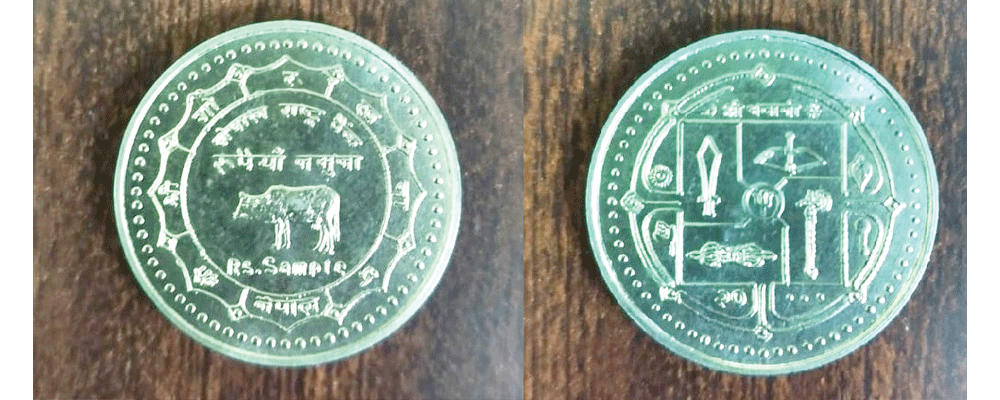

By Laxman Kafle,Kathmandu, Jan.28: Nepal can now mint coins inside the country, two decades after it halted the task thanks to the hard works of Mint Division’s director, staff, technicians and engineers.
The Mint Division under the Nepal Rastra Bank (NRB) successfully minted sample coins and tested them recently after repairing and maintaining the old, rusted and non-functional machines.
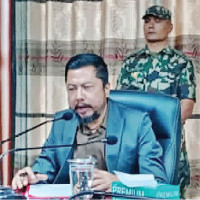
“Nearly after about two decades, the mint division is finally able to mint sample circulatory coins with the hard efforts of the employees and the management,” Binod Raj Acharya, the director of the division, said.
The Mint Division used to carve and issue circulatory coins which were in use for transaction process two decades ago from its office in Sundhara. But it halted the work and started issuing only medallions and gold bullions (asarfis).
With the technical assistance of the Department of Mechanical Engineering, Kathmandu University, all the machines worth millions of rupees affected by rust, quake and disuse were repaired and maintained.
They are now made functional to their full efficiency, testing some sample productions.
“These machines are now capable of minting 8 coins a second, 480 coins a minute and 28,880 coins an hour,” director Acharya told The Rising Nepal.
Acharya said that since these coins are produced as sample units, they are not mentioned as Rs. 1, Rs. 2, 5 or any other monetary denominations, he said showing the sample coins recently minted by the repaired machines.
With tiring and uninterrupted effort of a month and around, the technicians and engineers of the division have now made the minting machines fully functional, he said.
All the machines were brought during the reign of Rana Prime Minister Juddha Shumsher for the then Minting Department.
In 1983, the Department came under Nepal Rastra Bank as a division and started minting coins of small denominations of one, five, 10, 25 and 50 paisa and Rs. 1 to Rs. 5.
The minting of coins had stopped in 2003 and the NRB started minting coins abroad citing that the cost of production had increased in Nepal.
It is an irony that Nepal, which supplied coins to other countries in the medieval period, is now importing them, Acharya said.
History of coins in Nepal goes back to King Manadev of the Lichchhavi period who introduced Manank, the first coin of Nepal. But now, coins are minted only occasionally in Nepal.
Director Acharya acknowledged that if the central bank commercially minted circulatory coins in its own resources, the money previously spent to mint them overseas would remain within the country.
In the recent days, NRB discontinued issuing printed notes of Rs. 1 and Rs 2, instead these denominations were minted as coins abroad.
Unlike paper notes, old and rusted coins do not flow back to financial institutions compelling the bank to produce new coins.
"If the repaired minting machines are successfully brought into operation, it will reduce our financial burden to a measurable extent, help generate jobs and preserve our cultural tradition and pride of the nation as Nepal had first minted its coins in the 7th century during the reign of Licchhhavi ruler Manadev," Acharya said.
Acharya said that the country should mint the circulated coins inside the country even though the costs of minting at home were higher to preserve the cultural tradition and pride of the country.


-original-thumb.jpg)