- Thursday, 28 May 2026

World Cup And Domestic Violence

Football is a game that requires a lot of team work. Teammates have to coordinate with each other to reach the goal and make sure the opposition team does not get that prized goal. This is also a sport that attracts attention and passion globally. The FIFA world cup that comes every four years is an event awaited eagerly by, mainly men, fans. Special plans are made by fans globally to watch every game that is played either by going physically to the stadium or by watching it long distance on TV and on other digital media. However, there is one dark side to the FIFA world Cup which has not been covered by the media extensively. This football sporting event has been linked to increased amounts of domestic violence cases.
Although the sport itself is not a direct cause, the matches are known to allow for an atmosphere and behavioural patterns that often lead to aggressive behaviour. There seems to be a trend in European, African and world football matches where the viewership of the matches become so significant that it attracts attention globally. There is also a trend of increase of alcohol consumption and unfortunately rise in domestic violence. A study in 2014 by academics at Lancaster University looked at the number of reports of abuse to a police force in north-west of England during three football World Cups.
Violence upsurge
They found that such reports increased by 26 per cent when the national team won or drew and by 38 per cent when the team lost. Reports have also suggested that the abuse gets worse when England wins. According to Westminster: World, in an article of 12th December 2022 during this current session of FIFA World Cup being held in Qatar the domestic violence upsurge seems to have reached its climax in the knockout stages. A BBC report states that the police authorities detained 49 suspects of domestic abuse during the initial week of the tournament.
Although many non-governmental organisations and charity institutions try raising awareness of the risk of domestic violence, the data shows that this trend seems to recur every time these international matches occur. Many research has brought out evidence to show that although domestic violence is not caused by football, existing abuse can increase and become more frequent during tournaments. These surges in the abuse are linked to multiple factors. One major factor is seen to be the drinking associated with football. Data from Criminal Injuries showed that 250,000 police call-outs were related to domestic incidents. Alcohol was attached in 68.2 per cent of these cases and 61.4 per cent of the accused and 36.4 per cent of victims are seen as under influence.
Alcohol, football and men are known to be a dangerous combination, especially for women on the streets. In a BBC report, it has been cited that men with alcohol problems are six or seven times more likely to be involved in domestic violence against women (VAW). It is believed that consumption of alcohol adds to the already emotionally charged atmosphere of the game. It is also believed that although alcohol is not the root cause of domestic abuse, but serves as a factor that compounds it. It is an interesting fact that the country where the FIFA World Cup is currently happening has largely limited alcohol consumption. Alcohol is banned in stadiums and stadium perimeters, but is available in designated fan zones.
This is in conformity with Qatar’s policy of zero tolerance for drinking in public. Drinking in public is even considered a crime. However, even during this ongoing World Cup the above data shows that violence has sparked in England where men have a pub culture and drinking of alcohol has been seen to rise as it usually does during football matches. Although people have fun time drinking and watching football matches in pubs, which is known as a British culture and tradition, the aftermaths may often not be very pleasant or safe event. According to the Football Supporters Association, it is estimated that one out of every five women experience unwanted physical contacts during men’s football matches and about 24 per cent of women report hearing sexist chanting.
Unhealthy behaviours
Many a time boys and men are excused for rough and unhealthy behaviours like touching women and being rough on women and children. These behaviours are labelled as the “boys and men” traits. However, even in today’s world such behaviours are not widely acknowledged as wrong behaviours which inculcates violent behaviours. Football definitely brings people together but it also has become a means of exposing disorderly behaviour amongst football supporters. The societies and football match organisers need to recognise the fact that traits labelled as ‘male’ traits could lead towards violence.
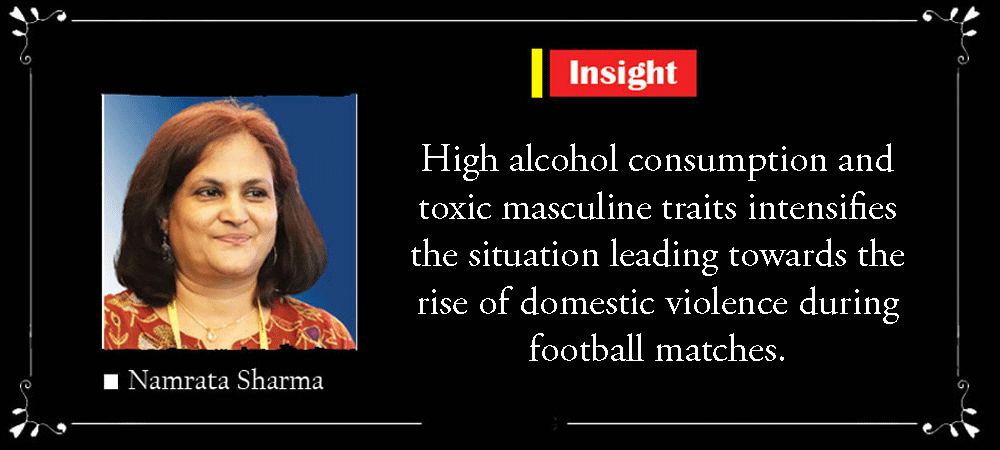
As a result, it needs to be taken seriously and not excused. Men should not be excused for their erratic behaviour which could be the consequence of the competitive nature of the game. Several researches has shown that while football might not necessarily turn men into domestic abusers, it has been seen that high alcohol consumption and toxic masculine traits intensifies the situation leading towards the rise of domestic violence during football matches.
(Sharma is a journalist and women rights advocate namrata1964@yahoo.com Twitter handle: NamrataSharmaP)