- Thursday, 28 May 2026

Physical Activity Averts Non-communicable Diseases

Physical activity has been associated with both immediate and long-term health benefits. People of all ages, genders, ethnicities, and abilities can benefit from physical activity. Everyone needs both aerobic and muscle-strengthening physical activity for a healthy as well happy life. With urbanisation, people are more into sedentary lifestyles, consuming more ultra-processed foods which contain excess salt and sugar has. This has led to a surge in non-communicable chronic diseases (NCDs) in recent times. Previously, thought of as diseases urban in nature, NCDs are growing at an alarming rate in rural areas as well. Worldwide, about two-third of mortality, nowadays, is due to NCDs.
The World Health Organisation (WHO) and the Centre for Disease Control (CDC) recommend at least 150 minutes of moderate-intensity physical activity or 75 minutes of vigorous-intensity physical activity each week for people aged 18–64 years and at least 60 minutes of moderate to vigorous physical activity for 5–17 years old. People do not need to do it at once and the goal can be achieved with 30 minutes of moderated intensity exercise a day, five days a week.
Scenario
Insufficient physical activity is the fourth leading risk factor for mortality in the world and accounts for about 3.2 million deaths and 32.1 million DALYs (the disability-adjusted life years), each year. People who are physically inactive have a 20-30 per cent increased risk of all-cause mortality compared to those who engage in at least 30 minutes of moderate-intensity physical activity most days of the week (WHO, 2022).
Current global estimates show about 30 per cent of adults (25 per cent males and 35 per cent females) and 81 per cent of adolescents worldwide do not do enough physical activity. Furthermore, studies have shown that as countries develop economically, levels of inactivity increase. Owing to changing transport patterns, increased use of technology, and increasing sedentary behaviors, as high as 70 per cent of adults do not meet recommended physical activity.
A recent survey showed that in Nepal, the prevalence of insufficient physical activity has increased from 2.4 per cent to 7.4 per cent for adults aged 18-69 and from 7.2 per cent to 10. 8 per cent for adolescents aged 15-17 between surveys of 2013 and 2019 (STEPS Survey 2019). At the same time, the increase in the prevalence of physical inactivity is more for women than for men.
The large and increasing prevalence of physical inactivity is one of the major reasons for the rising trends of several NCDs. Among various contributing factors to NCD-related mortality, physical inactivity alone is estimated to be responsible for 6-10 per cent of deaths related to coronary heart disease, diabetes, and site-specific cancer such as breast and colon cancers (NCD Alliance, 2022).
Physical activity either in the form of moderate intensity such as walking, or high-intensity activities, for example, cycling, running, swimming, etc. provides a range of benefits both for the body and the mind. Physical activity helps in preventing unhealthy weight gain, reducing non-communicable chronic diseases, such as heart disease, cancer, and type 2 diabetes; improves sleep quality and reduces anxiety, improves bone and musculoskeletal health. It also improves cognitive ability and reduces the risk of dementia.
Older adults who are physically active have a reduced risk for falls and improve their ability to do daily activities. However, inactivity tends to increase with age and women are more likely to lead inactive lifestyles than men. In fact, the exercise of any intensity every day is, therefore, essential for preventing a range of diseases and other health issues.
People who have a busy schedule can change their habits to meet physical activity much needed for good health. People who commute to their work could try getting off their bus a few stops early and walking the rest of the way; instead of using elevators, consider walking up and down the stairs; housework, gardening, and going up and down the stairs during chores also help meet the requirement.
However, for people who are not physically active and those who have underlying medical conditions, suddenly doing significantly more intensive exercise could increase the risk of cardiovascular events such as heart attacks. Therefore, consultation with a healthcare provider is recommended for those with medical conditions.
Policies
Nepal has incorporated the promotion of physical activity as one of the key targets in a multisector action plan for 2021-2025. Policies to promote physical activity include the development of physical activity guidelines for people of different age groups and abilities, incorporating physical education in the school curriculum, promoting the “Healthy Nepal” concept with the motto of “my health, my responsibility” by developing community-level physical activity centers, promoting physical activity centers in workplace and schools, starting an open gym, etc. and implementing healthy city concept supporting for the development of cycling lane and safe sidewalk.
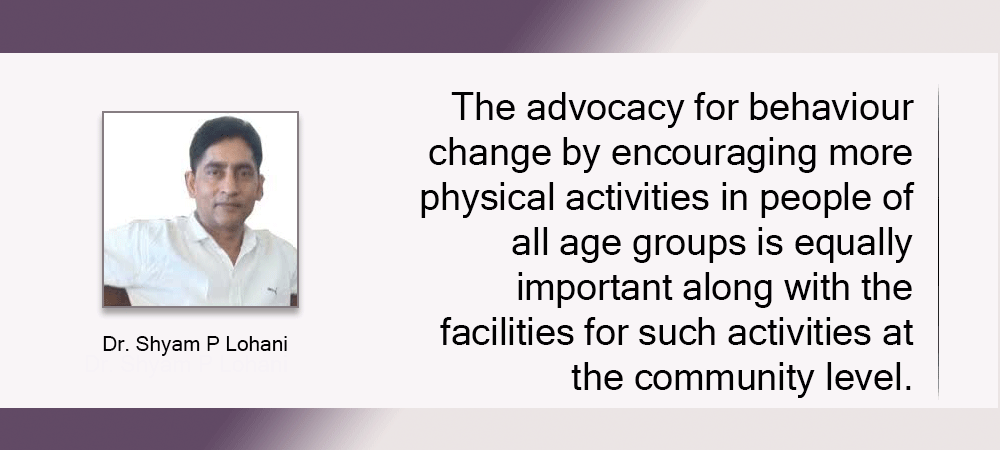
The advocacy for behaviour change by encouraging more physical activities in people of all age groups is equally important along with the facilities for such activities at the community level. All three levels of the government should work collaboratively in order to develop such facilities in cities where open spaces are scant. On the other hand, large-scale promotional activities throughout the country on the benefits of moderate levels of physical activity are warranted and all stakeholders, particularly healthcare professionals take lead in this endeavour. Lastly, for beginners, start physical exercise slowly and build up gradually to at least 30 minutes, five days a week for maximum benefits.
(Dr. Lohani is the clinical director at the Nepal Drug and Poison Information Centre. lohanis@gmail.com)