- Wednesday, 8 April 2026

Conflict victim in exile still unable to return home
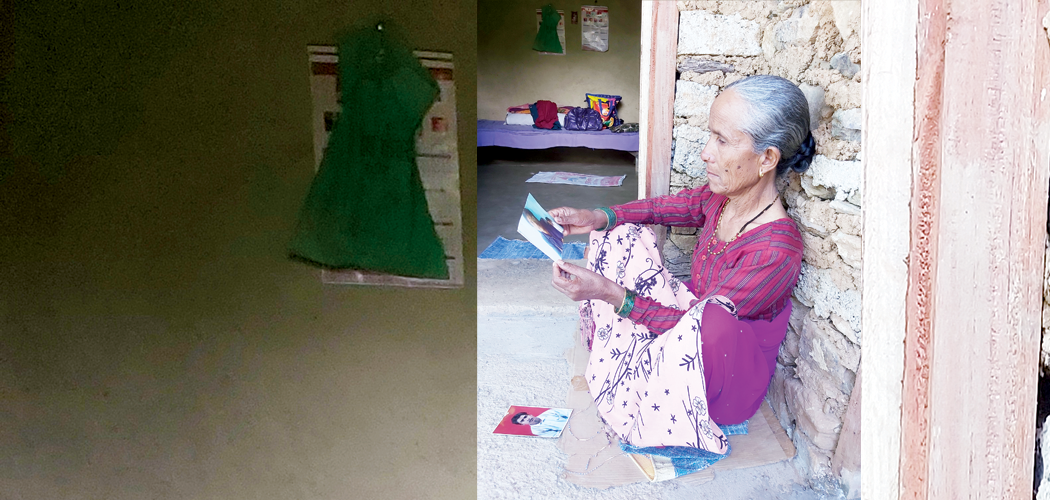
By Raju Lamichhane, Musikot, Sept. 6: Haunted by physical and psychological torture he went through during a decade-long armed conflict, a man from Rukum West has not dared to return home even 16 years after the end of the conflict.
Sher Bahadur B.K., 40, of Bhandarikanda in Musikot Municipality-6 of the district, refuses to return home because of traumatising torture he suffered as a teenager, his mother Parbati Kami said.
Now 66 years old, she is increasingly facing a difficult time due to her advanced age. Compounding her misery is her only child’s unwillingness to return home. Parbati said that her son Sher Bahadur is now in Ahmednagar, India. “My son was 15 years old then. He had just returned home from school when the police came and took him,” said Parbati, “They detained him for 22 days without any reason and tortured him.” She informed that her son, who was arrested in September 1997, ran away to Kalapahad (India) after the court started calling him. It has been 25 years since he left home, but Sher Bahadur has not returned home, she said.
Parbati is sad that she could not live with her only child in her twilight years. Even years after the end of the armed conflict, Sher Bahadur still thinks that the war between the Maoists and the police is going on in Nepal, and he fears that he would be tortured if he returns, Parbati said.
Parbati said, “My son is hearing-impaired, he speaks Hindi when he calls me on my mobile phone, he is not like before. He is calm and acts as if he doesn’t care about anything. He only talks about past things.”
Parbati said that her son is still in trouble because of the torture he received as a teenager. Parbati became emotional as she showed Sher Bahadur’s photo and said, “He will not come back because he acts like he is not alive.” After the death of her husband in 2016, her loneliness has only deepened. Parbati spends her time remembering her son. She has no land of her own. The government has built a house under the public housing programme, but she is not willing to stay there alone.
She said, “I want to cook my son’s portion of food when I light a fire in the fireplace, I want to sit with my son and eat whatever I have.” Parbati said, “I would continue suffering the pain of not having my child with me until I die.”
The social security allowance given by the government has helped her to stay alive so far. Since Rukum was the flashpoint of the Maoist insurgency, many people like Parbati have been in fathomless pain which they had never imagined.
Kamala Khadka, a psychologist at the Women’s Rehabilitation Centre (OREC) Nepal, said that the psychological effects of the armed conflict are still present in most of the districts. Conflict victims complain that local, provincial and federal governments have not been able to conduct effective programmes targeting the conflict victims, Khadka said.
It is necessary to conduct a proper programme to minimise the deep psycho-social trauma caused by the conflict, she said.
-original-thumb.jpg)


-original-thumb.jpg)