- Saturday, 4 April 2026

A Crackdown On Illegal Structures
Bini Dahal
Unregulated urbanisation has become the newest emerging issue in major cities of Nepal. Despite being one of the least urbanised countries in the world, Nepal’s cities and towns are growing fast, but in an erratic manner. So, it is difficult to confidently call the current trend of urbanisation a sign of development.
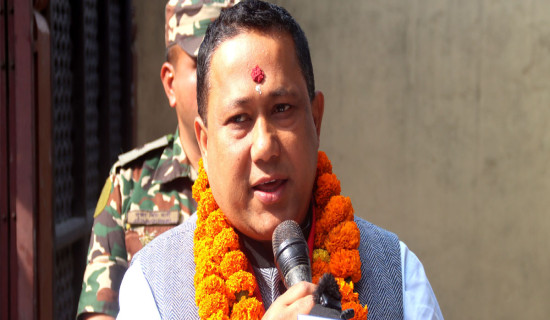
Kathmandu is found to be bearing the brunt of unplanned urbanisation. The population level here extends beyond its carrying capacity, creating too many unwarranted issues. The selection of Balendra Shah, as the Mayor of the Kathmandu Metropolitan City (KMC), is a clear indication that the Kathmandu denizens wanted someone different to deal with a myriad of existing problems.
Now that Shah is an energetic and visionary mayor, it is evident that he has many ideas he wants to implement for the city's betterment. However, a system that has continued for so many years is difficult to be changed at once. Yet, his efforts and his dream of changing the face of this historical and cultural city within the next five years are commendable.
Though Shah’s first three months in office could not be so noteworthy in terms of addressing the city’s mess, he now seems to have started coming into action. His latest move involves the demolition of different illegal commercial structures. The KMC has found the owners of commercial buildings operating shops at spaces underground meant for parking vehicles. This initiative aims at making available more parking spaces within the city.
Parking vehicles is not easy. The number of people who own vehicles (be it two-wheelers or four-wheelers) has increased dramatically. While the mode of transportation has helped ease the lives of people, we cannot say the same when it comes to mobility. Everywhere, the congestion is overbearing. An individual might reach a destination somehow, but s/he does not know where s/he can park the vehicle. An already narrow road gets narrower when vehicles are parked at any space available.
So, the KMC is destroying such structures keeping in mind the growing population, traffic congestion and difficulties commuters are facing while parking their vehicles. That the city is home to a large number of illegal structures is a clear indication of how the public institutions and businesses have existed up until now. It was possible for businessmen to build such structures because of a weak monitoring mechanism in place.
The KMC also needs to forge partnership with the private sector to address a number of challenges, including the parking spaces, as it cannot bring about any dramatic changes without the help of the businesses. Until and unless an action-oriented leadership emerges with proper planning and study, any kind of urban issue cannot be tackled.
It is needless to say that someone had to take up such a strict measure. Had they not taken it, the trend of defying government regulations would have continued. The urban growth in the city would have surely gone downhill without much progress. The idea of sustainability is linked to nearly every sector today. And the sustainable and resilient city is the need of people.
The continued effort and the action on the part of the KMC have created a ray of hope in the hearts of the Kathmanduites -- a hope to see Kathmandu in a progressive light. This move must go on until Kathmandu gets a facelift.