- Thursday, 28 May 2026

People pray at Banaskhandi shrine for rain, good harvest
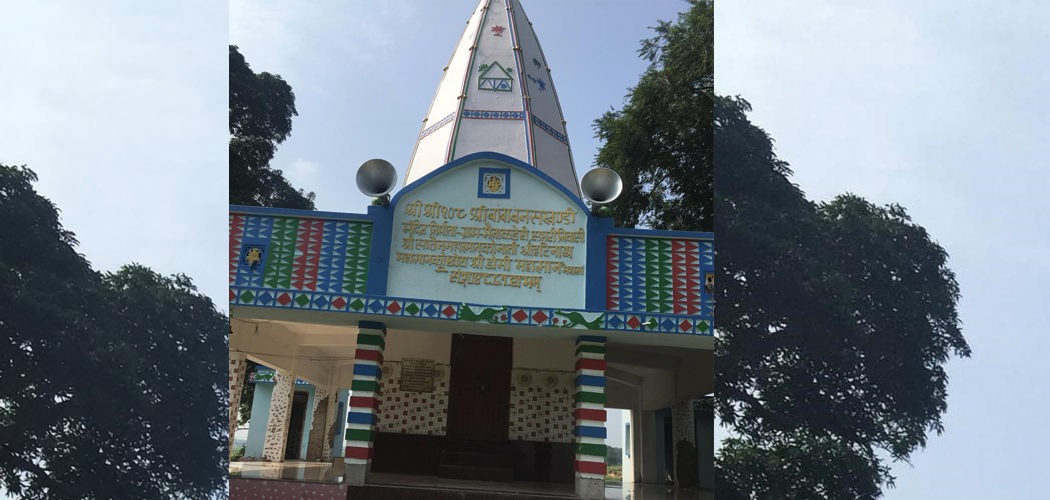

By Mala Karna Kalyanpur, July 15: People in Kalyanpur believe that offering prayer at Baba Banaskhandi (Thelia) shrine in Tirhut Rural Municipality, Saptari district, during mid-June to mid-July period will bring rains and good harvest.
Every year, Saptari's Chief District Officer (CDO) performs Rudri, Indra Puja and Hawan in the Nepali month of Asar as a tradition for the rains at the shrine. Earlier, that ritual used to be performed under the leadership of the chief of Land Revenue Office.
The temple is considered to be the oldest and most famous in the district and is located about two km south of Simara Chowk along the East-West Highway. The main feature of this place is that the people firmly hold the belief that it will rain when they worship in Banaskhandi amid drought-like situation in paddy plantation season.
Saptari's CDO Janardan Gautam, Superintendent of Police Avinarayan Kafle and others offered their prayers on Monday. “Mass prayer was organised recently at the place in line with the belief that doing so will bring rains and yield bumper harvests,” said Vijay Yadav, chief of the rural municipality. He said that the prominent people of the district, driven by the same belief, have been worshiping here every year.
Because Bansakhandi Baba is the follower of Guru Nanak, the founder of Sikh religion, Sikhs consider it to be a sacred place. Banaskhandi Baba is said to be an enlightened soul. The legend has it that he used to take a bath in Guptagadda in the morning, wake up at Dhuniwan (Ramdhuni) in the Sunsari district, rest at Besatakiya, and return to his Theliya-based math at night to take rest. Guptagadda is now referred to as “Jhauradaha”. All these three places he used in his day-to-day life are now famous as pilgrimage sites in Saptari and Sunsari.
Baba Banaskhandi math has been built on a large mound at an elevated place in an open field. There is a big Sal tree nearby. According to local eyewitnesses, the tree used to bear mango fruits until a few years ago. There is a belief that when Baba’s desire to have mango was unsuccessful, he hit the tree with tongs in a fit of rage. That resulted in mango appearing in the tree.
Even to this day, a branch of Sal tree is visible in the lower part of the tree while branch of mango tree is seen in the upper. Nearby lies the hermitage of Mohandas Bairagi, a sect of the Guru Nanak. He meditated there for many years until he breathed his last. What’s more, there is also a belief that Guru Nanak himself is buried there. The math also has an ancient and rare scripture related to Sikhism.
However, ancient texts and idols written in black transparent stone and Gurmukhi script of 2048 BS have now disappeared from the math. A large number of devotees from India’s Punjab, Mumbai and Delhi in the past used to make the pilgrimage to the place every year, but after the theft, the number has dwindled.
According to the records, the then king Rajendra Bir Bikram Shah provided 126 bighas of land in the name of the math for offering prayers. Although the math is associated with the Sikh religion, Hindus consider it to be an extremely important place of worship.
Even though regular worship happens there daily, a big fair is organised on the day of Haribodhini Ekadashi in the month of Kartik and Bhima Ekadashi in the month of Magh.
Behind the Banaskhandi math, on the banks of the Mahuli River, lies an archeological mound spread over an area of about 6 bighas. Chairman Yadav said that the government should be serious in constructing physical infrastructures and access road to the math.

-square-thumb.jpg)