- Tuesday, 19 May 2026

Community Forests Pilot Nature-Based Solutions to Reduce Wildfire Risks
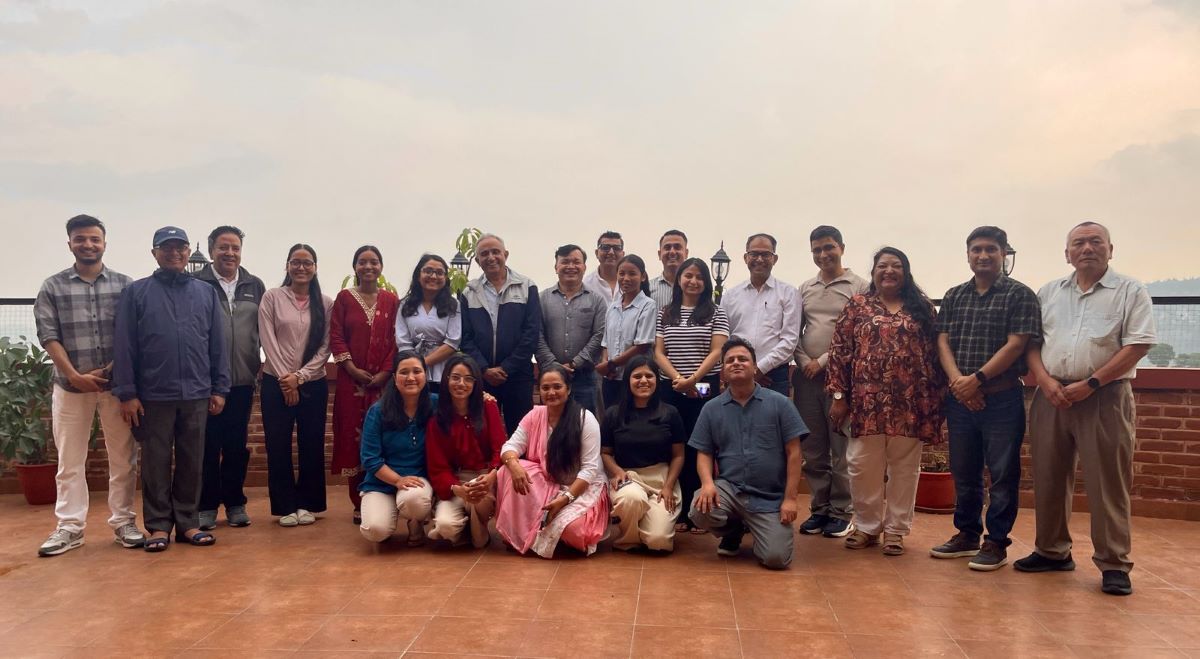

By A Staff Reporter, Kathmandu, May 19: The programme partners under the PunarUtthan Programme have reviewed progress on the application of nature-based solutions (NbS) for wildfire mitigation.
The partners held the reviews nearly after a year of
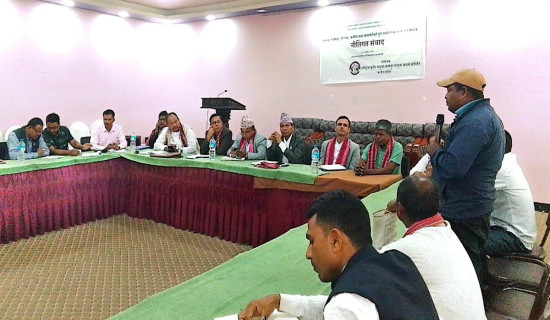
field implementation organising a four-day Annual Progress Review and Planning
Meeting from May 14 to 17.
The review meeting brought together representatives
from partner organisations and consultants, including Rupantaran, Global
Institute for Interdisciplinary Studies (GIIS), Nature Media Network (NMN), and
Kathmandu University School of Management (KUSOM), along with programme
management and technical experts.
Addressing the opening session, Country Director
Kiran Ojha said the programme was being implemented as an action research
initiative that prioritises learning through practical field interventions. He
noted that the programme begins with action on the ground, while lessons and
knowledge emerge from those interventions through collaboration and adaptive
approaches.
The review comes at a time when Nepal is witnessing
a growing number of wildfire incidents. Between 2001 and 2023, more than 40,000
fire events were recorded across the country, affecting ecological systems,
agricultural productivity and nearly 7.5 million people, particularly in
Lumbini, Karnali and Sudurpaschim provinces. These areas include more than
1,000 community forests that support the livelihoods of over two million
people.
During the review meeting, partners presented
progress achieved between March 2025 and April 2026. Programme interventions
have been implemented in selected municipalities of Arghakhanchi, Kapilvastu,
Surkhet and Kailali districts, where communities are testing a range of NbS
practices. These include composting, irrigation and recharge ponds,
agroforestry systems, and green firebreaks designed to reduce forest fuel load,
conserve soil moisture and strengthen ecosystem resilience.
According to organisers, a total of 35 different NbS
practices are currently being piloted, including interventions across 26
community forests to evaluate their effectiveness under varying ecological and
socio-economic conditions.
Programme lead Narayan Gyawali stressed the
importance of systematic documentation and evidence generation to demonstrate
how the interventions contribute to wildfire mitigation and community
resilience. He also emphasised the need to strengthen Gender Equality,
Disability and Social Inclusion (GEDSI) approaches within programme activities.
Similarly, Uttam Babu Shrestha, Director of GIIS,
underscored the importance of linking field implementation with research,
noting that reliable and timely field data are essential for measuring impacts
and informing policy decisions.
Representatives from partner organisations also
shared updates on their respective roles. NMN highlighted its contribution to
community mobilisation and outreach, while LB Pun of KUSOM stressed the
importance of documenting field-based learning and translating it into
policy-relevant knowledge.
The meeting also reviewed the programme’s approved
workplan and budget and discussed priority activities, research methodologies,
monitoring systems and coordination mechanisms for the coming phase.
The PunarUtthan Programme, being implemented from
March 2025 to January 2029 by Lutheran World Relief in partnership with
Rupantaran, GIIS, NMN and KUSOM, aims to strengthen wildfire resilience,
restore ecosystems and improve livelihoods through locally led approaches. The
programme is supported under the REDAA initiative managed by the International
Institute for Environment and Development with funding from the United Kingdom’s
Foreign, Commonwealth and Development Office.