- Sunday, 7 June 2026

Foundation stone laid for China Chongqing–Nepal Vegetable Training Center
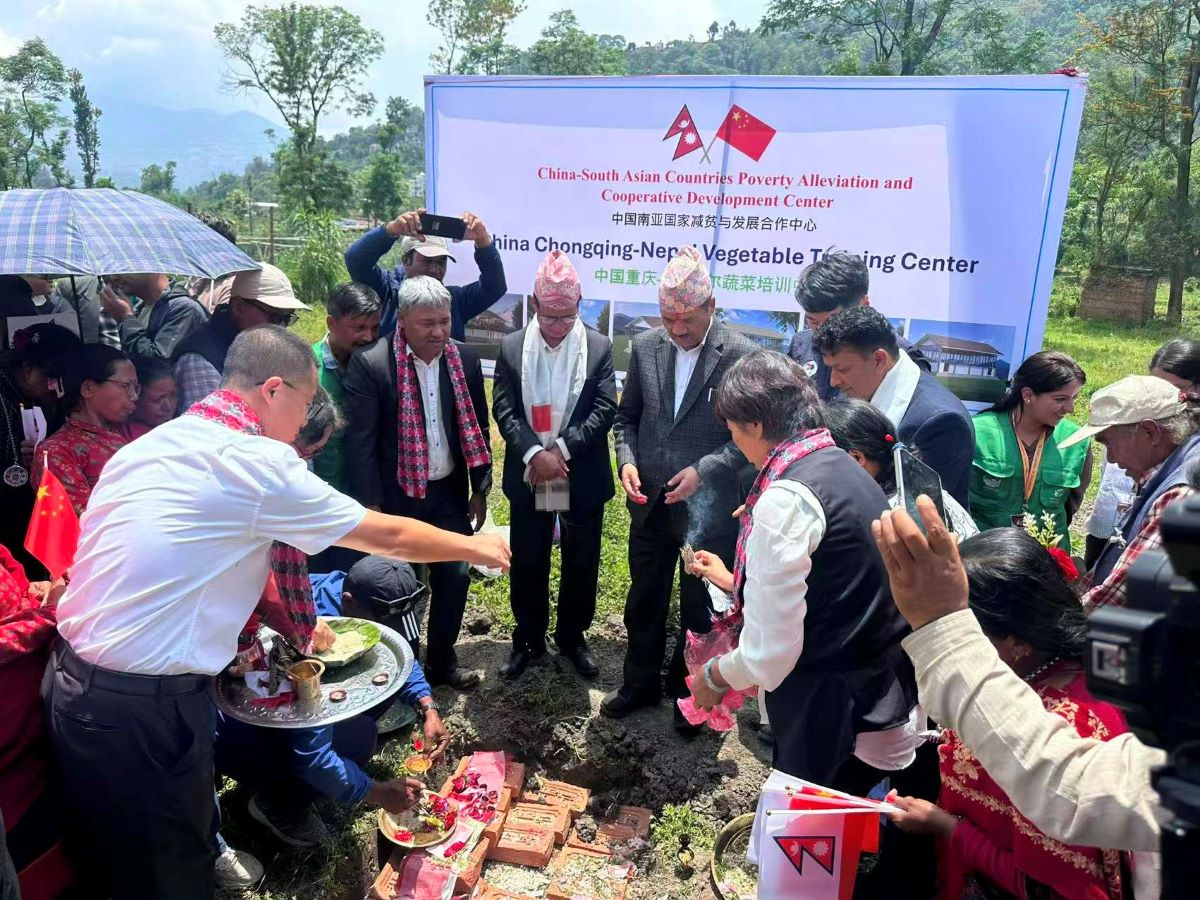
By TRN Online, Kathmandu, May 10: The Foundation
Stone has been laid for building the China Chongqing–Nepal Vegetable Training
Center at Khokana, Ward No. 21 of Lalitpur Metropolitan City.
The foundation stone was jointly laid by Madhusudan Paudel, Minister for Agriculture and Livestock of Bagmati Province, representatives from the Embassy of the People’s Republic of China in Nepal, and Zou Zhiqiang, Country Director of China Foundation for Rural Development (CFRD), Nepal Office.
On the occasion 2026 Vegetable Technical Training Program was also opened.
Mayor Chiri Babu Maharjan of Lalitpur Metropolitan City and Mayor Mohan Basnet of Dakshinkali Municipality further reinforced Khokana and Dakshinkali’s growing role as a focal point of rural transformation under the “China–South Asian Countries Poverty Alleviation and Cooperative Development Center – Nepal ‘Vibrant Village’” initiative, supported by the Embassy of the People’s Republic of China in Nepal, according to a press note issued by the CFRD.
The initiative aims to modernize Nepal’s vegetable sector through greenhouse innovation, climate-smart agriculture, and sustainable farming systems—positioning Khokana as a living model of rural renewal.
The project is already taking shape in Khokana, Lalitpur and Hudu, Dakshinkali, where greenhouse structures and technical support systems have been introduced. Focus areas include vegetable productivity enhancement, food security, efficient water use, integrated pest management (IPM), balanced fertilization, and stronger institutional coordination among stakeholders. With the guidance of Chinese experts, the project has gained strong momentum and is steadily flourishing. Fresh vegetables produced under the initiative are now being sold in local markets, exported to Qatar, and also showcased by CFRD in various high-level exhibitions and events, stated CFRD.
Adding color and life to the ceremony, the grounds turned into a vibrant exhibition of CFRD-supported projects in Khokana, including school feeding, education support, women’s empowerment programs, vocational training, and vegetable farming initiatives. Each stall reflected a layer of transformation already taking root in the community. The highlight came from local women’s groups and farmers, who proudly showcased their handmade creations—handwoven shoes, locally made candies, and other crafts and fresh vegetables harvested under the project. Their stalls drew attention not just for the products, but for what they represented: resilience, skills turned into income, and the quiet rise of economic independence.
Speaking on the occasion, Madhusudan Paudel, Minister for Agriculture and Livestock of Bagmati Province, emphasized the need for promoting climate-smart and technology-based agricultural practices to strengthen Nepal’s vegetable sector and improve farmers’ livelihoods.
He further stated that the training center would play a significant role in enhancing farmers’ technical knowledge, increasing agricultural productivity, creating employment opportunities, and encouraging sustainable and commercial farming practices in the province.
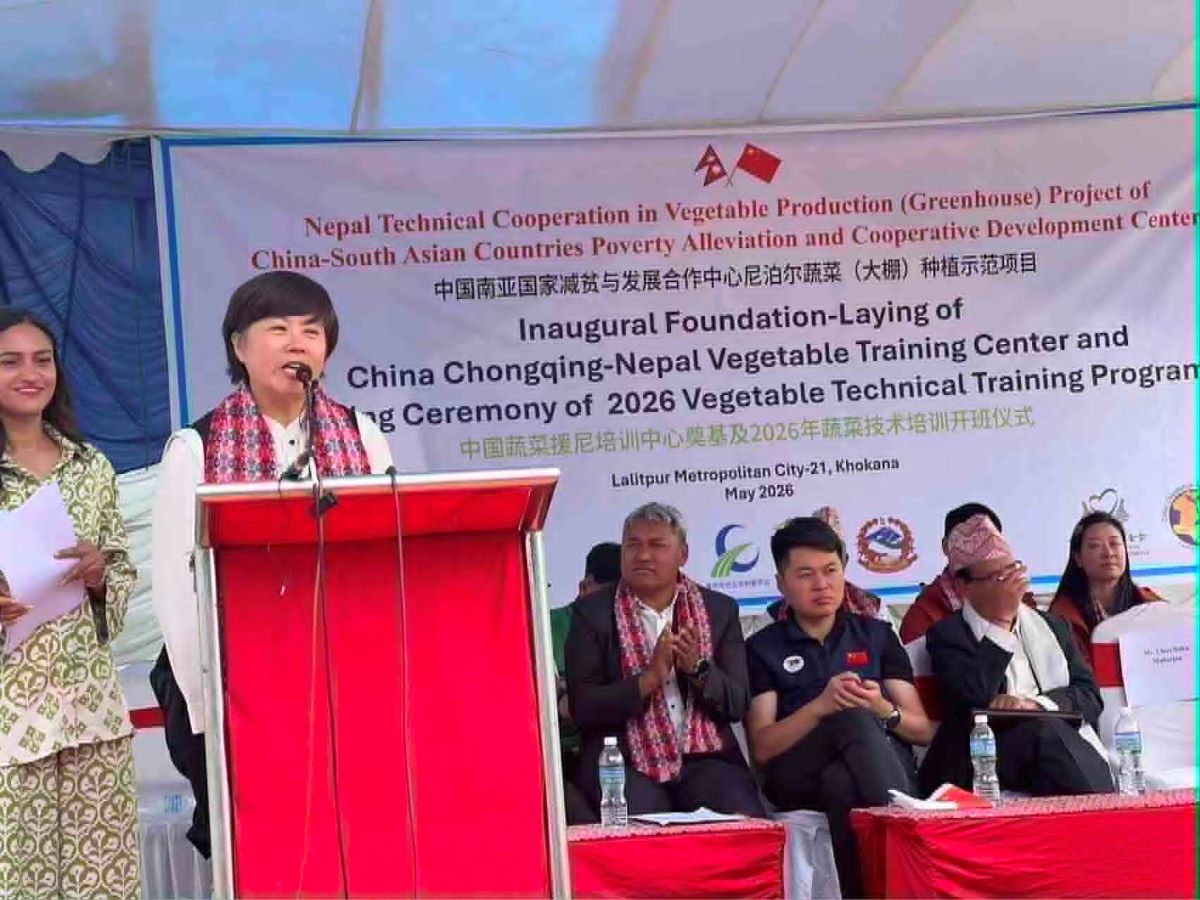
CFRD Nepal Country Director Zou Zhiqiang stated that the establishment of the training center and continued technical cooperation would strengthen farmers’ capacities through the adoption of modern agricultural technologies and improved farming practices.
She further emphasized that the initiative would contribute to increased agricultural productivity, enhanced economic opportunities, and the promotion of sustainable and climate-resilient farming systems in local communities. emphasized the importance of Nepal–China cooperation in promoting sustainable agricultural development, technology transfer, and rural revitalization.
She stated that the establishment of the Vegetable Training Center reflects the strong friendship and mutual commitment between the two countries people to support farmers through modern agricultural technologies, practical training, and capacity enhancement initiatives.
In a demonstration of knowledge exchange, CFRD recently facilitated a technical visit by agricultural experts from Chongqing, China. The delegation worked directly with local farmers, walking fields, conducting hands-on training, and sharing advanced insights on greenhouse cultivation, post-harvest handling, and integrated vegetable farming systems designed to strengthen community-based agricultural economies.
Over the past year, China Foundation for Rural Development has expanded its footprint across Nepal under the Vibrant Village Initiative, implementing flagship projects including hybrid rice demonstration farms in Chitwan, greenhouse vegetable systems in Khokana and Dakshinkali, and fishery and livestock technology projects in Jhapa. These efforts reflect a broader strategy of linking technology transfer with grassroots capacity building and rural innovation. Once again, Khokana stands at the crossroads of transformation. Already shaped by school feeding programs, women’s livelihood projects, vocational training, and agricultural interventions supported by CFRD, the village is increasingly emerging as a model of integrated rural development.
The ceremony concluded with symbolic exchanges, field visits, and interactive dialogues between farmers and experts, marking not just the start of a training center, but the beginning of a broader agricultural shift aimed at reshaping rural livelihoods through science, cooperation, and shared progress, according to the CFRD.