- Monday, 25 May 2026

Energy export strategy ready
By A Staff Reporter
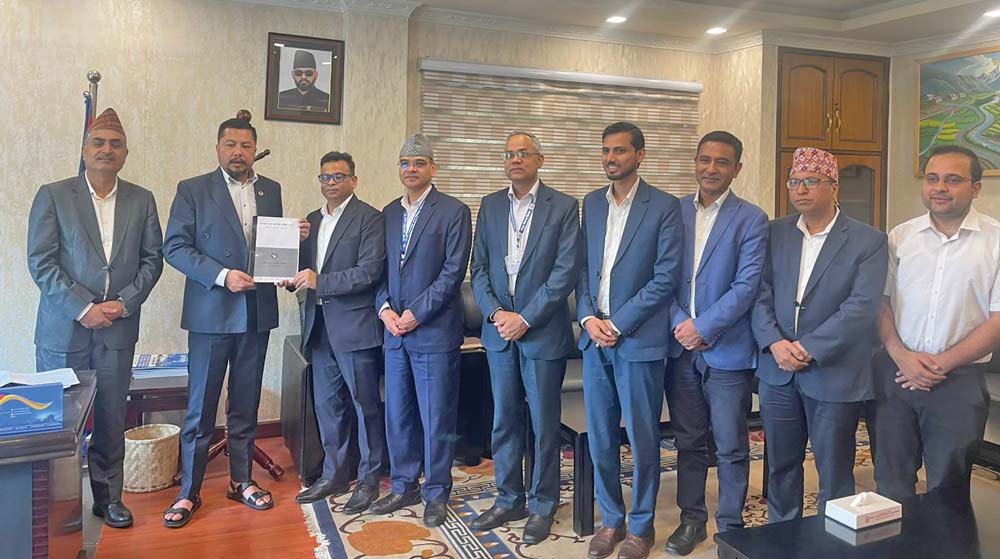
Kathmandu, Apr. 24: With the aim of making the energy sector the main pillar of economic transformation, the “Energy Consumption Growth and Export Strategy, 2083” has been submitted to the Minister for Energy, Water Resources and Irrigation, Biraj Bhakta Shrestha.
The strategy was prepared by a committee coordinated by Joint Secretary at the Ministry of Energy, Water Resources and Irrigation Sandip Kumar Dev and was submitted on Thursday, according to minister's secretariat.
The minister had formed a high-level study committee to address energy consumption and export strategies under point 74 (a) and (c) of the 100-point governance reform action plan approved by the Cabinet on April 27, 2026.
The strategy emphasises significantly increasing domestic electricity consumption while also promoting the export of surplus electricity as part of a long-term roadmap. It also stresses achieving 100 per cent household electrification and carrying out extensive improvements in transmission and distribution systems.
It further highlights encouraging the use of electric household appliances, upgrading the capacity of meters and transformers, and gradually reducing the use of Liquefied Petroleum Gas.
A major target outlined in the strategy is increasing per capita electricity consumption from the current level of about 450 kWh to 1,500 kWh within next 10 years. The key recommendations include promoting electric public transport, expanding charging station networks, and replacing coal and petroleum-based industrial boilers with electric systems.
For increasing energy consumption, the strategy proposes implementing consumer-friendly “seasonal” electricity tariff rates. This is expected to improve energy efficiency, reduce trade deficit, and strengthen foreign currency reserves.
On the generation side, the strategy aims to increase the share of reservoir-based and semi-reservoir hydropower projects to address seasonal imbalances between dry and wet seasons.
It also proposes expanding the national transmission system and increasing electricity exports to regional markets through cross-border transmission lines.
Exports are planned to be focused especially during high-demand evening hours to maximize economic benefits. The strategy sets a target of exporting 15,000 megawatts of electricity within next 10 years.
The strategy also identifies potential risks and proposes clear measures for their management. In addition, it prioritizes expanding private sector participation in electricity trade and improving the efficiency of the Nepal Electricity Authority through structural reforms.
For effective implementation, a strict monitoring system will be adopted and accountability will be ensured based on performance.
The committee includes Deputy Director General of the Department of Electricity Development, Gokarna Raj Pantha; Joint Secretary for Legal Affairs at the ministry, Jok Bahadur Dangi; Secretary of the Electricity Regulatory Commission, Nabin Raj Singh; Acting Deputy Managing Director of the Nepal Electricity Authority, Rajan Dhakal; Director Thark Bahadur Thapa; and Senior Divisional Engineers of the ministry, Raju Maharjan and Sanjiv Ray, as members.


-original-thumb.jpg)