- Sunday, 7 June 2026

Tap Huge Prospects of Wellness Tourism

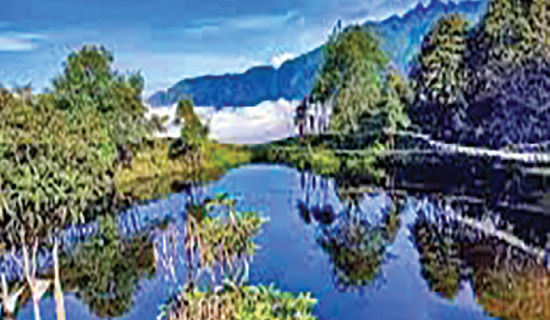
Nepal is undeniably a paradise for tourists, especially adventurers, explorers, nature lovers, and those interested in people’s culture and lifestyle, from around the world, because of its unmatched geographic, climatic, social and floral and faunal diversities. International visitors with different interests find this country an alluring destination with many snow-clad mountains, dense forests, green hills and beautiful valleys, lakes, rapidly-flowing freshwater rivers, and other breathtaking sceneries. With unique, age-old healing practices still in vogue, the country also holds a lot of potential for emerging as an appropriate wellness destination for those looking for evidence-based natural, traditional and cultural therapies.
The Himalayan belt of this country is regarded as a sacred abode where many sages had practised yoga and meditation. As mentioned by various religious scriptures, Lord Shiva (who is revered as the Supreme Deity) is also considered the patron of meditation, yoga and arts. Known as the first guru, Lord Shiva is the source of all knowledge. Also regarded as the first dancer of the universe, he is believed to have been staying as a detached ascetic on Mount Kailash (which is now located in Tibet of China). The Vigyan Bhairav Tantra, an ancient Kashmir Shaivism text, offers 112 meditation techniques that can be applied for attaining higher consciousness. Most of those techniques are related to breathing. Spiritual practitioners adopt those techniques to transition from mundane perception to full self-awareness.
Peaceful country
Nepal is a relatively peaceful country with its good religious and ethnic harmony. Hinduism and Buddhism are the main religions. The country has so far witnessed no strife related to religion and ethnicity. Both Hinduism and Buddhism have taken meditation as their important spiritual component since time immemorial. With a rising level of public awareness about the importance of meditation for their health and spiritual well-being, many people are now found being inclined toward meditation and yoga. Studies suggest that a spiritual lifestyle coupled with daily physical activities, proper diet habits, and stress management is key to improving the health and hygiene of individuals and communities.
In view of the desired implications of wellness for promoting self-discovery and action for the holistic well-being of people, the United Nations (UN) declared April 15 each year as International Wellness Day. What is notable is that, as proposed by Nepal, the global body endorsed a resolution in this connection on March 10, 2026. Nepal. The fact that Nepal took such an initiative to boost people’s health and wellbeing has brought the country to the spotlight globally once again. This initiative may also contribute towards protecting and promoting the huge wellness tourism resources this Himalayan country possesses.
The first International Wellness Day was observed in Nepal and other countries worldwide on April 15 with various programmes. The annual event provides a platform for education, cultural exchange, and knowledge-sharing. It also inspires people to embrace accessible, inclusive, and affordable wellness practices, enhancing their personal as well as collective health. The UN has already proclaimed March 20 as International Day of Happiness, June 21 as International Day of Yoga, and December 21 as World Meditation Day. The UN has passed those resolutions considering the fact that such global observances may complement each other in supporting wellness, harmony and a balanced way of life. The day encourages individuals and communities to focus on physical, mental and emotional well-being.
Wellness contributes to promoting quality of life, protects human dignity, and empowers individuals and communities to adopt sustainable lifestyles and safeguard resources for future generations. According to the UN, the wellness sector has a growing role to play when it comes to achieving the Sustainable Development Goals (SDGs) as well because it helps in job creation, poverty reduction and advancement of inclusive and sustainable economic growth. This sector is related to Goal 3 ‘Good Health and Wellbeing’ of the 2030 Agenda for Sustainable Development. It aims to ensure healthy lives and promote well-being for all at all ages. It intends to deal with major challenges like maternal and child health and access to essential medicines and vaccines. Besides, it gives importance to mental health, universal health coverage, and the reduction of health inequalities to build resilient and inclusive societies.
Vital chunk
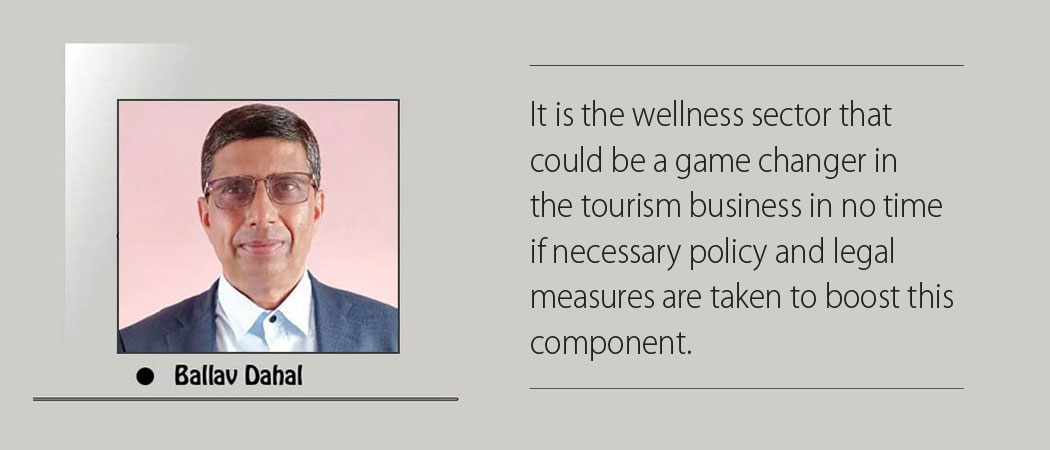
Developing Nepal into an important wellness tourism destination has also been included in the government’s 100-point action plan for effective governance. The government has come up with this idea to attract high-end international travellers into the country, giving a sustained boost to the national economy. Although tourism has been hyped as a vital chunk of the economy, its contribution to the gross domestic product (GDP) hovers just about 6-7 per cent. This sector requires the government’s high priority so as to increase its contribution to the GDP. It is the wellness sector that could be a game changer in the tourism business in no time if necessary policy and legal measures are taken to boost this component.
Meanwhile, the Nepal Tourism Board (NTB) has lately declared 2027 as "Nepal Wellness Year" in order to position the country as a premier global hub for healing, yoga, and meditation. This is a good step towards highlighting the country as a destination with spiritual peace and wellness. With just eight months left for the year-round event to begin, relevant authorities must now start making necessary preparations to make it a success. A clear investment protocol should be in place to attract more investors into the wellness sector. More human resources also need to be trained in wellness services. Much focus should also be laid on coordination, marketing and promotion.
(The author is a former deputy executive editor of this daily.)
-original-thumb.jpg)