- Thursday, 30 April 2026

Law fails to uproot Chhaupadi in Bajura
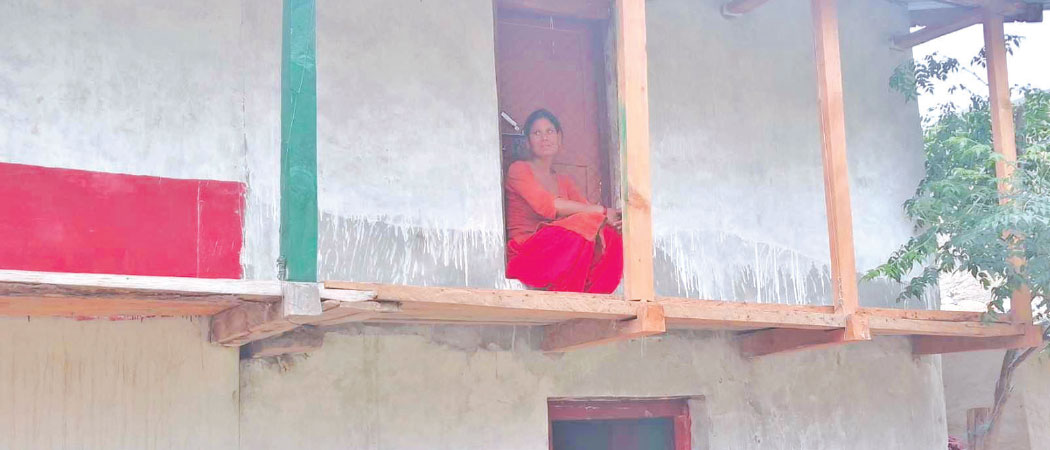

By Sher Bahadur Sarki,Bajura, Mar. 15: Women in the Bajura district are still forced to stay in chhaugoaths (menstrual sheds) for five days during menstruation, despite laws banning the Chhaupadi practice. They are not allowed to sleep inside the house and are also restricted from eating nutritious food such as yoghurt, buttermilk and milk.
This tradition has continued for generations in Bajura and remains deeply rooted in society. Even though the practice has been declared illegal, the law has failed to eradicate it. As a result, women and girls are still forced to stay in chhaugoth during the cold winter and the muddy monsoon season.
Because of this practice, thousands of women and girls in the district have suffered from various health problems. Some have even died while staying in chhau sheds.
Local governments have the authority and responsibility to eliminate such harmful social practices. However, local leaders have not been able to take action against those who promote the practice due to fear of traditional healers (dhami-jhankri) and beliefs related to gods and goddesses.
Even when some women try to stay inside their homes, traditional healers often frighten them by saying that the gods will become angry.
Dev Serala, a social activist from Budhiganga Municipality-9, said the practice continues because younger women follow the traditions of older generations.
Similarly, Pabitra Budha, a teenage girl from Khaptad Chhededaha Rural Municipality-5, said women are forced to stay in chhau sheds mainly because of pressure from family members and traditional healers.
“I started menstruating about five or six years ago. At first, I was not allowed to sleep inside the house,” she said. “But as I grew older and continued my education, I explained to my family that chhaupadi is a harmful practice. Now they have agreed and I stay in a room inside the house,” Budha said.
“Older women still tell us to stay in chhaugoth, but I no longer follow them. A few women like us now stay inside our homes, but most women here still follow the practice,” she said.
On January 9, 2019, a tragic incident in Budhinanda Municipality-9 shocked the district. Amba Bohara and her two sons died from suffocation when a fire broke out in the chhaugoth where they were sleeping.
Following the incident, authorities launched a campaign to demolish chhaugoths across the district. On February 26, 2025, police from Budhiganga Municipality-8 demolished about 29 chhaugoths in several villages, including Nuwakot, Sigada, Bhandargaun, Jhargaun, Badeda, Timada and Selapakh.
In total, around 540 chhau sheds have been destroyed in Bajura, but the practice continues because attitudes in society have not changed.
A local woman from Budhiganga Municipality, who asked to be identified only as Raju BK, said she still sleeps outside during menstruation because her in-laws warn that the gods will become angry if she stays inside the house.
Under Section 168 (3) of the Criminal Code, forcing a menstruating or postpartum woman to stay in chhaupadi or treating her with discrimination or inhumane behaviour is a punishable offence. However, social traditions are still given more importance than the law in many communities.
The practice is still common in Triveni, Khaptad Chhededaha, Badimalika, Himali, Swamikartik Khapar, Jagannath, Budhinanda, Gaumul and Budhiganga municipalities of Bajura district.
Budhiganga Municipality reportedly has the highest number of people following the practiceThe practice is comparatively less common in Himali Rural Municipality, where local authorities have been running awareness programmes to eliminate it.
Chairperson Govinda Bahadur Malla said the municipality has been conducting awareness campaigns in all wards and plans to declare the entire area chhaupadi-free in the near future.
Chief District Officer Dorendra Niraula said changing public awareness is essential to end the practice.
“Chhaupadi is illegal and must be eliminated completely. For that to happen, people’s attitudes and awareness must change,” he said. He also warned that legal action will be taken against anyone who forces women to stay in chhaugoths during menstruation.