- Monday, 25 May 2026

PHOTO ESSAY
From Market stall to ballot box: Women's votes for Nepal's election 2026
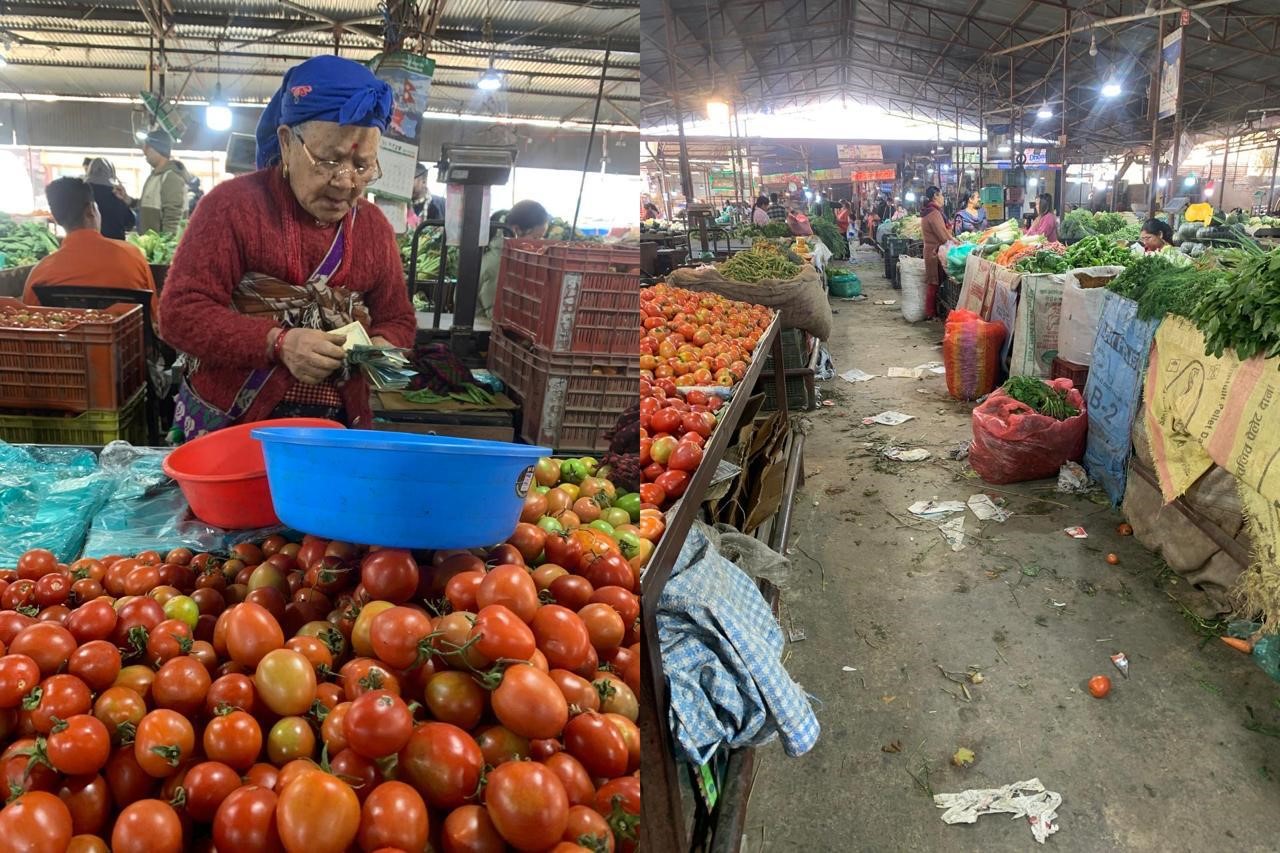

Dhan Maya Gurung ,72, is busy counting money at her vegetable stalls. In front of her, there are fresh tomatoes ready to be sold. Her family runs this small business whereby they collect vegetable from the farm at countryside and brings in to sell at the heart of city. The vegetable stall has mainly tomato and some cabbages.
In the modest, unassuming space of the vegetable market in Lalitpur district, women continued the political discussion amid transactions. While customers were coming and going, women vendors shared their opinion on Nepal’s parliamentary election 2026.
“I have voted many times in many elections. Every time I am told that our country will get better but it always fails. This time I felt like not voting but my grandchildren convinced me not to do so. As per them, it’s time that our vote brings change to the country’s deeply rooted political culture” Dhan Maya Saya.
According to the election commission, there were altogether 9,240,131 female voters for this parliamentary election 2026 and yet the women voices remain underrepresented.
“I was deeply hurt by the September violence incident in our country. It was really very disturbing and painful to see young children dying. I don’t understand politics much but I feel whoever did so much be punished.”
Last September, Nepal witnessed one of deadliest incident in its political history, witnessing civilian deaths. Widely referred to as the “Gen Z protest” saw young generation on streets against corruption, nepotism and a ban on social media. This protest was the culmination of rampant corruption, rising unemployment, inequality and failed government. For most like Dhan Maya, the election was not just a vote but a revival for the country’s political mechanism.
Dhan Maya Gurung shows some hope.
“I don’t want my grandchildren to go abroad. I think life is difficult abroad. When I tell them not to go abroad for work, they say that if the new government creates job opportunities, then we will definitely stay back. I ask them many times, do you think it will happen? They tell me that they are very hopeful and convinced me to be hopeful for the new upcoming leaders. As these old guards in failed political mechanism have been defeated in the election through ballot box our country will start to choose the path of stability and development, my grandchildren tell me. Like most families of Nepal, migration has been both an opportunity and a sorrow. Dhan Maya spends nearly five to six hours daily at the stall alongside her husband. Her son and grandchildren join when time is feasible.
Political discussions aren’t common amongst women in Nepalese society. Yet in this vegetable market, I could see women talking about the election. Women’s involvement into domestic politics remains relatively very low. In this 2026 parliamentary election, women have been either underrepresented or given less priority at party conventions, debates, presidential campaigns and even candidacy. The electoral commission reported that out of 3,406 candidates only 388 are female. It seems to be an enduring side of Nepalese political system, this deeply ingrained gender disparity in politics.
The women vendor’s hope has been clear: employment and stability.
When asked upon what are they actually looking from the new government, their common answer was employment and stability. I tried to dig further into it and asked why are you asking employment further when you already have a vegetable business here? One of them told that her husband is working at gulf country, he tried to find work here but couldn’t. She had met her husband two years back and wasn’t happy as life out there was equally challenging.
On my conversation with another women vendor, I found that she was preparing to go for work abroad. Some of her friends had been to the gulf countries for work as a domestic worker and have been earned better salary. She told me that “the living expenses in Kathmandu is really high and could barely save some. The rent has skyrocketed and the education fees for children is no lesser.”
Kathmandu is one of the most expensive cities in South Asia, goods and services like food, drink, household supplies, rent, transport, utility bills, private school, domestic help and recreational cost demands higher income.
These women vendors have cautious hope from the upcoming days with new government but they are equally aware of the strenuous reality of the country. We would definitely like to live with our family in the country, going abroad for work really disturbs us but we have no choice left. Meanwhile one of them interrupts “even if the new is here our problem might not be solved; I am not that fully hopeful.” Because of corruption and mismanagement from the prior political parties our country has remained underdeveloped. Hence, this time we look for change and stability from the newer faces.
Yet, I feel something newer at this market, I could see women getting more aware about the political scenario in the country, they were more open to their ideas about election, they are not passive observers. They are equally thoughtful participants and is open to discussion whom and why they have chosen as their people’s representatives.
“I don’t feel like an old when I am working together with my family. I am happy to be here with all and hope that my children and grandchildren don’t have to go abroad for work. I hope the upcoming days will fulfill the desire of the young generation; I love Nepal and want to see it peaceful always”. ‘I hope the hope of my grandchildren relives from this election, it is for them that I voted for change says Dhan Maya Gurung with teary eyes.
(Shraddha Aryal Joshi identifies herself as a development professional in politics, resource economics and diplomacy.)


-original-thumb.jpg)