- Sunday, 7 June 2026

Locals of Sarlahi say votes are sought repeatedly, but water problem remains unresolved
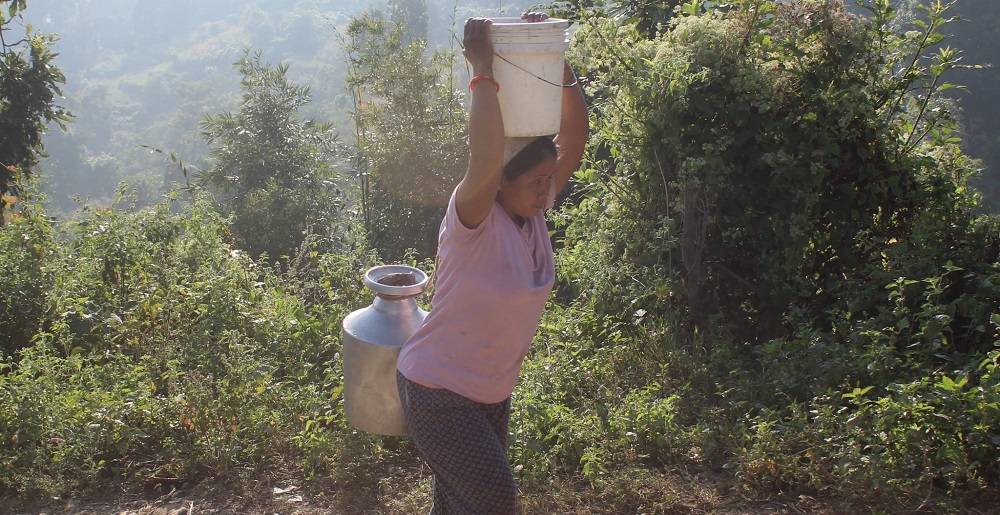
Local won of Hariban Municipality-1 fetching water. Photo: Janarjan Kharti/TRN
By Janarjan Khatri, Sarlahi, Feb.26: Residents of the Chure belt in Sarlahi district have expressed growing frustration over chronic drinking water shortages and the limited presence of election candidates in their remote settlements as the country heads toward the House of Representatives elections.
Bishnu KC of in Jharjhara-15 said that the water crisis is most severe for four to five months each year.
According to him, the situation has worsened to the extent that even during June and July, traditionally rainy months, residents are forced to fetch water from rivers.
“Rather than the election, we are more worried about water,” KC said, adding that daily life becomes extremely difficult during the dry season.
KC further alleged that election candidates rarely visit the remote areas of the Chure range to seek votes. “Candidates usually stay in the more accessible areas and visit the homes of party leaders, where they fest with meals. But they do not reach the homes of ordinary citizens living in difficult terrain,” he said.
Locals say the limited presence of candidates in their communities has made it difficult to communicate pressing issues such as water scarcity and poor road conditions.
They complain that while election campaigns are visible in towns and accessible villages, remote settlements remain largely ignored.
Shovitman Thing of Sirshekharka of Ishworpur-12 said elections have come and gone many times, but basic infrastructure such as drinking water and roads has yet to reach their village.
“There is a tendency for candidates to be seen during election time, but they do not return after winning,” Thing said. “Leaders and party cadres have come multiple times to ask for votes, yet they have never stepped into our remote village.”
Residents of the Chure region have reiterated that access to drinking water and road connectivity should be top priorities for elected representatives, urging candidates to focus on long-standing development issues rather than limiting their engagement to election periods.
In the Chure belt areas of Ishworpur, Lalbandi, Hariwan, and Bagmati Municipality, although local governments, the provincial government, and donor agencies have supplied drinking water to some settlements compared to the past, access has still not reached all scattered households.
As the country heads into the House of Representatives elections, residents here have put forward drinking water as their primary demand.
Brish Bahadur Bomjan ofBagmati Municipality-1 said t although the municipality distributes water by tanker for a few winter months, it is not sufficient. He lamented that throughout the dry season, there is no alternative but to search for water in rivers and streams just to fill a single vessel.
Bomjan complained that the shortage of water has made it difficult not only for daily household use but also for raising livestock and maintaining sanitation. “The drier it gets in our area, the more severe the drinking water crisis becomes,” he said. “People can somehow manage with one or two pitchers of water, but it is very difficult to provide enough for livestock.”
In the Chure region, women are forced to walk long distances to rivers and streams and carry water for hours in baskets. They say much of their morning is spent just managing drinking water.
As the nation moves toward elections, locals hope that if water from the Marin–Bagmati Irrigation Project can be channeled through the Chure belt, the problems of drinking water and irrigation in this region could be significantly reduced.
-square-thumb.jpg)

-original-thumb.jpg)