- Saturday, 2 May 2026

Parties In Real Test

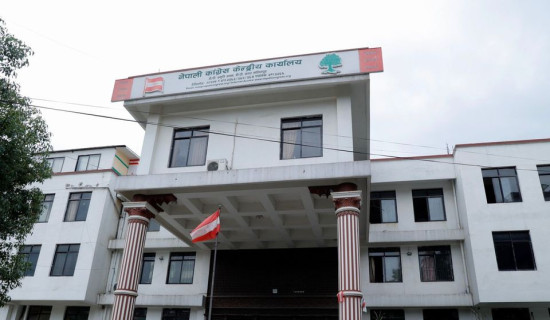
With only 11 days left until the House of Representatives elections, the government, the Election Commission (EC), and the political parties are now giving final momentum to their election-centric activities. The political parties have unveiled their election manifestos, giving them different names. Although the election body had urged the political parties to make their manifestos public by February 15, the big three—the Nepali Congress, the CPN-UML and the Rastriya Swatantra Party—unveiled them only on February 18 and 19.
Interestingly, these three parties chose three different locations to unveil their manifestos. The NC unveiled its manifesto in Janakpurdham, the capital of Madhes Province, on February 18; the CPN-UML unveiled it in Kathmandu on February 19; and the RSP did so in Surkhet, the capital of Karnali, also on February 19. Other parties, including the Nepali Communist Party, unveiled them before February 15.
The manifestos are what the political parties use to reach the people in elections. The Nepali Congress, in its comprehensive 10-point vision, has pledged to strengthen good governance and advance national prosperity under the slogan 'Prosperous Nepal, Dignified Nepalis'. Likewise, the CPN-UML has pledged to implement 11 immediate actions, including time-bound reconstruction of damaged public infrastructure and key state institutions, and strengthening law and order to restore public confidence in governance.
In its 100-point election manifesto, the RSP has focused on structural transformation, proposing reforms in governance, the economy, energy, education, health, and foreign affairs. Although common voters in Nepal hardly choose the parties based on the election manifestos, a handful of independent learned individuals tend to read them before deciding to cast their votes. Whether these manifestos become guiding documents or mere campaign rhetoric now depends on the political will of those seeking power.
After unveiling the manifestos, parties and their candidates are now reaching the voters, while the EC has started dispatching the ballot papers, and the government has already deployed security personnel, including the election police, to provide security before, during, and after the elections. According to a news report published in this daily the other day, EC has completed dispatching ballot papers to Sudurpaschim, Karnali, and Koshi provinces, and said it would complete the ballot distribution tasks in two days. Besides ballot papers, the EC has already made arrangements for other goods like ballot boxes and ink. The EC had printed 20,323,000 ballot papers for the first-past-the-post system.
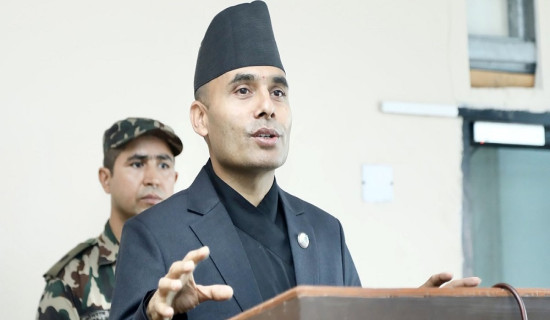
The developments made in holding the polls have also encouraged Prime Minister Sushila Karki, as reflected in her address to officials in Mustang the other day. She said with the House of Representatives (HoR) election set to be held simultaneously across the country, the only step left is for the citizens to cast their votes. She also directed officials to ensure that the polls are conducted on the designated date in a fair, fear-free and credible environment nationwide. She is also optimistic about the favourable weather on election day.
Now that almost all preparations have been completed by the government and the EC, political parties must ensure their campaigns remain peaceful by strictly adhering to the code of conduct. They should shun unethical and violent activities so as not to spoil the election environment. The government may deploy security forces and the EC may print millions of ballot papers, but the real guarantee of a credible election lies in the conduct of the political parties. If they fail to uphold discipline and democratic values, no administrative preparation will be enough. The coming 12 days will test not just electoral logistics but political maturity.
-square-thumb.jpg)