- Saturday, 2 May 2026

Nepal’s Esports body face recognition deadlock
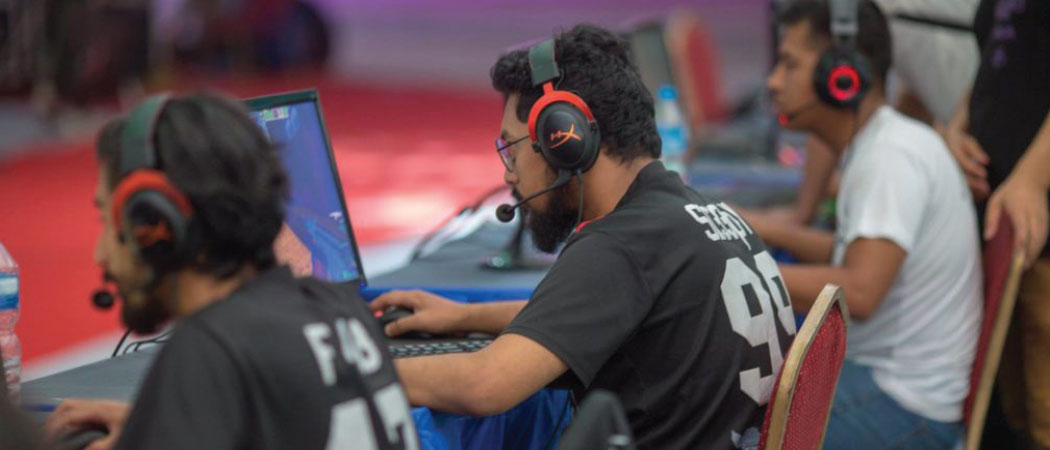

By A Staff Reporter,Kathmandu, Feb. 22: Politics continues to cast a long shadow over Nepali sport. Each change of government brings reshuffles in ministries, sporting bodies and institutions. Yet the overall state of Nepali sport has never truly improved.
The entrenched practice of ruling parties appointing loyalists- only for them to be removed after a shift in power- has left Nepali sport stagnant.
A major problem lies in the existence of parallel associations: one nationally recognised, the other internationally recognised.
Even the Nepal Olympic Committee (NOC) has struggled to function openly amid disputes.
Disciplines including e‑sports, wushu, table tennis, weightlifting, badminton, swimming and cycling are all mired in conflicts between national and international federations, with cases piling up in the courts.
Among them, the Nepal Esports Association (NESA) claims to have suffered injustice. Its president, Suraj Dangol, who introduced e‑sports to Nepal in 2014, says his organisation has fallen victim to political manoeuvring.
“While in South Korea, I studied e‑sports. With NOC support, I built a strong team in Nepal and formed the association. In 2016, we gained international recognition. We then organised various international qualifiers to give players exposure abroad.
In 2018, we staged the National E‑Sports Championship with a prize fund of four lakh rupees.
That event triggered a boom in e‑sports in Nepal,” he recalls.
NESA went on to train referees, coaches and technical staff, and worked closely with the private sector. In 2018, it began the process of registering with the National Sports Council (NSC), the governing body of Nepali sport. Yet despite nearly a decade of legal operation, affiliation was never granted.
“The NSC misled us repeatedly. They cooperated until the Hangzhou Asian Games, then quietly formed the Esports Association Nepal (ESAN), staffed by people with no knowledge of the sport.
“Recognising the growing popularity and potential of e‑sports, board members became eager to get involved, and political interests eventually took control,” says Dangol, who also serves as Secretary‑General of the South Asian E‑Sports Federation and is a member of the Asian Electronic Sports Federation.
Today, two associations operate in parallel: NESA, internationally recognised, and ESAN, nationally recognised. Dangol argues that ESAN now has the status of a mere club.
According to the Sports Development Act 2077, if any sports association or federation in Nepal, excluding traditional Nepali games, applies for registration with the NSC, and if the sport has an international governing body, then the association must obtain affiliation with it within one year. Failure to do so means the body will be recognised only as a local sports organisation or club.
ESAN, registered on 19 March 2024 at NSC, has yet to gain international recognition.
NESA, on the other hand, is a full member of the International Esports Federation, the Asian Electronic Sports Federation and the South Asian Esports Federation.
Dangol laments that the government has failed to enforce its own law. “It has been more than a year. By law, ESAN is now just a club. Yet no action has been taken.”
NSC Member‑Secretary Ramcharit Mehta says the council is working to merge parallel associations under rightful leadership.
“Those who work honestly with international cooperation deserve recognition. With the Asian Games approaching, we must rely on internationally recognised associations. Even the NOC’s nationally recognised committee is inactive. So we must merge based on integrity, whether national or international,” Mehta explains.
As major competitions such as the Asian and South Asian Games draw near, disputes between parallel associations cast uncertainty over participation. Which body will send players remains unresolved.
NESA President Dangol insists the issue must be settled quickly. “Past NSC Member Secretary brought a policy to reduce the number of associations, forbidding new registrations. Yet they created two from one.
“At present, since ESAN has failed to gain international recognition, it cannot be granted national status. It must be treated as a club. If we are denied registration, then others should be too.”
“We are continuing our efforts outside the NSC and will do so in the future. If e‑sports is to be truly developed, national recognition must go to those genuinely committed to the sport,” Dangol adds.
With the Asian Games in Aichi–Nagoya, Japan approaching, NESA has already moved to send players through the NOC. E‑sports is regarded as a medal prospect for Nepal.
Dangol says qualifiers must be held this time, with only selected athletes eligible for the Asiad. He believes Nepal has medal chances in PUBG and MLBB at the 2026 Games, having narrowly missed out at Hangzhou.
Deepak Shrestha, president of the Nepal National and International Players Association, warns that parallel associations hinder progress.
“Karate once had two associations, leading to player flight. Now, with one Karate association, exposure has increased and role models like Arika Gurung have emerged. With two associations, no one can work openly, sponsors are hard to find, and players lack exposure, causing them to leave,” he says.