- Saturday, 2 May 2026

Poetry explores socio-political dimensions of love
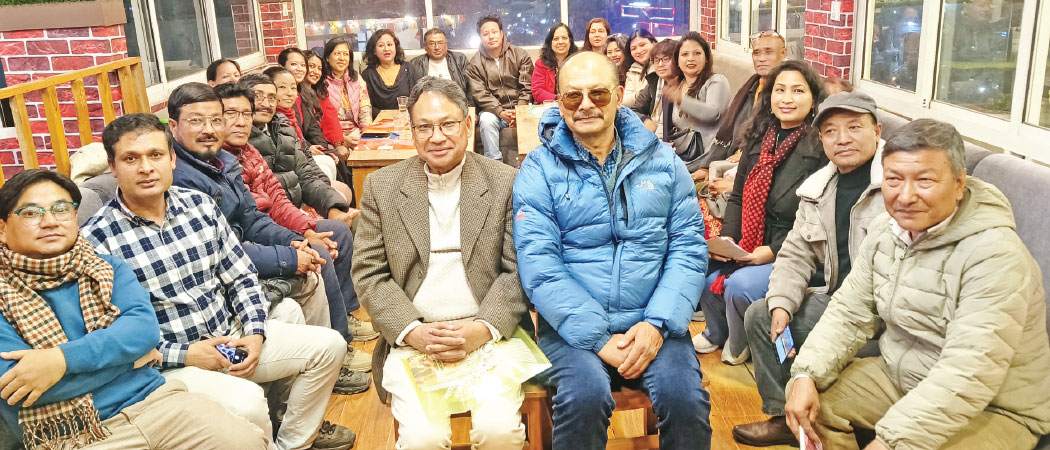

By A Staff Reporter,Kathmandu, Feb. 15: On the eve of Valentine’s Day, the tranquil heights of Swayambhu resonated with the powerful beat of contemporary Nepali love-poetry as Bartaman Kabita Samuha organised a special recitation event titled ‘Kabyik Pranay Sanjh’ (Poetic Love Evening).
The event brought together 24 poets who moved beyond conventional romantic tropes to explore love through various social, psychological, and political lenses.
The recitations collectively portrayed love not merely as a personal sentiment but as a complex human experience intertwined with broader societal structures.
Rajani Mila intertwined a compassionate relationship between a Buddhist disciple and a lady in her poem, while Laxmi Rumba expressed her objection to the love interrupted by consumerism.
The poets delved into the subversive power of love within rebellion, illustrating how affection can serve as a form of resistance against oppression and conflict.
Speaking at the event, Bishwa Sigdel, a member of Bartaman Kabita Samuha, emphasised that the group's mission extends beyond romantic themes. He noted that the Samuha has been organising similar programmes focusing on diverse and pressing issues such as labour rights, ecology, and social justice, adding that they remain committed to hosting such thematic literary discourses in the days to come.
Highlighting the group's vision for the future of Nepali literature, another member, Dhir Kumar Shrestha, shared that they are actively working on translation projects. According to Shrestha, translating Nepali works into other languages is a crucial step in ensuring that local literature reaches and resonates with a wider global audience, bridging the gap between domestic creativity and international readers.
In a gesture of literary appreciation, all participating poets and guests were presented with books as gifts during the programme. The evening, which celebrated both the intellectual and communal aspects of poetry, concluded with further discussions regarding the current state and future direction of Nepali literature.
-original-thumb.jpg)