- Sunday, 3 May 2026

West Bank misery grows as Israel limits work permits
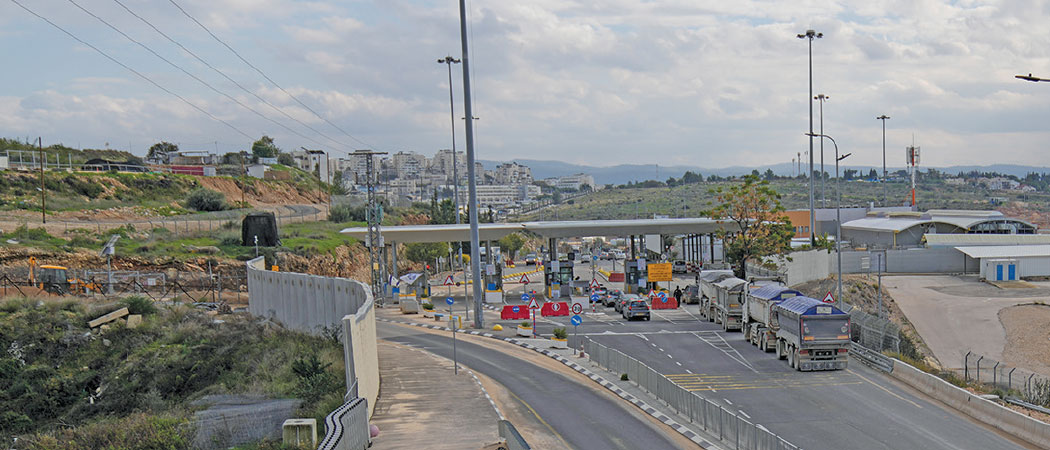

Tulkarem, Feb. 11: Hanadi Abu Zant hasn't been able to pay rent on her apartment in the occupied West Bank for nearly a year after losing her permit to work inside Israel. When her landlord calls the police on her, she hides in a mosque.
"My biggest fear is being kicked out of my home. Where will we sleep, on the street?" she said, wiping tears from her cheeks.
She is among some 100,000 Palestinians whose work permits were revoked after Hamas' Oct. 7, 2023, attack ignited the war in the Gaza Strip. Confined to the occupied territory, where jobs are scarce and wages far lower, they face dwindling and dangerous options as the economic crisis deepens.
Some have sold their belongings or gone into debt as they try to pay for food, electricity and school expenses for their children. Others have paid steep fees for black-market permits or tried to sneak into Israel, risking arrest or worse if they are mistaken for militants.
Israel, which has controlled the West Bank for nearly six decades, says it is under no obligation to allow Palestinians to enter for work and makes such decisions based on security considerations. Thousands of Palestinians are still allowed to work in scores of Jewish settlements across the West Bank, built on land they want for a future state.
The World Bank has warned that the West Bank economy is at risk of collapse because of Israel's restrictions. By the end of last year, unemployment had surged to nearly 30% compared with around 12% before the war, according to the Palestinian Central Bureau of Statistics.
Before the war, tens of thousands of Palestinians worked inside Israel, mainly in construction and service jobs. Wages can be more than double those in the landlocked West Bank, where decades of Israeli checkpoints, land seizures and other restrictions have weighed heavily on the economy. Palestinians also blame the Palestinian Authority, which exercises limited self-rule in parts of the territory, for not doing enough to create jobs.
About 100,000 Palestinians had work permits that were revoked after the outbreak of the war. Israel has since reinstated fewer than 10,000, according to Gisha, an Israeli group advocating for Palestinian freedom of movement.
Wages earned in Israel injected some $4 billion into the Palestinian economy in 2022, according to the Institute for National Security Studies, an Israeli think tank. That's equivalent to about two-thirds of the Palestinian Authority's budget that year.
An Israeli official said Palestinians do not have an inherent right to enter Israel, and that permits are subject to security considerations. The official spoke on condition of anonymity in line with regulations.
Israel seized the West Bank, Gaza and east Jerusalem in the 1967 Mideast war, territories the Palestinians want for a future state. Some 3 million Palestinians live in the West Bank, along with over 500,000 Israeli settlers who can come and go freely.
The war in Gaza has brought a spike in Palestinian attacks on Israelis as well as settler violence. Military operations that Israel says are aimed at dismantling militant groups have caused heavy damage in the West Bank and displaced tens of thousands of Palestinians.
After her husband left her five years ago, Abu Zant secured a job at a food-packing plant in Israel that paid around $1,400 a month, enough to support her four children. When the war erupted, she thought the ban would only last a few months. She baked pastries for friends to scrape by. (AP)





-original-thumb.jpg)