- Sunday, 7 June 2026

Nepal's Grey Challenge
Money laundering is a grave and pervasive issue globally. An estimated 2 to 5 per cent of global GDP ($800 billion to $2 trillion) is said to be laundered annually. It can distort economies, raise inflation rates, cause unfair competition, abet corruption and create inequality. It also enables criminals to conceal, use, and enjoy the money made illegally. Besides, it can provide means for terrorist financing, undermining national security. Given these proven risks, stringent measures are taken worldwide and laws enacted to crack down on money laundering activities.
Nepal has been placed on the grey list for money laundering by the Financial Action Task Force (FATF) since February 2025 because of its failure to fully implement necessary legal, policy, and structural reforms to combat money laundering and terrorist financing. Factors – such as weak regulation of high-risk sectors like cooperatives, casinos, and real estate, inadequate enforcement against financial crimes, and slow implementation of necessary legal reforms – have been identified as the key reasons. Not only are these sectors poorly regulated, but transactions there are hardly reported. The list risks putting the country under scrutiny and tightening transactions by international financial institutions. It is required to clean up its financial sector if it is to be spared from international sanctions and hurdles.
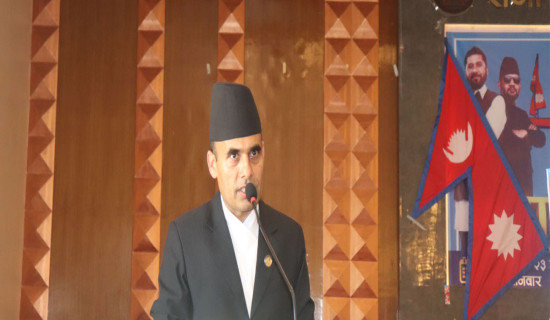
Speaking at a programme held to prevent money laundering the other day, Finance Minister Rameshore Prasad Khanal said that it is the shared responsibility of all stakeholders and authorities to work to get the country removed from the grey list. He argued that the lower-than-expected inflow of foreign investment is due to weak confidence in Nepal's financial system, underscoring the need to create an investment-friendly environment through reforms. As explained by expert speakers at the programme, this could spur serious social and economic problems domestically. It might also mean restrictions on travel for Nepali citizens and an increase in the cost of remittances and other international transactions. For a country with a small economy and highly dependent on remittances, imports, and international aid, these could be too costly to afford.
Greater effectiveness in investigation, prosecution, and action in money laundering cases is essential. As recommended by experts, cases should be prepared with strong evidence and provisions for the prompt seizure of cash, real estate, vehicles, and bank accounts suspected to be derived from or used in criminal activity must be made. Any individual indicted in crimes related to money laundering should not be spared or freed under any pretext, no matter how powerful they are. Only then, it will be easy to free the country from the grey list.
The good news is that an action plan has been formulated to remove the country from the grey list within the next year through the effective implementation of collective efforts from all sectors. The nation has until January 2027 to fully implement its action plan to get itself off the list. A special emphasis should be laid on legal reforms and updating the legislation, enhancing efforts among the investigation agencies, expanding international coordination, developing an integrated information partnership system, and monitoring the digital economy. Besides, special attention should be paid to minimising crimes through modern technology and controlling cybercrimes.The action plan needs to be implemented with clear responsibilities, activities, and timeframes. Greylisting may result in future blacklisting and loss of correspondent banking with many of the world’s major banks, depriving domestic banks of access to global payment services. The government has no time to waste.