- Sunday, 7 June 2026

Election fervour sweeps Kathmandu Valley
By A Staff Reporter
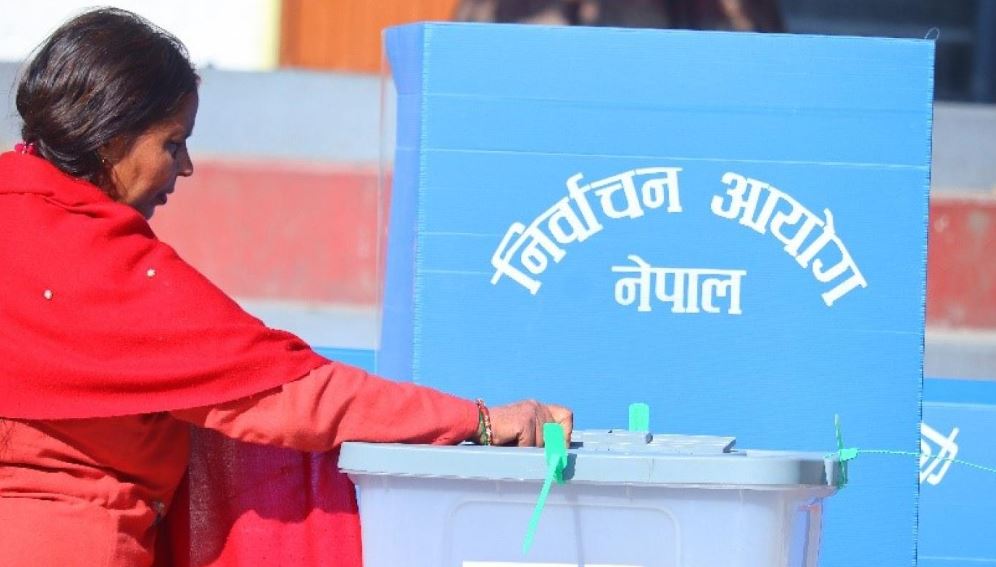
Kathmandu, Jan. 30: The capital valley has entered a vibrant and crowded election phase after major political parties, smaller groups and independent candidates filed nominations across all 15 constituencies of the three districts—Kathmandu, Lalitpur and Bhaktapur. The candidates are now on door-to-door visits.
The contest for the House of Representatives has drawn a mix of experienced leaders, first-time contenders, youth activists and well-known public figures, reflecting a broad political spectrum and a strong emphasis on generational change.
The Nepali Congress has prioritised new faces in Kathmandu, fielding newcomers in 13 of 15 constituencies.
Of the three districts, Kathmandu has 10 constituencies, Lalitpur three and Bhaktapur, the smallest district of the country, two.
In Kathmandu Constituency No. 1, youth leader Prabal Thapa Chhetri of the Nepali Congress has replaced former party vice president and deputy prime minister Prakash Man Singh, while Kabir Sharma Phuyal, Ramesh Aryal and Sachin Timalsina have been nominated in Constituencies No. 2, 3 and 4 respectively, all contesting parliamentary elections for the first time.
In Kathmandu district, General Secretary Pradip Paudel is the sole repeat NC candidate, seeking re-election from Constituency No. 5. Other Nepali Congress nominees include Sabuj Krishna Baniya Chhetri, Pramodahari Guragain, Sapana Rajbhandari, Nanu Bastola and Himal Karki, many of whom are entering the House of Representatives race for the first time.
In contrast, the CPN (UML) has largely relied on senior and previously elected leaders. Mohan Raj Regmi, Maniram Phuyal, Rameshwor Phuyal and Dr. Rajan Bhattarai are among the prominent UML candidates, alongside senior leader Ishwar Pokharel in Constituency No. 5. Several UML nominees have prior experience in the Constituent Assembly or Provincial Assembly, signalling the party’s preference for seasoned politicians over newcomers.
The Nepali Communist Party has highlighted younger leadership, nominating candidates such as Menuka Bhandari, Nitesh Poudel and Indra Kumar Bhusal, many of whom emerged from student politics and social activism.
Similarly, the Rastriya Swatantra Party has fielded a blend of youth, women and former office-holders, including Ranju Darshana Neupane, Sasmit Pokharel and former ministers Shishir Khanal and Biraj Bhakta Shrestha, underlining its mixed-representation strategy.
The election has also attracted high-profile figures outside mainstream party politics. Former Rastriya Prajatantra Party chairman and deputy prime minister Kamal Thapa is contesting from Constituency No. 5, while Rabindra Mishra is once again seeking election in Constituency No. 1. Mishra lost 2027 and 2022 elections to NC's Prakash Man Singh.
Other notable candidates include former minister Kul Man Ghising, artist Nisha Adhikari, Maoist leader Maila Lama and several social activists and cultural campaigners. In total, 257 candidates from various parties and independent backgrounds have registered nominations across Kathmandu’s 10 constituencies.
In Bhaktapur, the Rastriya Swatantra Party has nominated Rukesh Ranjit and Rajiv Khatri in Bhaktapur Constituencies No. 1 and 2 respectively, while in Lalitpur it has fielded Buddharatna Maharjan, Jagdish Kharel and Dr. Toshima Karki across Constituencies No. 1, 2 and 3.
Kharel, the Minister for Communication and Information Technology in the interim government, resigned and joined the RSP to contest the election.
The CPN (UML) has named Chetnath Sanjel, Prem Bahadur Maharjan and Sandan Thapa Magar as its candidates in Lalitpur, while in Bhaktapur it has put forward Som Prasad Mishra and Mahesh Basnet. Meanwhile, the Nepali Congress has nominated Kabir Rana in Bhaktapur–2 and Udaya Shumsher Rana, Prem Krishna Maharjan and Jitendra Kumar Shrestha in Lalitpur Constituencies No. 1, 2 and 3 respectively, underscoring the breadth of competition across the Kathmandu Valley. Rana is the second repeated NC face in the valley. He was elected to the CA in 2013 and House of Representatives in 2022.
According to the District Election Office, Kathmandu has 655,998 registered voters, including 338,606 women, 317,383 men and nine others.
The highest number of voters is in Constituency No. 2, while Constituency No. 3 also records a significant electorates. For the election scheduled on March 5, authorities have established 320 polling centres and 817 polling stations to facilitate voting across the district.
Similarly, Lalitpur has 269,259 registered voters, including 131,549 female voters and 137,707 men.
Likewise, Bhaktapur has 205, 410 registered voters, including 105,265 female voters and 100,140 male voters and five others.
With intense competition, a strong youth presence and a record number of candidates, Kathmandu’s electoral battleground highlights a broader shift in Nepali politics, where demands for renewal coexist with the enduring influence of established leaders.