- Wednesday, 22 April 2026

IPPAN urges political parties to prioritise energy in election manifestos
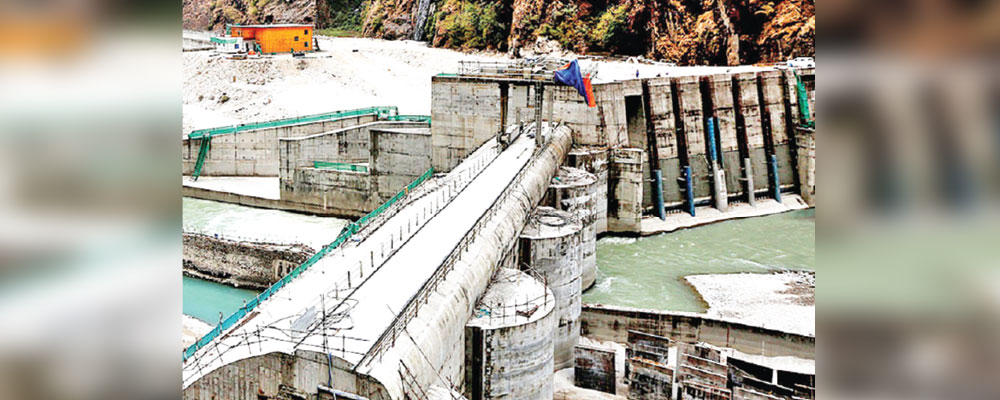

By A Staff Reporter,Kathmandu, Jan. 24: The Independent Power Producers’ Association, Nepal (IPPAN) has urged political parties to give special priority to energy-related issues of the private sector in their election manifestos to accelerate the country’s energy development.
On Friday, IPPAN sent formal letters to major political parties, including the Nepali Congress, CPN-UML, Nepali Communist Party, Rastriya Swatantra Party, Rastriya Prajatantra Party, and Ujyalo Nepal Party, calling for the inclusion of private sector–friendly energy policies.
In the letter addressed to the top leadership of all political parties, IPPAN emphasised the need to transform Nepal into a strong and energy-secure nation and to develop the country as a 100 per cent clean and green energy user.
According to a press statement issued by IPPAN, it included 13 demands, including a call to declare Nepal an ‘energy-friendly country.’
IPPAN President Ganesh Karki said that they called for amendments to the Electricity Act, 2049 to create a competitive market through a multi-buyer and multi-seller system and to allow private sector participation in electricity trading, transmission, and distribution.
"The energy sector has become the main basis of the country's prosperity and development. If political parties can move forward by mentioning the energy sector, which is the largest investment sector in Nepal, in their manifestos, it will attract more investment," Karki said.
He said, "To achieve the government's goals, there is a need to move forward by including the private sector in electricity trade, transmission and distribution. The plan to achieve the country's prosperity through energy development will not be completed unless the private sector is included in this."
According to IPPAN, the private sector has produced more than 3,300 megawatts of electricity over the past 26 years.
Currently, power projects totaling 5,700 megawatts across 190 projects are under construction, while 958 projects with a total capacity of 36,336 megawatts are in various stages of development.
According to IPPAN, nearly Rs. 1,300 billion has already been invested in electricity generation, but the sector is facing increasing challenges, making policy clarity in party manifestos essential.
According to a study by the Water and Energy Commission, Nepal has the potential to generate around 120,000 megawatts (MW) of electricity—48,000 MW from reservoir-based projects and more than 72,000 MW from run-of-river projects.
However, only about 4,000 MW have been generated so far.
The National Planning Commission has set a target of increasing electricity generation capacity to 8,500 MW under the 16th Five-Year Plan.
Nepal’s long-term goal is to produce 40,000 MW by 2100.
Similarly, the Energy Development Roadmap 2081 aims to generate 28,500 MW by 2035, while the Third Nationally Determined Contribution (NDC) targets 14,000 MW by 2030 and 28,500 MW by 2035.
To achieve these targets, IPPAN has urged political parties to include clear policies, strategic plans, and private sector-friendly provisions in their election manifestos.

-square-thumb.jpg)

-original-thumb.jpg)