- Sunday, 3 May 2026

Guidelines finalised to deploy 149,000 ‘Election Police’ for March 5 polls
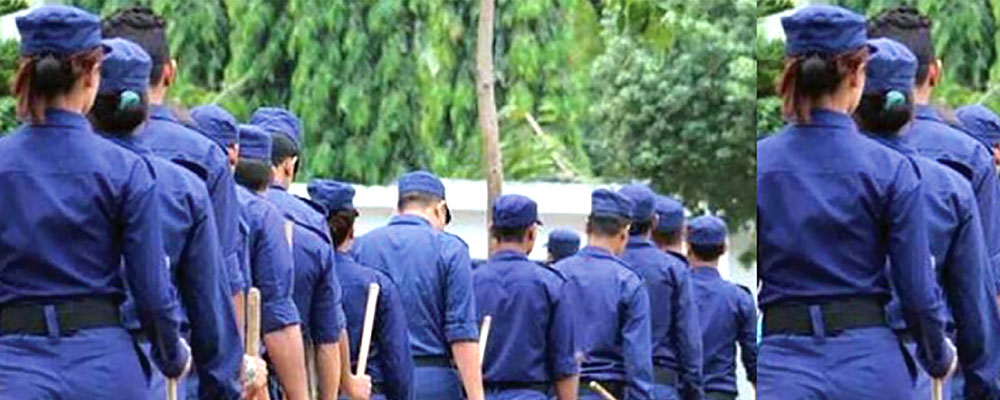

By A Staff Reporter, Kathmandu, Jan. 5: The Ministry of Home Affairs has prepared guidelines for the recruitment of ‘election police,’ previously known as temporary police, to be deployed during the upcoming HoR polls.
The guidelines were finalised on Friday following a meeting of officials from the Ministry of Home Affairs, Nepal Police and the Armed Police Force (APF).
Security agencies are expected to submit separate proposals to the Ministry of Home Affairs detailing the number of personnel to be recruited. Once approved by the Home Secretary, the recruitment process will formally begin.
After receiving approval from the Ministry, both forces will instruct district police offices across the country to proceed with recruitment.
According to the Ministry’s Secretariat, preparations are under way to secure approval for the guidelines within this week.
“Almost everything has been finalised. We will complete the remaining work by Sunday or Monday and send it to the police. They can then move ahead with recruitment according to their allocated quotas,” the Ministry’s secretariat said.
According to Deputy Inspector General (DIG) and Spokesperson for the Police Headquarters, Abi Narayan Kafle, the recruitment process would move forward once approval is granted by the Ministry.
The Ministry of Home Affairs has decided to allow Nepal Police to recruit 134,000 election police personnel, while the Armed Police Force will recruit 15,000. Nepal Police had initially sought approval to recruit 137,644 personnel, while the APF had sought 16,000. The Ministry approved a slightly reduced number for both forces.
The Ministry of Finance has already ensured budgetary resources for the recruitment of election police by both forces. Based on the approved budget, the recruitment guidelines were prepared.
According to the guidelines, newly recruited election police personnel will receive 10 days of training before being deployed for one month during the election period. Personnel recruited by Nepal Police will be deployed under Nepal Police, while those recruited by the APF will be deployed under the Armed Police Force.
They will be entitled to benefits equivalent to those of police constables, including insurance, uniforms and ration allowances.
Former security personnel and individuals who served as temporary election police in previous elections will be given priority, said DIG Kafle.
Home Ministry officials said most of the criteria remain similar to those applied in past elections.
During the 2022 elections, 115,000 temporary police personnel were recruited. However, the Election Commission has increased the number of polling stations this time, necessitating a larger deployment.
For the election scheduled on March 5, 2026, there will be a total of 10,967 polling stations nationwide, an increase of 168 compared to the previous polls.
Of these, around 3,500 polling centres have been classified as highly sensitive from a security perspective. Citing increased security sensitivity due to the rise in polling stations, authorities have decided to deploy an additional 35,000 election police personnel.
For the first time, the Armed Police Force will also recruit election police. While APF strike teams previously consisted of 18 personnel, six election police officers will now be added. Similarly, mobile patrol teams, which earlier comprised seven APF personnel, will now consist of 12 members, seven APF personnel and five election police personnel.
In preparation for the elections, Nepal Police has formed a separate cell under the command of Additional Inspector General Uma Prasad Chaturvedi, head of the Operations Department.
Meanwhile, the Nepali Army will deploy 95 per cent of its total strength, around 80,000 personnel, during the elections, according to Army Spokesperson and Brigadier General Raja Ram Basnet. The Army’s approved total strength stands at 96,000.
The Army has already begun establishing bases in election areas.


-square-thumb.jpg)