- Sunday, 3 May 2026

Cultural Exchange Through Education
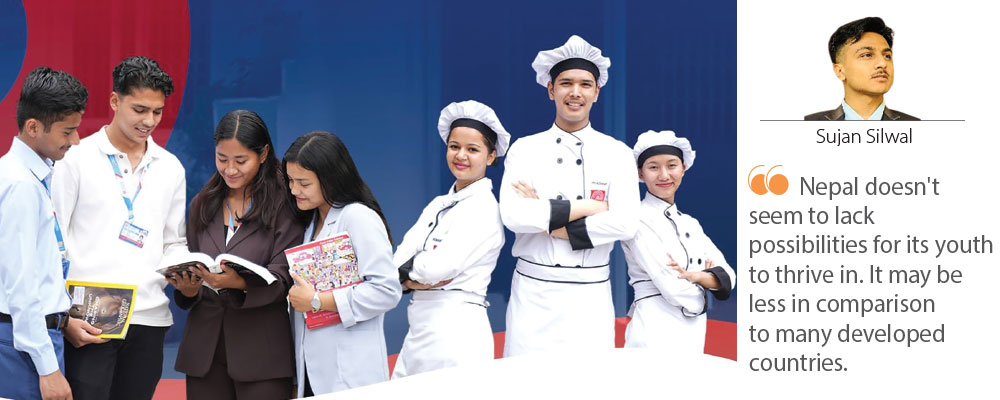
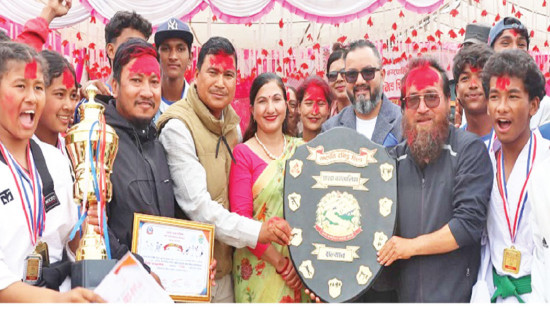
Photo courtesy of Nepal College of Management (NCM)

Whatever your life's work is, do it well. This, by Martin Luther King Jr., must have certainly been the driving factor contributing to my willingness to choose hotel management subject for my Bachelor's degree, despite having a long-standing dream of seeing myself in another field. The idea of completing my Bachelor's in a field closely pertaining to the tourism sector struck me as I was in a continued dilemma of choosing the best-suited course for my further study following my emotional parting from the good old high school days.
Much like everyone else, I began gathering suggestions from others, that too with a hope of expediting the process of selecting a subject which I would be pursuing and making my career out of. Initially, there was no dearth of advice on opting for innumerable measures from people from different walks of life, with some stubbornly suggesting that I go with information technology, given its thick and fast growth and increasing use to others unremittingly portraying a picture of their accomplished lives and demandingly asking me to follow suit. Being as bemused as I was with a state of indecisiveness, followed by a never-ending unsolicited and superfluous recommendation by a growing number of people, circumstances left me with no alternative.
As would everyone in such a situation do, I chose what had, at the time, become a popular subject among students, i.e., tourism. Barring my building fear in the lead-up to studying a new course, I, without a shadow of a doubt, thoroughly enjoyed my university days. Interestingly, having to study engineering, law, and maths in the 2nd, 3rd, and 4th semesters respectively, my days began demanding me to put in more effort, regardless of the supposedly practically enriched subject.
Mandatorily, students are required to have their internship completed within a year before becoming eligible for university graduation. With a compulsory requirement of a completed internship in a year, students in Nepal appear excitedly choosing foreign countries for their training destinations in full swing, mirroring a lack of opportunities and limited high-end hotels and restaurants back home. Personally, seeing the vast majority of friends going for overseas interviews, the unavoidable temptation was clearly there. However, I decided to finalize my required industrial training in Nepal.
Among many hotels searched and found in the course of a month, the hotel I found for my industrial training stood tall in regard to making me feel welcomed and profoundly involved. From its boutique-like architecture to modern equipment used and incredibly friendly people working alongside, the hotel was an excellent destination for internship-seeking students. Because of a conducive environment for an amateur student like me with an insatiable hunger for learning new things, it did not take long for me to acquire the knowledge and skills I was so direly in need of. In no time did I become happy with my delayed choice of finishing the training in Nepal.
Understandably, those deciding to acquire experience of working abroad, being on the rise, is rational, as many want to work in different cultures with people from different backgrounds. I, now with working experience, however, think we will not be compelled to leave our country in search of better training or study overseas should we become actively enthusiastic about creating an atmosphere in Nepal. For instance, the government can chip in and bring in initiatives capable of allowing students to go to different universities for the purpose of gaining experience of working in a new environment alongside people of different background.
Furthermore, those universities receiving Nepali aspiring students in return can send their interested scholars for the same purpose of exposing them to a new culture to gain hands-on learning. In doing so, not only will students of both countries be immensely assisted with knowledge of varied cultures, traditions, and existing sets of rules and regulations, but also the economy, social, and cultural aspects of both countries will be equally benefited. For instance, with many students from foreign countries coming to Nepal for the purpose of learning, the tourism sector, in particular, will have adequate manpower, capable of making a potentially swift transformation. Social landscapes and cultural ties, on the other hand, will inevitably remain stronger as Nepal continues to remain a trusted nation for students' cultural programmes.
To my knowledge, every Nepali must have come across a returnee filled with renewed vigour and exceptional work ethics but in utter desperation with a failed opportunity to showcase their talent and with an apathetic approach of the current government. Such ambitious people in possession of exceptional talent could be effectively used in passing down acquired knowledge abroad to a young, aspired generation to enhance productivity and better use of the resources available.
I strongly believe if genuine attempts are made at creating an environment conducive for students to learn practically, with a focus on long-term talent development in Nepal, it is just a matter of time for Nepal to reverse the trend of exporting youth to retaining them and making the most out of their uniquely accumulated skills.
A very convivial establishment, accompanied by unbelievably supportive members, I successfully wrapped up an obligation of my academics without feeling an iota of boredom. To sum it up, opportunities are created through hard work, perseverance, and setbacks. Nepal doesn't seem to lack possibilities for its youth to thrive in. It may be less in comparison to many developed countries. Nonetheless, there still lies something on the horizon, and it is our collective responsibility to hone that potential to create a sustained employment environment for the generations to come.
(Silwal currently works with The Malla Hotel, Kathmandu. )